Saturday, 1 April 2017

Sutton-in-Ashfield Brickmakers

Searching new trade directories has revealed the names of several "new brickmakers" which I have not previously wrote about who worked in Sutton-in-Ashfield, Notts. As of yet no bricks stamped by these makers have been found. 

I first use a 1877 map of Sutton & Skegby to show the possible locations of some of these brickmakers works because in most cases the exact location of their works is not given in trade directories. This is followed by another map of another part of Skegby where brickmaking also took place & more will be explained about that area of Skegby later. Then I cover a brickyard which was on Wild Hill, Teversal.

So after listing these "new" brickmakers I have then added the possible timeline to each of these works which are shown on the 1877 map, with information just gathered or previously wrote about. Please note that the orange coloured yard was not started until 1904 & in most cases each of these brickworks expanded in size over the years. I have also listed the timeline for two other yards which are not shown on this map.

  © Crown Copyright. Reproduced by permission of NLS/Ordnance Survey 1877.

My first "new brickmaker" is Aaron Knighton & his listed in Kelly's 1876 edition at Skegby, Mansfield. Then John Lane is listed at Skegby, Mansfield in Kelly's 1885 edition. As to Skegby, Mansfield in these entries & in subsequent entries, Skegby at this date was a parish within the district of Mansfield, today it forms part of Sutton in Ashfield/Ashfield District. I then found that George Vallance is recorded at Skegby in Kelly's 1876 & 81 editions & he was the son (b.1832) to the George Vallance (b.1808) who is recorded in directories dating from 1853 to 1872 first as George Vallance then Vallance & Sons, builders & brickmakers in Mansfield. There are two yards shown on this 1877 map which fall into the Parish of Skegby & these are the purple & green yards, but I have note because dates clash with other brickmakers operating at Skegby at this time, some of these Skegby entries may refer to the two brickworks which where in another part of Skegby & I write about these yards later.


Kelly's 1876 edition lists Robert Boot at Eastfield Side, S-in-A. & this may have been the red works, but this cannot be confirmed. Robert Boot may have been the father or brother to George Boot who was a brickmaker from 1904 in Sutton, but again this cannot be confirmed.

William Bilson is listed at Eastfield, Sutton in White's 1864 edition, then in Morris's 1869 edition William is listed as Brick & Tile Manufacturer at Eastfield Side, Sutton with Richard Carter as Manager. So William's yard will have been the red coloured yard. Now this 1869 entry records Richard Carter as Manager of this works & we next find in White's 1872 edition that Richard Carter had started working at his own works in Skegby, (the purple coloured works & I have wrote about Richard Carter in my Henry Shaw Post).

Kelly's 1853 edition records brickmaker John Miller as living at Dalestorth House, Sutton & White's 1853 edition actually records his works address as Eastfield Side, Sutton, so this could be the red coloured works. John Miller is then listed in Kelly's 1855 edition at Dalestorth, Skegby. Further investigation has revealed that John Miller a farmer & maltster acquired Dalestorth House in the early 1900's. It was then his nephew, also John Miller together with his wife who were to open a "An Establishment for Young Ladies' in 1852 at their 18th century built Dalestorth House. For the sum of 20 guineas per annum young ladies of the area would receive instruction on plain and ornamental needlework, reading, writing, arithmetic, grammar, composition, history, geography and French. So it appears from the trade directory dates that this second John Miller is our brickmaker. Today the house is a B & B together with a garden centre set within it's grounds.

I now write about two brickmakers who worked at a brickworks which was at the side of Blackmires Farm & is not shown on the map above. The yard was situated about half a mile south off the bottom of this map on Coxmoor Road & next to Sutton Reservoir. By the way Coxmoor Road joins Eastfield Side road (which is shown on this map going south) at the junction with Garden Lane. So Charles Lindley is listed at Blackmires in White's 1844 edition with John Baines as Manager. Then Charles Lindley is next listed in White's 1853 edition again at Blackmires. 
The 1861 Census records William Tomlinson as Master Brickmaker & living/boarding with William Clay at Blackmires Cottage. This cottage could have been on Blackmires Lane, which ran from Newark Road to Blackmires Farm & is now named Hamilton Road. So this William Tomlinson may have worked at or owned the Blackmires brickworks before William Beeley. I have wrote about William Beeley & his son William junior in a previous post. 


I now move on to the Timeline for the brickworks marked on the 1877 map above. Please note that the dates given are from trade directories or from info found & I would like to say that this timeline is 100% accurate, but I am unable to do so. The brickmakers who I am not sure if they worked at that yard are marked with an asterisk. 

Green Works on Forest Road, Skegby. This yard is shown on maps dated 1877 to 1938.
George Vallance* 1876 - 1881.
John Lane* 1885.
Aaron Barke 1904 & then Barke Brothers 1912 - 1916. Also see Blue Works entry.

Purple Works on Dalestorth Road, Skegby. Please note that the parish boundary follows the length of this road (dotted line) with the north side being Skegby & the south side being Sutton. This yard is shown on maps dated 1877 to 1938.
Richard Carter 1872 - 1878.
Henry Shaw 1894 - 1916. 
Sutton in Ashfield Brick Co. 1928. Owned by Walter Shaw. 

Pale Yellow Works on Dalestorth Road, Sutton. This yard is shown on maps dated 1877 to 1938.
Thomas Slack 1891 - 1899.
George Boot 1901 - 1916.
S.E. Carding & Son* 1922 - 1925. There is the option that Carding & Son operated the purple works instead at these dates.
Boot Brothers 1928 - 1933. Sons of George.

Orange Works, clay pit went up to Mansfield Road, but access was via a lane off Skegby Road which today is Hill Crescent. Only shown on 1913 & 1917 maps as disused. Not on 1898 map.
I originally thought George Boot operated this yard, but I now have a March 1901 newspaper advert recording his brickworks as being on Dalestorth Road (Pale Yellow works) & builders yard on Mansfield Road (precise location of which is unknown). If I establish who owned this works I will update the post. 

Blue Works on Mansfield Road. This yard is shown on maps dated 1875, 1898 & then marked disused on the 1913 map. 
Aaron Barke 1871 - 1900 .
Mrs. Louise Barke 1904.
Aaron is then recorded at Skegby in 1904 & 1908, followed by his sons George & John who are recorded as Barke Brothers in 1912 to 1916 at Skegby. See Green Yard.

Red Works on Mansfield Road/ Eastfield Side. Earlier maps show this New Cross area of Sutton as a open field called East Field. This yard is shown on maps dated 1877 to 1898. Works had closed sometime after 1904 & was gone by the 1913 map.
John Miller 1853 - 1855.
William Bilson 1864 - 1869 with Richard Carter as Manager.
Robert Boot 1876. (possibly at this works).
Walter Straw (junior) 1895 to 1905.


I now list the two brickworks which are not shown on the 1877 map above.
Blackmires Brickyard was situated between Sutton Reservoir & Blackmires Farm, just to the south on this map on Coxmoor Road. This yard is shown on the 1877 map, but only the clay pit is shown on the 1898 map.
Charles Lindley 1844 to 1853 with John Baines as Manager.
William Tomlinson* 1861.
William Beeley senior 1864 up to 1885.
William Beeley junior 1876 up to 1885.

Priestsic Road - near town centre. Only on 1898 map.
William Beeley senior 1885.
William junior & John Beeley as Beeley Brothers 1885 possibly up to 1898.

This just leaves Aaron Knighton of Skegby in 1876 not yet assigned to a yard, but there is the option that he may have worked in this other part of Skegby where two more brick yards were situated & I write about these two yards little later in the post after I have wrote about the Skegby Colliery Lime & Brick Co.

  © Crown Copyright. Reproduced by permission of NLS/Ordnance Survey 1876.

After finding a 1872 trade directory entry for the Skegby Colliery Lime & Brick Company I then delved into the web to find information & the location of this colliery as I had not come across it before. So I first slightly digress to tell you about this colliery & Skegby/Stanton Hill. 
I first use the 1876 map above to show the location of Skegby Colliery (coloured yellow), then the 1898 map below shows that Skegby Colliery was at the end of Wharf Road in what we now know as Stanton Hill, but why was it called Skegby Colliery. Further investigation has revealed that the village of Stanton Hill did not exist in 1876 & this area where the colliery had been sunk was in the Parish of Skegby, hence it's name. The Dodsley family of Skegby Hall were the Lords of the Manor & owners of this land & they sunk Skegby Colliery sometime in the early 1800's, the actual date is unknown. Local Historian Bill Clay-Dove wrote in his book that in 1847 coal production was recorded as only being small compared to modern outputs with an average output of 500 tons per month. Some of the coal was used by Dodsley himself to operate his colliery, lime kilns & brickworks. The Stanton Ironworks Co. then sunk Butcherwood Colliery (Teversal) in 1867 & Silverhill Colliery in 1878 with the Company then building houses for it's workers at Cooperative Street, Institute Street & Cross Row starting in 1877. These streets were to be later known as Stanton Hill in the Parish of Skegby in 1881. The first entry for Stanton Hill appears in the 1871 Census, but only as the name of a street in the Parish of Skegby. Further houses were then built by the Stanton Ironworks Co. at Meden Bank in 1880, but these houses have since been replaced with Council built houses, possibly around the 1970's. Bill records these 1880 Meden Bank houses as being demolished around 1963. It is also thought that Stanton Hill was named after the Stanton Ironworks Company with them building these houses. 
You will see another colliery which I have coloured red on these maps & this pit was sunk in 1873, again by the Dodsley's who first named it New Skegby Colliery. This pit then took on the name of Brierley Colliery as it was sunk by miners who had come from Brierley Hill in Staffordshire. By the time the Blackwell Colliery Co. had taken over this pit it had been renamed Sutton Colliery & had been named after Sutton Colliery Limited which had been formed from the Skegby Colliery Lime & Brick Co., but this pit was always affectionally known as Brierley. The original Skegby Colliery which I have coloured yellow closed in 1887. 

Now back to the brickworks at Skegby Colliery & the first trade directory entry that I have found for this brickworks is in Morris's 1869 edition & the entry is Skegby Colliery Co., coal owners, lime & brick manufacturers, Skegby with Richard B. Henson as Manager. Then the entry in White's 1872 edition is Skegby Colliery Lime & Brick Co., Skegby. Although both these two maps do not indicate which are the brickyard buildings, the clay pit is shown next to the colliery (yellow). I have also coloured Wharf Road yellow on the 1898 map below to show you the distance this colliery was from Stanton Hill, it was almost in Huthwaite. As to the Lime kilns owned by Skegby Colliery these may have been the lime kins that I have coloured green on the 1876 map above & where situated on Stoneyford Lane (now Road). Some small holdings & Fisher Close now occupies this former lime producing works. I have also found that there are some lime kilns & quarry marked on the 1875 map nearly opposite Skegby Hall on Mansfield Road, so more than likely these lime kilns were also owned by John Dodsley.

 © Crown Copyright. Reproduced by permission of NLS/Ordnance Survey 1898.

I now write about the two brickyards which where next to the New Skegby Colliery (aka Brierley & later Sutton) in Skegby as shown on the 1876 map below. Please note that road which was used to access these two works was called Rooley Lane at this date & was later renamed Brand Lane as shown on the 1898 map above. I have no proof, but there is the possibility that the yard which I have coloured purple may have been owned by the colliery with the Skegby Colliery Co. previously owning a brickyard at their other colliery site & this purple yard is connected to the colliery via a lane. So this theory does look promising, if I only had written proof !!!

  © Crown Copyright. Reproduced by permission of NLS/Ordnance Survey 1876.

So as previously wrote I was unable to allot a yard to Aaron Knighton who is listed at Skegby in Kelly's 1876 edition & this blue coloured yard may have been his works as the criteria of Skegby in 1876 fits, with this area of Skegby then becoming known as Stanton Hill after 1881. As said earlier in the post Aaron Knighton may have worked at one of the yards which was on the Sutton side of Skegby & it might have been George Vallance that was at this blue coloured yard in 1876 & 1881 ?  Both these two brickyards are no longer shown on the 1898 map.

 © Crown Copyright. Reproduced by permission of NLS/Ordnance Survey 1898.

I finish the post with a brickworks which was situated on Wild Hill at the junction with Chesterfield Road in an area of Sutton in Ashfield which is called City of Whiteborough. It is unknown why this area has got this name as it only consisted of a few cottages, farms & farm land at this date as shown on the 1898 map. Wild Hill is the road (red) which connects Teversal to Tibshelf. I have been unable to find any information about this brickworks neither from trade directories or from Sutton Library. I have even asked someone who I know & has lived all his life on Wild Hill & this brickworks was unknown to him also. So this one will remain a mystery unless new information turns up. If anyone has any information about this works or any other brickworks in this post, please get in touch. Thanks.



Thursday, 9 March 2017

West Notts. Brickworks

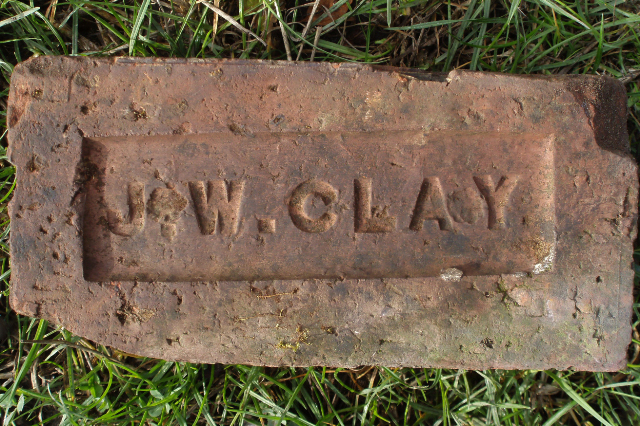
In this post I cover the brickworks that where in Eastwood, Newthorpe, Giltbrook, Kimberley, Awsworth, Cossall, Watnall & Brinsley & I first start with the aptly named Jesse Ward Clay.

Jesse Ward Clay, Hill Top

  Photo by Frank Lawson.

Jesse Ward Clay is first listed as brickmaker at Hill Top, Greasley in Kelly's 1885 edition & continues to be listed at Hill Top until Kelly's 1900 edition. In these listings after Hill Top the place given as the location of this yard varies & is given as Greasley, Eastwood, Newthorpe or Nottingham. 
I have found that today, Greasley is only the name of a civil parish which includes Beauvale, Giltbrook, Moorgreen, Newthorpe, Watnall & parts of Eastwood, Kimberley & Nutnall & the settlement originally known as Greasley does not exist today as it is thought the Earl of Rutland destroyed the village so he could have a better view. There is however the remains of Greasley Castle, a fortified manor house which was incorporated into a range of farm buildings, the 15th century Church of St. Mary's & few houses situated on the B600 between Moorgreen & Watnall which are classed as Greasley. 
Jesse C. Clay is listed as brickmaker at Hill Top, Eastwood in Kelly's 1904 to 1912 editions, so I am taking it that Jesse C. Clay was Jesse Ward Clay's son.

  © Crown Copyright. Reproduced by permission of NLS/Ordnance Survey 1899.

I have found four brick works marked on two maps in the Hill Top area of Eastwood & from Clay's 1912 trade directory entry & both these maps, I have concluded that the Clay family owned the purple works as the other three yards are no longer shown on this 1899 map. The 1879 map below shows that Springfield Colliery occupied the next field to where Clay's brickworks was going to be established. I have to note that there is the option that Jesse Ward Clay may have owned the red coloured yard first, as shown on the 1879 map below, with him then later establishing a new works (purple) as shown on the 1899 map. I have come to this conclusion as I have only found two more brickmakers listed in trade directories at Hill Top & I have established that they owned the green & yellow coloured works. Also Clay & Hickling (owner of the green coloured yard) are both listed in Kelly's 1885 edition at Hill Top, Greasley, thus indicating that both their yards where in the same area. 


 © Crown Copyright. Reproduced by permission of NLS/Ordnance Survey 1879.

As said from trade directories I have found two more brickmakers listed at Hill Top & I have established that Samuel Hickling owned the green coloured yard on the 1879 map above as he is listed at Lynncroft, Greasley in Kelly's 1885 edition, then in Kelly's 1888 edition at Lynncroft, Eastwood & then Kelly's 91 & 94 editions lists him at Lynncroft, Newthorpe. I am taking it that the marked Lynncroft House on this map was his home. Today this former brickyard site is occupied by a large bungalow & what appears to have been a garden nursery (Goggle Maps) with the site being accessed off Percy Street. Also listed in Kelly's 1855 edition is J. Hickling, Eastwood, so he may be connected to Samuel Hickling, possibly Samuel's father. 

Edward Allcock is listed at Hill Top, Greasley in Kelly's 1885 edition & then in White's 1894 edition the listing is Edward Allcock & Sons, Newthorpe. Although I do not have 100% proof, I believe he owned the yellow coloured yard. 


Lodge Colliery Brickworks

 © Crown Copyright. Reproduced by permission of NLS/Ordnance Survey 1900.

The Lodge Colliery Brickworks was owned by William Hall (known as Billy) & this purple coloured brickworks was accessed via Halls Lane & was possibly named after Billy. Halls Lane also splits into two with the second leg going down to the canal, (both coloured brown on the map above). The other brickworks on this 1900 map were owned by The Erewash Valley Brick Co. (green & red) & were also accessed via Halls Lane. The yellow works was owned by the Eastwood Brick Co & I write about these two companies later. 

The Lodge Colliery brickworks is first listed in Kelly's 1881 edition as William Hall, Lodge Colliery, Newthorpe. The entry in Kelly's 1885 edition reads William Hall, Gilt Hill, Kimberley. Kelly's 1888 & 91 editions is the same listing as in the 1881 entry. White's 1894 listing is William Hall, Kimberley. Then the last two listings are William Hall (exors. of), Lodge Colliery, Newthorpe in Kelly's 1899 & 1900 editions. Lodge Colliery was sunk in 1877 & together with it's brick kilns they are shown on the 1879 map, so it appears that the brick yard had just been established at this 1879 date & it coincides with the first trade directory listing for this yard in 1881. 


Documents held at Nottingham Archives has revealed William Hall leased the land Newthorpe Lodge Colliery, pottery & brickworks were built on from Earl Cowper & a second document dated Oct. 1899 reveals that Johnstone & Williams, solicitors to William Hall (William passed away in 1899) asked W.G. to "let us know if Earl Cowper would be disposed to grant a lease," (extension to the original lease). It appears that W.G. may have been William Hall's right hand man & in-charge of the brickworks as another document dated 27th April 1893 held at the Archives from William Hall to W.G. says "I want particularly to see you respecting the proposed tramway connection with our No. 2 works." A new find in a newspaper article dated May 1898 has revealed Billy Hall's second works was on the south side of the railway line & is the green coloured works on the 1900 OS map above. This newspaper article also reveals this green coloured works was acquired in May 1898 by the newly formed Erewash Valley Brick, Pipe & Pottery Co. Ltd. hence it being named as the Erewash Valley Brick Works on the 1900 map. Billy Hall's Lodge Brickworks & Colliery (purple) was not taken over by the Erewash Valley Brick Co. & the 1913 map no longer shows neither the colliery or brickworks (purple) & trees are shown planted on most of this site. However a new Lodge Colliery was built on the same site & was operational in 1915 & was owned by the Manners Colliery Co., running it till 1930. Then the Ilkeston Colliery Co. owned Lodge Colliery between 1935 & 1946. Today the Birch Industrial Estate has been established next to the A610 on the part of the site where the two collieries & Billy Hall's brickworks had once stood. 


Eastwood - Erewash - Manners

I have grouped these three companies together as the Eastwood & Erewash brick companies later amalgamated & the Manners Brick Co. was formed.

 © Crown Copyright. Reproduced by permission of NLS/Ordnance Survey 1900.


Eastwood Brick Co.

I start with the Eastwood Brick Company which was formed in May 1897 & this company is first listed in the 1901 edition of the Directory of Clayworkers in Eastwood, then Kelly's 1912 & 16 editions at Newthorpe. Their 20 acres site is coloured yellow on the 1900 map above next to Newthorpe & Greasley Railway Station on Newmanleys Road. The company had constructed a William Sercombe continuous kiln with 14 chambers which had the capacity to produce 100,000 bricks per week, the chimney was over 100ft tall. Two further clamp kilns could produce 20,000 bricks per week & plans were in place to build more round ovens. The Nottingham Journal in it's 24th May 1898 reports on the evening meal at the Moon & Stars Inn provided by the directors of the Eastwood Brick Company, were all it's forty workers were invited to celebrate the company's first year. The Directors of the company are listed as Mr. E. Lindley, also Chairman, Mr. G.H. Cullen, Mr. J. Bentley & Mr. H. Saxton. The company is also listed as the Eastwood Brick & Pottery Co. in the 1901 Clayworkers Directory & Kelly's 1916 edition with the pottery being situated on Lynncroft Road, Hill Top, Eastwood, opposite the former brickyard owned by Samuel Hickling. This pottery is shown on the 1899 map in the Jesse Clay entry. Today this former pottery works site is occupied by the houses which are built on The Crescent. In 1920 the Eastwood Brick Co. was taken over by the Manners Colliery Co. which then became the Manners Brick Co. & I write about this company later. 


 Photographed in Sutton Scarsdale by Frank Lawson.


Will Moss found me this "Blue" Eastwood brick in Brinsley. This blue example is very heavy compared to it's red counterpart & is only blue on it's surface because where the brick is damaged on it's other surfaces, red clay can be clearly seen. So I expect the local clay was used & fired at a much higher temperature to achieve this bluish effect. On the derelict land where this Eastwood "blue" brick was found, Will also found several Riddings "Blue" examples & again this bluish tint is only on the surface of the Riddings brick. I can only assume with now finding several other "Bluish" versions that local brick companies tried to emulate their West Midlands counterparts to gain access to the blue brick market. Other local bluish bricks that I have found are by Sherwood Colliery, Butterley Brick Co. Kirkby, Shipley & Brinsley (example in this post). Needless to say that these "East Midlands Blues" did not match their West Midlands counterparts for quality & take over their share of the blue brick market.


Erewash Valley Brick, Pipe & Pottery Co.

Found by Dave Wall in Skegby Notts. Photo by MF. 

An article in the Nottingham Journal dated 24th of May 1898 reports the Erewash Brick, Pipe & Pottery Co. Ltd. had been formed to purchase the Freehold brickworks & it's minerals thereunder previously run by the Exors. of the Late Billy Hall. This was the green coloured brickyard shown on the 1900 OS map above & it covered 17 acres. It appears this company did not purchase Billy Hall's Lodge brickworks (purple) or Lodge colliery situated on the north side of the railway line, which had been demolished by 1913. However the Prospectus outlining the takeover does tell you the company had purchased the Freehold to a further 17 acres of land for it's minerals situated on the north side of the railway line near to Newthorpe Station. A further 3 acres of Freehold land had been purchased on the south side of the railway line to build a second brickworks & this is the red coloured works shown on the 1900 OS map above. This 1898 newspaper article records the Company Directors as Thomas Gascoigne JP , also Chairman, James Crossley, Henry Saxon, Henry Cullen & John Carter Berry. The company had been formed with a Share Capital of £25,000 in two types of £1 shares. 

The Erewash Brick, Pipe & Pottery Co. Ltd. are first listed at Newthorpe in Kelly's 1900 edition with Chas Martin as secretary & this entry continues up to the 1916 edition. A find in a 1904 newspaper article now records the green coloured brickworks as the Giltbrook Brick & Pottery Works which was previously shown on the 1900 map as the Erewash Valley Brick Works.  The red works is not named on the 1900 map, but is shown as the Erewash Works on the 1913 map. The Erewash Brick Co. was operational from 1898 to 1920 & both works at this time were accessed via Halls Lane (brown) which split into two. Today both these lanes are only footpaths. 

The 1913 map below now shows the original main works (green) as disused & a May 1915 newspaper article reveals the Erewash Co. was selling at auction on the 1st of June their Giltbrook Brick & Pottery Works as a going concern. I then found with the reserve not being met, Lot one was withdrawn & the freehold land was then sold as Lot Two & was purchased by the Manners Colliery Co. for it's minerals. Lot Three consisted of all the buildings, kilns, boilers, plant, machinery, tools, surplus bricks on site & these were sold to individual buyers & the buildings were then demolished. 

In January 2024 Richard Bull sent me these two images of his recently found Erewash white glazed brick & in the 1915 Sale Notice of the Giltbrook Works these white glazed bricks are listed with the many other types of bricks, flue bricks, terra-cotta & chimney pots which were being sold.  


Photos by Richard Bull.

The 1913 map now shows the red works as the main works & marked as the Erewash Brick Works. In 1920 the Erewash Brick Co. was taken over by the Manners Colliery Co. which then became the Manners Brick Co. & I write about this company next. 

 © Crown Copyright. Reproduced by permission of NLS/Ordnance Survey 1913.


Manners Brick Co.


In 1920 (reference the Eastwood Advertiser) The Manners Colliery Co. of Ilkeston purchased both the Eastwood Brick Co. & the Erewash Valley Brick, Pipe & Pottery Co. Another source reveals that the Manners Colliery Co. had acquired the Erewash Valley Brick & Pottery Co. before they purchased the Eastwood Brick Co. which was on the 1st January 1920. I next found the Sheffield Independent dated 13th of June 1921 records the Manners Brick Co. had been registered on the 8th of June with a share capital of £30,000 in £1 shares to take over the two brick & tile works at Greasley owned by the Manners Colliery Co. The subscribers of this new company were Messers. H. Potter, W. Adlington, W.A. Potter & F. Chambers. The first directors had not been named at this point. 

The first trade directory entry for The Manners Brick Co. is in Kelly's Derbys. 1925 edition & the listing is The Manners Brick Co. Ltd., Ilkeston; yards, Newthorpe. The 1928 & 32 editions record the same listing. Then Kelly's Notts. 1936 & 1941 editions records the Manners Brick Co. Ltd. Eastwood, Nottm. 

Nottingham Archives has two letterheads for the company dated 1934 & 36. The 1934 letterhead records the company as the Manners Brick Co. Eastwood. Directors, H.D. Bishop JP & Managing Director, F. Chambers JP, G.A. Eastwood JP & G. Lomax. Works, Newthorpe, own railway sidings on L & NER. Then the 1936 letterhead is almost as identical, with the differences of the Manners Brick Co. New Eastwood, Notts. & works, Eastwood instead of Newthorpe plus the same directors. Below is a 1935 advert for the company, please note the red works is now called the Erewash Valley yard.

West Bridgford Times & Echo - Friday 01 November 1935 Image © Successor rightsholder unknown. Image created courtesy of THE BRITISH LIBRARY BOARD.


 © Crown Copyright. Reproduced by permission of NLS/Ordnance Survey 1938.

With new info turning up it has revealed Manners closed their Erewash Valley Works (red) in 1956.

The link below shows two photos of Manners brickworks. The one taken from the other side of the Nottingham Canal will be the Erewash works, with it being the nearest. 
http://www.healeyhero.co.uk/rescue/Collection/Colin_Pounder/Brickworks.html

The Manners Brick Co. closed their Eastwood Works (yellow) in 1977 & this closure date came from the Eastwood Advertiser. A June 1978 newspaper article records the owners of this former brickworks site as Leigh Interests of Birmingham, who filled in the old claypits with household rubbish. I then found Martin Hammond had wrote this in the May 1985 edition of British Brick Society journal - "On the current letterhead of Messrs. Barnett & Beddows Ltd, Atlas Works, Aldridge, Walsall, it says "incorporating Hamblet's Blue Brick Co. & Manners Brick Co.". I suspect Barnett & Beddows had only purchased the Manners company name & may have been producing bricks with the Eastwood name stamped in them at their Aldridge Works at this 1985 date, we know they were producing bricks stamped Hamblet at their Aldridge Works. 

Today the Eastwood/Manners brickworks & the former Newthorpe & Greasley Railway Station on Newmanleys Road which in more recent times had been occupied by industrial units is now void of all buildings & is waiting to be developed. Of the two Erewash/Manners sites further down the Erewash Valley, the green coloured works has been restored for farming & the red coloured works is now under the A610 Bypass. Also to note is that the Nottingham Canal which served the two brickworks has now been filled in & today part of it is a public footpath.


This brick came from an old demolished school in Kirkby in Ashfield. I found the blue brick below in a reclamation yard in Langley Mill & although it's blue on the outside, damage reveals it's red clay underneath, so another example of a Notts brick company trying to produce blue bricks. 


Photo by Ian Holmes.


Photo by Richard Harvey.


The N's & S are reversed in this example, indicating an 1860's/70's brick, so it could have been made by a brickmaker called Manners rather than the Manners Brick Co. which was established in 1920. 


Newthorpe Brick Co. 


The first bit of information for this brickworks comes from Kelly's 1876 edition & instead of the entry listing the Newthorpe Brick Company, it lists it's owners. So the entry is Sellman, Bircumshaw, Rowbottom & Lowe, Newthorpe, Greasley. I have to point out that the name of Sellman in this entry should read Salmon.

This brickworks was only short lived as I found a notice which appeared in the Ilkeston Pioneer newspaper which stated that Mr. John Peet had received instructions from the Newthorpe Brick & Tile Co. (through the dissolution of partnership), to sell by auction on Monday, the 23rd December 1878 at the Old White Bull, Newthorpe at 4 o'clock precisely, the whole of the valuable Brickyard Plant situated on Baker Lane. There is then a list of the buildings & their contents. It then states that the Vertical Engine would be put into motion between 2 & 4 o'clock & that the whole of this property which had only been in use for four years would be sold as One Lot.

Then an article in the London Gazette states that John Salmon, Isaac Bircumshaw, John Rowbottom, and William Clarke Lowe, of Newtborpe, in the parish of Greasley, Nottinghamshire, Brick and Tile Makers, trading under the name of the Newthorpe Brick Company, is this day dissolved by mutual consent. Dated this 16th day of January, 1879. 

The 1879 map below shows the Newthorpe Brick Co.'s yard on Baker Lane which I have coloured yellow. The 1899 map no longer shows this yard, so one can only assume that no one purchased this yard as a going concern. The Old White Bull Inn where the auction of this brickyard took place is also shown on this 1879 map on Nottingham Road.

 © Crown Copyright. Reproduced by permission of NLS/Ordnance Survey 1879. 

This 1879 map also shows that there was a brickworks (coloured green) next to Newthorpe Colliery & this yard may have been associated with this colliery which was sunk in 1863 by the Digby Colliery Co. & closed in 1888.


Digby Colliery


 © Crown Copyright. Reproduced by permission of NLS/Ordnance Survey 1900.

Digby Colliery at Giltbrook was sunk in 1866 & a brickworks had been established by 1879, as it is shown next to the colliery on the 1879 map in the same location as it is shown on the 1900 map above (yellow). The green coloured yard was in Kimberley & I write about that works later. Both the 1879 &1900 maps show that Digby Colliery & Brickworks had it's own wharf on the Nottingham Canal & it's own railway sidings connecting to the Great Northern Line to distribute the company's coal & bricks.

The Alfreton Journal dated 14th of September 1894 reports on the history of Digby Colliery recording Mr. T. Potter as Managing Partner & Mr. Granville Chambers as Certificated Manager. The article finishes with some information on the brickworks in which 120,000 bricks are turned out each week consisting of common, pressed & firebricks. The common bricks being largely used for railway work. The present plant was made by Wootton Brothers of Coalville which had been in operation for a year.   


The Directory of Clayworkers in it's 1901 edition lists the Digby Colliery Co. at Kimberley, Nottingham, then there is only one trade directory entry for the company in the brick & tile manufacturers section in Kelly's 1912 edition & the listing is the Digby Colliery Co. Ltd., Reg. Offices, 17 Derby Road, Nottingham; brick yard, Giltbrook, Nottm. The 1913 map reveals that the brickworks is marked as disused & may have closed sometime in late 1912 or early 1913. The 1938 map still shows one building standing & the outline of the claypits. The colliery closed in 1928. Today the A6010/A610 roundabout is built where the kilns had stood, with the industrial units on Artic Way where the brickworks buildings had stood & the former clay pit is a recycling centre.


W. & J. Buxton - J. Shaw, Kimberley


 © Crown Copyright. Reproduced by permission of NLS/Ordnance Survey 1879. 

I have established that W. & J. Buxton / William Buxton owned the green coloured yard as William's last entry is in Kelly's 1904 edition & this brickworks is the only one shown on the 1900 map in Kimberley at this date. (see Digby entry for this green coloured works on the 1900 map). The red & purple works are no longer shown on the 1900 map. So the trade directory entries for the Buxtons are W. Buxton, Kimberley, Kelly's 1855 edition; William & J. Buxton (same as the brick below) Kimberley, Kelly's 1876 edition; William Buxton, Kimberley, Kelly's 1881, 85, 88 & 91 editions; White's 1894 edition now records William Buxton at two works, Kimberley & Wollaton. Kelly's 1895, 1900 & 1904 editions only list William Buxton at Kimberley.


I have two more trade directory entries for brickmakers in Kimberley, J. Shaw is listed in Kelly's 1855 edition & Edwin Higdon is listed in Kelly's 1888 edition. Which of the two works red/purple these brickmakers worked at as shown on the 1879 map above is unknown. I have added the J. Shaw brick which is in the Silk Mill Museum's collection in Derby as a possibility of it being made by this J. Shaw of Kimberley, but I have to note that the lettering indicates to me a slightly later date than 1855, unless this maker was producing bricks say five years later. No other J. Shaw's have been found listed in trade directories covering Nottinghamshire or Derbyshire, so this 1855 J. Shaw of Kimberley is my only candidate as the maker of this brick. 

Photographed at the Silk Mill Museum, Derby.


Awsworth Patent Brick Co.
Nottingham & Awsworth Brick Co.


Photo by MF courtesy of Nottingham City Museums & Galleries.

The first reference found to the Awsworth Patent Brick Company comes from an advert in the Ilkeston Pioneer newspaper dated 16th of July 1874 - Awsworth Patent Brickworks, moulders wanted. A later find reveals the Awsworth Patent Brick Co. was established in May 1874. 

Then an advert in the Nottingham Guardian dated 30th of April 1875 reads - Bricks For Sale & delivered in canal boats to Radford & Lenton or alongside any wharf in Nottingham. Apply to Mr. Gadsden, Awsworth Patent Brick Co. Ilkeston. Further adverts for the sale of the company's bricks in November 1875 record James Sanders as General Manager.  

Photo by Richard Bull.

Richard found these Awsworth Patent Brick Co. bricks near Cossall Colliery. Originally fused together with others due to a kiln meltdown they dropped apart on removal from site.

My next article comes from a Nottingham Daily Express notice dated 18th of December 1875 & I have selected the juicy bits which records the share issue in a new company called the Nottingham & Awsworth Brick Co. operating at the former Awsworth Patent Brick Co's works.
Notice of Prospectus, Shares available in the Nottingham & Awsworth Brick Company. Directors - Messrs.  Ralph Firbank, Finsbury Park, London. G.R. Turner, Vulcan Engineering Works, Langley Mill, John Hassell, Firebrick Works, Woodville, Burton on Trent, John Farnsworth, Eastwood, Notts. R.E. Cooper, Campden Grove, Kensington. Bankers - The Nottingham & Notts. Banking Co. Nottingham. 
The Company has been formed for the purpose of purchasing & working the brick manufactory on the banks of the Great Northern Company's Canal at Awsworth, known as the Awsworth Patent Brick Company with that company in May 1874 having acquired a 14 year lease on the land. The new Company (N & A) for a sum of £3,200 & 50 in shares had purchased all of the plant, a Pickwell's Patent Kiln, capable of burning 60 thousand bricks per week, a scotch kiln capable of holding 40 thousand bricks, buildings, clay mills, brick press, one foreman's & two workmen's dwellings. drying shed, horse & cart, wheel barrows & tools, landing stage at canal. The list is endless.
Expected profit of 20% return on investment. The Directors invite applications for shares. It then lists who to contact & how to obtain the prospectus. 

This new company is listed in Kelly's 1876 & the entry is The Nottingham & Awsworth Brick Co., Awsworth, with James Sanders as secretary. So it appears James Sanders had taken up a new roll within this new company with him previously being the General Manager at the Awsworth Patent Brick Co.

Please note the reversed N for Nottingham & Awsworth Brick Co. All examples found so far have this reversed N. I have also added another example of this stamp mark sent to me by Richard Bull. 

 Photo by MF courtesy of the Andy Mcauley Collection at the Marpool Brewing Co.

Photo by Richard Bull.

The Nottingham Guardian dated the 16th of March 1877 records the Nottingham & Awsworth Brick Co. had gone into Liquidation. Then a Ilkeston Pioneer newspaper notice records - "Land for Sale - 4 acre field & cottage along side Great Northern Canal at Awsworth, recently occupied by the Awsworth Brick Co. This site is up for sale or to be let up to Lady's Day 1888 & is suitable for brickmaking, market gardening - contact Mr. G.R. Turner, Langley Mill." Lady's Day is March 25th.  

I have used the 1879 OS map below to show the brickworks (coloured yellow) owned by the Awsworth Patent Co. then the N & A Brick Co., as this works was the nearest to the banks of the Great Northern Canal (Nottingham Canal) as per description above in the Land for Sale Notice. It was known as the Great Northern Canal because it was built by the Great Northern Railway Co. 

 © Crown Copyright. Reproduced by permission of NLS/Ordnance Survey 1879. 

I have three more brickmakers listed in trade directories as brickmaking in Awsworth & this will have been at the green coloured brick yard - W. Truman Kelly's 1855 edition, Lynch & Cadogan Kelly's 1876 edition & John Richards Kelly's 1876 edition. Both these two Awsworth brick yards are no longer shown on the 1899 map.


Cossall


 Photographed at the Silk Mill Museum, Derby by Frank Lawson.

The Cossall Colliery Co. is listed in Kelly’s 1916 & 22 editions with three railway siding depots in Nottingham, but no works address. The brickworks was next to the colliery in the village of Cossall, Notts, which is just east of Ilkeston. A mining reference records the Cossall Colliery Co. brickworks as making 10,000 bricks per day in 1923 & by 1940 the output was 15,000 bricks per day.

  © Crown Copyright. Reproduced by permission of NLS/Ordnance Survey 1899.

1899 map showing location of the Cossall Colliery brickworks situated next to the Nottingham Canal & a 1950 photo of the works from the canal can be seen at this link. 
http://www.healeyhero.co.uk/rescue/Collection/Colin_Pounder/Brickworks.html

This brickworks is shown on maps from 1879 through to the 1938 & I have a reference that the brickworks closed in the late 1950's with the colliery closing in 1966. Below is a CCC brick made by the Cossall Colliery Co. which I photographed at the Silk Mill Museum in Derby. 

 Photographed at the Silk Mill Museum, Derby.

Photo by Richard Bull.


I photographed this brick at Cawarden in October 2020 & was unable to say who made it, but with one being found in the Ilkeston area in November 2021 I think I can now say it's Cossall Colliery Co. Ltd. Because the letters were stamped backwards I have flipped this image. Another example found by Angel Rose also at Cawarden is shown below. Another variation which is in Richard Bull's Collection is shown afterwards.


Photo by Richard Bull.


Watnall / NCB Watnall


Many thanks to Courtney Higgins & Lloyd Henshaw who found this pre-NCB Watnall brick while they were exploring Brinsley Headstocks park. After being contacted by Will Moss this brick is now proudly displayed alongside my other Nottinghamshire bricks. An example of one of these bricks had eluded me for such a long time. Update 8.8.18 - I now have a full example. Many thanks to Will Moss who found it, again in Brinsley Headstocks Park.


So on to the history of this works. Watnall Colliery was sunk in 1873 by Barber Walker & Co. The 1900 map below shows that a brickworks was in production by this date. The colliery & brickworks had it's own railway siding to transport it's coal & bricks. Nationalisation in 1947 saw both the colliery & brickworks being transferred over to the National Coal Board. The colliery closed in 1950, but the brickworks remained open & continued to produce bricks from the large reserves of clay shale & coal which had been stock piled. Then when these reserves dwindled new materials were brought in from other pits, mainly from nearby Moorgreen. According to Martin Hammond's account of the brickworks, it closed in 1969. 

 © Crown Copyright. Reproduced by permission of NLS/Ordnance Survey 1900.


 Copyright © North East Midland Photographic Record. All rights reserved & reproduced with the permission of Picture the Past. Photo by Reg Barker.

Photo of the brickworks taken in 1975 along with the information that accompanies it.
This view was taken from the entrance on the west side. The kilns are numbered 1, 2 and 3 (left to right). No. 4 kiln is situated behind no. 3. At the rear of no. 1 is the puddle-shop, where the bricks were made. Behind are the remains of Watnall Colliery. On the left is the railway embankment of the branch line from the Great Northern Railway which served the colliery and the brickworks, both of which were nationalised in 1947. The brickworks were closed in the spring of 1975. From Martin Hammond's account were now know the brickworks actually closed in 1969.

After the brickworks had closed the buildings were demolished, but the four chimneys remained & were highly visible from the M1 motorway. When I was heading north on the M1 & saw the chimneys I knew that I was nearly home & would soon be having a nice cup of tea.
These iconic chimneys were found to be unsafe due to people taking bricks from their bases & they were finally demolished in August 2009 with the M1 being closed during the demolition.


Further information about Watnall Colliery & Brickworks was found in an uncredited article at Angel Row Library, Nottingham which may have been produced by the National Coal Board.
Originally named The Watnall Brick & Tile Company this brickworks was owned by Barber, Walker & Co. Ltd. who owned many collieries in Nottinghamshire & South Yorkshire with it's head office located in Eastwood.
This article records the building of the brickworks at Watnall as 1920 & not by 1900 as previously found & shown on the 1900 map above.
Further investigation has revealed that this brickworks is shown next to the colliery on a 1875 O.S. map two years after the pit was sunk & the brickworks continues to be shown on subsequent maps. 
So the 1920 date may come from Barber Walker building a new replacement brickworks at that date next to the colliery ? The article then goes on to say that production started in 1922 & the works used coal & clay shale from it's colliery with electricity being supplied from Moorgreen Colliery. 
Bricks were produced in a 18 chamber Manchester type kiln with a second kiln of the same design being built in 1923. A 18 chamber Staffordshire kiln was added in 1926 resulting in the production of 9 million bricks per year. 1934 saw the addition a 20 chamber Staffordshire type kiln & the total production from the four kilns rose to 16 million bricks per year in 1935.
The brickworks closed between April 1942 to December 1945 during WW2 with the kilns being requisitioned by the Government for storage purposes. Production resumed in 1946 with the colliery & brickworks being Nationalised in 1947. As previously wrote the colliery closed in 1950 with brick production carrying on using the large stocks of clay shale & coal which had been stock piled. Then when these reserves dwindled new materials were brought in from other pits. As previously wrote Martin Hammond records Watnall brickworks closed in 1969. 


Brinsley


This Brinsley brick was more than likely made at the Stoney Lane Brick Yard, Brinsley in the 1880's & the 1900 map below shows that this yard was situated next to Clinton Colliery, (marked disused at this date). A 1887 map is available, but the quality is not good enough to show.

© Crown Copyright. Reproduced by permission of NLS/Ordnance Survey 1900. 

John Beardsley sunk Clinton Colliery in 1872 & it was operational by 1875. The 1875 map shows that the colliery had a tramway to transport it's coal to nearby Clinton Wharf on the Cromford Canal & the map also reveals that a brickworks had not been establish at this date.The first reference to the brickworks is in a book by Brinsley's local historian, Stan Smith. Stan who sadly passed away in 2017 wrote that John Beardsley is recorded in White's 1885 edition as owning an extensive brickworks at Brinsley. The exact date when this brickworks opened is not known.  

A mining article records that Clinton Colliery closed on Lady's Day (25th March) 1887 with The Brinsley Brick & Tile Co. given as it's owners, thus confirming that the Brinsley B.&T Co. were the makers of this brick. John Beardsley was declared Bankrupt in May 1887 & the works was next owned by Isaac Riley who is recorded as brickmaker in Brinsley in Kelly's 1891 edition. 

Photo by Frank Lawson, courtesy of the Phil Sparham Collection.

This Brinsley "Blue" brick which is in Phil Sparham's collection in Derbyshire was photographed by fellow brick collector Frank Lawson. I have to note blue bricks are normally made with Etruria clay which is mostly found in the West Midlands & this type of clay is not found in Nottinghamshire. I have photographed several Nottinghamshire "blue" bricks & these were made by Sherwood Colliery, Riddings, Butterley Brick Co. Kirkby, Eastwood Brick Co, Manners Eastwood & one came from nearby Shipley Colliery, Derbys. So I have come to the conclusion that the Brinsley Brick Co. & these other local brick companies experimented in making blue bricks from their local clay, firing them at a higher temperature to achieve a blue brick. On examination these bluish bricks are only blue on the surface & damage bricks reveal they are red clay underneath. So with finding only the odd East Midlands blue brick scattered here & there, I can only conclude that these bluish bricks did not match the quality of their West Midlands counterparts, therefore not taking over their share of blue brick sales market. 

As a footnote a mining article has revealed that Arthur Lawrence father of the famous author, D.H. Lawrence moved from Brinsley Colliery to be a sinker at Clifton Colliery in 1872 at the aged 28. Arthur had worked at Brinsley Colliery since the age of 7. 

All the mining reference dates for this Brinsley yard came from this website. 
http://www.healeyhero.co.uk/rescue/individual/Bob_Bradley/Bk-2/Bk2-1887-P2.html 


As previously wrote Isaac Riley took over the Stoney Lane brickworks sometime after May 1887 & Kelly's 1891 & White's 1894 editions record Isaac Riley as brickmaker in Brinsley.

I then found that Stan Smith writes in his book that George Clark was the owner the Stoney Lane brickworks in 1894. Stan then continues to say that in 1896 Peter Newton became the new owner of this works & I write about the Stoney Lane Brick Co. next.


Stoney Lane Brick Co., Brinsley


Many Thanks to Will Moss for finding me this brick in Brinsley.

Stan Smith writes in his book that local Derby man Peter Newton became the new owner of the Stoney Lane brickworks in 1896, calling his company the Stoney Lane Brick Co. I then found a mining article recording Peter Newton as the owner of the New Clinton Colliery in Brinsley, with him sinking a new pit next to the brickworks in 1902. The 1912 map reveals that this New Clinton Colliery was now situated on the northern side of the brickworks. The first colliery had been sunk on the southern side of the brickworks next to Stoney Lane. From another mining article New Clinton Colliery closed in 1909. 

A newspaper article records that on the 13th of October 1903 Peter Newton had registered the Stoney Lane Brick Co. Limited with a Capital of £15,000 in £10 shares, however non of the other Directors are listed. The brickyard is shown as operational on the 1913 map, but there is the option the brickworks may have closed at the start of WW1 & then re-opened afterwards as Stan Smith writes in his book that the brickworks had closed by 1930 & the 1938 map confirms this by only showing the outlines of the clay pit. None of the many trade directories that I have access to do not list either the Stoney Lane Brick Co. or Peter Newton which I find quite strange bearing in mind that the works could have been operational for around 34 years ? 

I have also found Peter Newton owned two more brickworks in Derbyshire in the early 1900's & these are the Barlborough Common Brickworks & the Spinkhill Brickworks. 


This blue Stoney Lane example is in a display of locally made bricks at St. Ann's Allotments in Nottingham & I have photographed another one of these bricks in Phil Sparham's collection in Derbyshire. These Stoney Lane "blues" show signs of red clay where they are damaged, hence me coming to the conclusion as previously wrote in the Brinsley entry that Nottinghamshire brickworks tried to emulate their West Midland's "cousins" in producing blue bricks. My conclusion is also back up with the fact that the Brinsley Brick & Tile Co. also made "blue" bricks at this same works in the 1880's. To double confirm my theory I have received an image of one of these Stoney Lane bricks from Will Moss who tells me that the brick is in the collection of a man living in Brinsley, so I think I can now say for certain that these Stoney Lane blue bricks were made by the Stoney Lane Brick Co. in Brinsley & not as first thought made at a brickworks in West Bromwich which coincidentally was also situated near a road called Stoney Lane. There is a West Bromwich connection to the Stoney Lane Brickworks as Stan Smith writes in his book that the manager of the works at the time came from West Bromwich & I am thinking that it may have been this un-named manager who brought his knowledge to the works in the making of these "blue' bricks ? Stan also writes that the Stoney Lane Brick Company brought brickmakers to their works from Stoke & other Potteries towns, housing them in the nearby terrace houses on Wharf Row which where basic 2 up 2 down houses of poor standard & they were cold in winter, had no electricity, gas or running water installed & the toilets were outdoor earth closets. I would like to say the money was great, but I expect it wasn't. So I expect these brickmakers were glad to have a roof over their heads & being employed earning a wage in these dark times. 

I have formulated this timeline of events for the Stoney Lane colliery & brickworks, which may or may not be correct, but I have to say that all the dates fit.  

Clinton Colliery sunk by John Beardsley in 1872, opened 1875.
Brickworks opened by 1885 as per White's entry for John Beardsley & with him being the owner of the Brinsley Brick & Tile Co. 
Clinton Colliery in closed 25th March 1887. John Beardsley was declared Bankrupt in May 1887.
Isaac Riley next at this yard as recorded in Kelly's 1891 & White's 1894 editions as brickmaker in Brinsley. 
Stan Smith writes in his book that George Clark owned the brickworks in 1894 with Peter Newton taking over in 1896. Then a mining article records Peter Newton as sinking the "New" Clinton Colliery in 1902 on the northern side of the brickworks & that he was the owner of the brickyard & his company was called the Stoney Lane Brick Co.
Clinton Colliery closed 1909.
Peter Newton formed the Stoney Lane Brick Co. Limited on the 13th of October 1903. 
Stoney Lane brick yard still shown as operational on the 1913 map. 
There is the option that the brickworks may have closed at the start of WW1 & then re-opened afterwards ? 
Stan Smith writes in his book that the brickworks had closed by 1930 & I think he got this date from a lady he interviewed for his book who recollects that as a young girl living on Stoney Lane, she remembers only seeing the open claypit & no works buildings in the early 1930's. The 1938 map confirms this as it only shows the disused clay pits.

All the mining reference dates for this Stoney Lane yard came from this website. 
http://www.healeyhero.co.uk/rescue/individual/Bob_Bradley/Bk-2/Bk2-1887-P2.html