Tuesday, 1 March 2016

North Nottinghamshire Brickworks


Walkeringham


Photo by Frank Lawson.

I have established from several old maps that there were four brickworks or yards at Walkeringham. Two of them being owned by the Cowling family until they were sold in 1880 as two individual yards & I have marked the four yards on the 1900 map below in different colours.


Brickmakers in Walkeringham & nearby Gringley on the Hill made distinct white bricks as well as the standard red clay bricks & tiles with these first two Walkeringham bricks in this post being made by Cocking & Sons. 
If you are wondering why one says Notts & the other Gainsborough. Walkeringham is in Nottinghamshire & the nearest large town to the village is Gainsborough, Lincolnshire. Thus indicating the village's location if these bricks were sold further afield. Nottinghamshire's nearest large town Retford is eleven miles away.  

© Crown Copyright. Reproduced with permission of NLS/Ordnance Survey 1900.

1900 map showing the location of the brickworks next to the Chesterfield Canal just outside the village of Walkeringham. The canal was used to transport the bricks made at these two works to the canal's terminus at West Stockwith & then on to many locations via the River Trent with Cockings Walkeringham bricks being found in Hull.
The two yellow yards were primarily owned by the Cowling family & the green yard by the Cocking family & as a group are show as the Walkeringham Brickworks on this 1900 OS map. The access to the green brickworks was first via the main road & then after Cowlings east bank yard had closed, access was then through this old yard because the original access had become an extension to the clay pit & this is shown on a 1912 OS map. 
The Fountain Hill brickworks coloured purple on this map was owned by Aaron Cooper who's family owned another brickworks in nearby Misterton & I write about this branch of the Cooper family later in the post. 


So I start with the two yellow coloured yards owned by the Cowling family, with one yard on the west bank of the canal & the other on the east bank & they were known locally as the old & new yards. Most of the information about the Cowling family has been taken from an article written by Chris Page who has kindly given me permission to use extracts from his work & I have pasted his full article after my Cowling entry.  

John William Cowling was a bricklayer in 1835 & by 1851 he is recorded as a master builder, then a few years later he is also recorded as a farmer at Walkeringham. John may have first started as a dealer in bricks in the 1840's because in 1849 he advertised that he had a quantity of ‘White Sands Stocks" for sale & was asking 30 shillings per thousand. He is first recorded as a brickmaker in White's 1853 edition at Walkeringham & then in Whites 1856 Lincs. edition lists John as a brickmaker, living at Spital Terrace, Gainsborough from were he ran his brickworks. In 1857 John was selling his crops, livestock & farm equipment to concentrate on the running of his brickworks, his building company & his artificial manure works. His son William Chamber Cowling in the 1861 Census aged 24 is now recorded as running the brickworks & I have an entry from Kelly's Lincs. 1868 edition as him living at Crowgarth, Gainsborough with his works at Walkeringham. John Cowling died in 1870 aged 60. 

Photo of a floor quarry tile by Frank Lawson.

As well as white & red bricks Cowlings produced red floor quarry tiles & red roof tiles. 
William Cowling continued to run the works until May 1871 when tragedy struck. He had been ill for short time & on Saturday 13th of May in the afternoon he died without a murmur in his office at the brickworks. William was only 35 years old. Unable to sell the works his wife Maria took over the running of the yards & in 1872 advertised for more brickmakers. Kelly's 1876 edition records the works as Cowling & Co. Walkeringham same as the floor quarry tile above. It was also in 1876 that Maria re-married & continued to run the works until 1880 when she successfully sold the business. 
From Chris Page's article Charles Hill is recorded as purchasing the works on the western bank of the canal & F.M. Cousins purchasing the east bank yard. 
Charles Hill is listed in Kelly's T.D. as brickmaker in it's 1881 & 1891 editions at Walkeringham & I have not found any listings for F.M. Cousins. 

From the several maps that I have access to, the east bank yard (dark yellow) had closed & is no longer shown on the 1912 map. The west bank yard (light yellow) which is actually in the parish of Gringley on the Hill is still shown as a brickworks on the 1946 map. I do not have any more maps after this date. So when the west bank yard exactly closed & who continued to run this brickworks after Charles Hill is unknown, but from my recent visit to this brickyard & talking to a lady who lives in one of the houses which now occupies this site, she told me that she had found several Cocking bricks in her garden. I also came across several Cocking bricks myself on this side of the canal & I have added examples to the Cocking entry later in the post. So along with their main works (green) on the east bank of the canal, Cocking's may have also run the west bank yard (light yellow) until 1946 ?

The B.B.S. article tells us that these former brickyards were next used to dry silt collected from rivers & after several processes was used in the cleaning of silver. One gentleman is mentioned as having worked there for 36 years making this fine silver cleaning powder, so brick production may have finished around 1946 on the west bank works, the same date the map records this site still as a brickworks. This processing works was owned by Mr. P. Hanson & due to the lack of demand for this product closed in 1982. Houses now occupy the west bank site along with the chimney belonging to the former steam engine house, photo below. 


The east bank yard on the other hand has remained overgrown & derelict & is awaiting redevelopment, but as I found from my visit (Feb 2016) the site is now in the process of being cleared.

Photo by Angela Harrison.

In July 2023 Angela Harrison photographed these 'Bath Brick Made at Walkeringham' at Brodsworth Hall, Doncaster & posted the image on UK Bricks & Brickworks Past. Angela then gave me permission to add it to this post. Thanks Lady-Ange. Although they are called "bricks' there were used as a household cleaning product. An amount would be scrapped off & mixed with water, then applied with a cloth to whatever you was cleaning. Today we just reach for a cleaner in a spray bottle & a cloth. These bricks were made from the same river silt as the paste used for cleaning silver & I am assuming they were made between 1946 & 1982 at Mr. Hanson's works. The process to produce these bricks was jointly patented by William Champion & John Browne in 1823.  


Chris Page's full article. 
Chris has asked If any readers have any additional information about this brickworks which he can add to his article, to contact me please at the e-mail address on my contacts page & I will pass this information on to him. Thank you.

William Chambers Cowling, brickmaker, Walkeringham, Nottinghamshire.

William Chambers Cowling was a brick, tile and drainage pipe maker at Walkeringham, Nottinghamshire. He was born in Gainsborough to John William and Elizabeth Cowling, being baptised at All Saints church on 21 August 1835. John was described in the Parish Register as a bricklayer, but at this time this could also mean builder. John had been born at Gainsborough in 1811 whilst his wife came from Walkeringham, born 1816.

By 1851 the family were living in Hickman Street, Gainsborough and John was now in a more substantial way, being listed as a master builder employing four joiners, two bricklayers and four labourers. He also seems to have had interests in the brick works at Walkeringham as in 1840s he was advertising bricks from the ‘Walkeringham brick fields’. In his advertisement, which appeared on 2 March 1849, he described himself as a ‘contractor’. He announced that he had a quantity of ‘White Sands Stocks’ for which he was asking 30 shillings per thousand. White’s trade directory for 1853 listed him as a brick maker in the village. He also seems to have held a farm in Walkeringham as a few years later, on 11 March 1857, there was a John Cowling selling up and auctioning all his crops, machinery and livestock. The link with Walkeringham no doubt being stimulated by his wife’s family connections with that village.

By 1858 John was living in Spital Terrace in Gainsborough where he not only operated his building business but also he was running his own artificial manure works, taking regular advertising space to promote his wares. John William Cowling died in the village of Morton on 17 November 1870, at the age of 60. His Will referred to him as a brick manufacturer, late of Walkeringham, but also a farmer. His estate came to under £600, with his son William Chamber Cowling as his executor.

William Cowling was running the Walkeringham brick works by the time of the 1861 census. He was now 24 years old and married with a growing family. He is listed in that census not only as a ‘master brick maker’ but also as a forage merchant with a small 24 acre farm. At this time he was employing 30 men, 10 boys and 10 women in his enterprises. Earlier he had been in partnership with William Hawksley who, in the 1851 census was living in the New Brickyard, Walkeringham, as a journeyman carpenter. They were making bricks and tiles under the title of ‘Cowling and Hawksley Ltd’ but the partnership seems to have ended acrimoniously. William dissolving this partnership on 5 October 1859 and he stated that William Hawksley ‘has no right henceforth to use my name in the said trade’. However by 23 November the split was formally recognised and now described as by being by mutual consent, with William Cowling carrying on the business on his own. By the next census, 1861, William Hawksley had set up on his own brickworks at Misterton.

In 1860 and 1861 William Cowling was regularly advertising for moulders and in 1863 he wanted ‘a fine stuff maker’ showing that he was making more fancy products than just stock brick. His address at this time was ‘W. C. Cowling, Steam brick and tile works, Walkeringham’. This brickyard was in fact two yards set each side of the Chesterfield canal, with one being the ‘Old Works’ and the other the ‘New Works’. By 1871 William was not only running the brick works but his farm had now developed, extending to 112 acres, with 33 men being employed on both enterprises. 
William was 35 years old in May 1871 and was described as being very stout. He had not been well for some time, but he was of a cheerful disposition and regularly attended to his business. On Saturday afternoon on the 13 May he went to his office as usual after playing with his children. He took some wine but died shortly after, ‘without a murmur’. He was buried at Walkeringham church yard on Monday 15 May, with 60 of his friends and his workforce following.

Williams wife Maria (nee Baker, born Gainsborough 1839), whom he had married at Gainsborough in April/June 1859, now had to support their seven young children. William’s estate was valued at under £5,000, but much of that was no doubt in the two brick yards and the farm. On 1 June 1871 these yards were put up for sale. They included the brick yards, lands, cottages and premises in the parishes of Walkeringham and in Gringlay. The advertisement went on to state that this was ‘a very large and profitable business’ which had been carried on for many years by William and his father. Both yards were in full operation and well supplied with machinery and plant. The auction was to take place on 10 July 1871, however it seems that this either did not go ahead or that the price offered was unacceptable, as on 7 June 1872 Mrs Cowling of Walkeringham was advertising to employ more brick makers at her works.

The 1876 Kelly’s directory for Nottinghamshire shows that the works was still operating under the name of Cowling and Co. However in that year Maria married John Archer Pawley at Gainsborough in January/March 1876. In 1880 the brick yards were again up for auction. The one on the western side of the Chesterfield canal, in the Parish of Gringley was being operated by the Hill brothers, although Kelly’s 1881 directory lists Charles Hill as operating it. This had four kilns, two engine houses an engine, and three large (drying) sheds. The second yard on the east bank in the Parish of Walkeringham was run by Mr F M Cousins. It had two kilns, a drying shed with a furnace and heating apparatus, an engine house with engine and boiler, millwright works, rollers and crushers.
Today there seems to be a substantial amount of the eastern yard surviving but the western yard is now private housing.
C J Page
14.01.2016

Photo by Frank Lawson.

Now on to the Cocking family who were another major player as brick producers in Walkeringham (green coloured yard on map above). Thomas Cocking, born 1819 in North Wheatley, Notts is recorded in the 1851 census as Master Brickmaker aged 31 & living with his wife Ann & one year old John in Walkeringham. The 1861 census lists Thomas now 41 as a Brick & Tile Manufacturer in Walkeringham together with his wife Ann & their 4 children, two boys & two girls. The 1871 census still records Thomas as Brick & Tile Manufacturer & now with 6 children, eldest son John, aged 21 is listed as an Engine Driver, so was he operating a static steam driven engine at the brickworks or was it on the railways ? I prefer the brickworks option. Kelly's 1876 edition is the first directory that I have found recording Thomas as a brickmaker. The 1881 census lists Thomas aged 61, a brick manufacturer employing 20 men at Walkeringham, then sons John Cocking b. 1850 & Frederick William Cocking b. 1867 are listed as Brick Manufacturers Sons & George Ellis Cocking b. 1857 is listed as a Brick Manufacturers Son & clerk. So it appears in 1881 George Ellis was more than likely working as a clerk at his father's brickworks & John & Frederick may have been learning the trade in becoming brickmakers. Thomas is not listed in the 1891 census & his wife is recorded as a widow & head of the family, so Thomas had died by 1891. A new search has revealed he died on the 9th of January 1888. The 1891 census records Frederick is now a brickmaker & still living with his mother in Walkeringham. So it appears after his fathers death Frederick was brickmaking at his father's works, however by 1892 Frederick was brickmaking in Kirk Sandall, Doncaster & more can be read about Frederick later. In the 1891 census I found John Cocking is recorded as a brickmaker & living with his wife Maria at her uncle's house, John Naylor in Walkeringham & Maria is listed as a House Keeper. So it appears John was also still at his father's brickworks in 1891. John died on the 21st of September 1892 & his estate went to Probate with his brothers George Ellis Cocking & Frederick William Cocking being listed as beneficiaries. I next found in the 1891 census that George Ellis Cocking is listed as Brick & Tile Manufacturer in Walkeringham & married to Sarah, so it appears George was now running the family business. George's entry is repeated in the 1901 census, but the 1911 census now records George Ellis Cocking as Managing Director of a Brickworks. George Ellis Cocking died on the 6th of April 1917. 

In February 2024 Penny Hawkins, great, great, grand-daughter of Thomas & Ann Cocking contacted me saying she was sorting out the family's photos & has sent me photos of Thomas & Ann in their finest refinery & the yard's workmen. Penny has no dates for the photos, but I am assuming they will have been taken in 1870's or 1880's. 


A British Brick Society article states that Thomas Cocking owned the Walkeringham yards until his Grand-daughter Eleanor married George Charles Cooper (b. 1881) who then took over the works. A Cocking family descendant has told me Eleanor was the daughter of George Ellis Cocking & she married George Charles Cooper in 1908. This BBS article does not take into account the running of the works by Thomas's son George Ellis Cocking, so I am assuming George Charles Cooper took over the running of the Cockings family business after the death of George Ellis Cocking in 1917. However there is the option that George's brother Frederick was running the Walkeringham works as well as his own Balby works after George's death with the company still being recorded as Cooking & Sons in Kelly's 1928 trade directory & George Charles Cooper did not take over the running of the Walkeringham works until 1932 when the company name changed to Cocking (Walkeringham) Ltd. George Charles Cooper is recorded as a Retired Draper aged 30 in the 1911 census living with his wife Eleanor at her father's house (George Ellis Cocking) in Walkeringham, so maybe Cooper did take over the Walkeringham works in 1917. If I get the answer to this conundrum I will update the post. As a footnote George Charles Cooper was the son of George Cooper & Grandson of Aaron Cooper who were both brickmakers at the Fountain Hill Brickworks in Walkeringham & I write more on these two men later in the post.

Information gathered from a B.B.S article states that coal was brought by narrow boat via the Chesterfield Canal from Shireoaks Colliery & the 22 tons of coal carried by each boat had to be unloaded by hand with shovel & wheelbarrow to supply the four kilns at the works. The four kilns had the capacity of producing 50,000 bricks & one kiln was fired each week. Finished bricks also had to be loaded into the narrow boats by hand with the aide of wheelbarrows.  

These are the Kelly's entries for Cocking at Walkeringham.
Thomas Cocking 1876 to 1881 editions.
Cocking & Sons 1885 to 1928 editions.
Cocking (Walkeringham) Ltd. 1932 to the last available directory of 1941.


George Charles Cooper then sold the Walkeringham works to the Hill Brothers, brickmakers of Misterton & Gringley at a date unknown but after 1941. Due to stiff competition from LBC, Hill's reduced their staff at Walkeringham from 28 to 12 & then sold the works on to Smith & Co. of Stockport. Smith & Co. continued to run the Walkeringham works until it's closure in 1956. 


I found the Cocking brick above near to some houses which are being renovated on the eastern bank of the canal & the Cocking & Sons quarry tile I found on the western bank.


The eastern bank site later became a timber yard & sawmill owned by Fred Wilkinson who apparently never threw anything away. The results of his hoardings can be seen at the 28 days later link which I have pasted at the end of the Cocking entry.
I also have to add that there are now plans to convert this derelict land which was Cowlings eastern yard & Cockings brickyard into a marina (December 2015) & as previously said, the site is now in the process of being cleared (Feb. 2016).


The remains of Cockings brickworks/sawmills buildings before the start of the clear up (green & dark yellow yards) can be seen at this link. 


Cocking & Sons rev. Walkeringham, Gainsborough by Chris Shaw.

Please note Gainsborough (Lincs.) on this brick only indicates the nearest large town to Cocking's Nottinghamshire brickworks. This next example does have Walkeringham, Notts stamped in it.


Photos by Nigel Furniss.

The Cocking family also operated two more brickworks in the Doncaster area & it was Thomas Cocking's son Frederick William Cocking who moved to the area to operate these works. I am grateful to Graham Snowdon who is distantly related to the Cocking family for supplying me with the following info to which I have added some extra info, maps, trade directory dates & census info.  

Frederick William Cocking, born 1867 first ran a brickworks at Kirk Sandall in the early 1890’s & Kelly's 1892 &1893 editions record Frederick as the brickmaker at the Sandall Brickyard, Kirk Sandall. The 1890 OS map below shows that the Sandall Brickyard was on Thorne Road & nearly 2 miles south of the village Kirk Sandall, but lay within the Parish of Kirk Sandall. Today Sandall Park occupies this former brick yard site.

© Crown Copyright. Reproduced with permission of NLS/Ordnance Survey 1890.

By 1897 as recorded in Kelly's 1897 trade directory, Frederick had moved to live & work at Balby establishing a new brickworks on Tickhill Road with Frederick now living at 1 Furnival Road. I am thinking the reason for this move was because the clay at Sandall was running out or had run out. The map above shows that many of the clay pits had already filled with water & there wasn't much more land on this site to work. The 1900 OS map shows this yard as disused.

Before continuing with Frederick at Balby I slightly digress in giving you information on two other brickworks at Balby in the 1890's which Frederick later took over, possibly in the early 1900's. The 1890 OS map below shows the two works were side by side & Kelly's 1892 & 93 editions record one works as being owned by the Doncaster Brick Co. & the other by Edward Gibson. Both these yards are recorded in Kelly's as being in operation in 1857.

© Crown Copyright. Reproduced with permission of NLS/Ordnance Survey 1890.

So back to Frederick & the 1900 OS map below shows Frederick's new works which I have coloured green, later maps recording this works as the Balby Works. A photo of this works taken in 1900 can be seen in Doncaster Archives.

© Crown Copyright. Reproduced with permission of NLS/Ordnance Survey 1900.

Although I do not have written evidence of Frederick taking over these other two brickworks around 1900, trade directories only record Frederick Cocking as the only brickmaker in Balby from 1900 onwards. This 1900 map appears to now only show one works were there had been two, so I have coloured all this site yellow. In the 1911 Census Frederick is listed as Brick Manufacturer & son John George Cocking b.1893 aged 18 is listed as a Brick Works Clerk. By 1915 Frederick and his family had moved to a large house nearby called Brookwood, number 12 Greenfield Lane (now a residential care home). 

The 1928 OS map below records this yellow works as the Doncaster Works & I am thinking this works was named after one of it's previous owners The Doncaster Brick Co. Both the green & yellow works are again shown on the 1952 map, so confirming to me that the Cocking family were still operating both works. In 1929 due to the trading pressures of remaining independent, Cocking & Sons in Balby became part of the newly formed Yorkshire Amalgamated Products Ltd. with Cocking & Sons still operating under their own name. Cocking & Sons continue to be listed at Balby in trade directories right up to the last available edition in 1936. After Frederick's death in 1935 his son John George Cocking took over as manager of the brickworks until his retirement. He died in 1957.

© Crown Copyright. Reproduced with permission of NLS/Ordnance Survey 1928.

Much of Doncaster was built with Cocking bricks, but the business faced strong competition and was eventually closed down in the 1960s. The company of Cockings & Sons (Member of the Yorkshire Brick Group Ltd.) is listed in The Clayworker / Clay Products Directory for 1961/2 & the final listing for the company appears in the 1966 edition of Chambers Trade Register covering Yorkshire, Durham & Northumberland. All that is left now is what is known as the Clayfield Industrial Estate, an apt name for a former brickyard. 

A portrait of Frederick in his position of Mayor of Doncaster can be seen at this link.

The two following Cocking bricks were photographed by Frank Lawson, one possibly made at the Balby Works & the other possibly at the Doncaster Works. The number 1 on this Doncaster brick will refer to the machine or production line it was made on with Frank photographing other bricks stamped 2 to 5. Frank has also come to the conclusion that bricks just stamped Balby were made by Cockings when they were part of the Yorkshire Amalgamated Products Group.


Photos by Frank Lawson.


Graham Snowdon has since sent me more information on the Cocking family & I have pasted his article below which he has compiled with his cousin Jonathan Lockwood who is the great-grandson of Frederick William Cocking. Their work contains additional info to my findings, so well worth a read.

Cocking (Walkeringham) Ltd.                              

Cocking & Sons Ltd. 

by Graham Snowdon & Jonathan Lockwood  

February 2021

The Cocking family, from artisan producers to major players this publicly-quoted company were manufacturers of bricks and floor tiles, first at Walkeringham, Nottinghamshire then later at Kirk Sandall and Balby, Doncaster, covering a period of more than a century.

Like many smaller producers, they fell victim to increasing rationalisation in the brick industry which today sees production dominated by one large conglomerate which owns leading brands such as London Brick Company and Butterley. Cocking (Walkeringham) Ltd after being sold on to a rival manufacturer closed in 1956 and it was largely due to stiff competition from LBC, meanwhile Cocking & Sons Ltd at Balby had been a subsidiary of a larger business for four decades when the yard finally closed in the late 1960s.

Cockings had already been in business long before firms such as London Brick came on the scene. Thomas Cocking was born in 1819  in the Nottinghamshire village of North Wheatley, and by the age of 32, in the 1851 census, was listed at Walkeringham as a brickmaker (master), probably signifying that he was already employing other men. Also listed were his wife Ann (neé Ellis), five years his junior, who had been born in the village of Bole, near Beckingham, and one-year-old John.

Ten years later Thomas Cocking described himself as a ‘Brick & Tile Manufacturer,’ and adding to the family were Mary, seven, George, four, and Betsy, 11 months. 

Thomas left no doubt about his status in the 1871 census when his description under ‘Rank, Profession or Occupation’ is given as ‘Brick & Tile Manufacturer, 12 men & 6 boys.’ Also now part of the growing family were Emma, eight, and Frederick William, four. By now John, 21, was presumably one of those dozen men and was described as an ‘engine driver at brickworks,’ which may have been a static steam driven engine rather than a locomotive.

In around 1876 the name Cocking & Sons started to appear. By the 1881 census the address at Walkeringham is narrowed down slightly as North Moor, and Thomas, by now 61, is listed as a ‘brick manufacturer 20 men’ along with wife Ann and their completed family ranging from 31-year-old John, himself also described as a brick manufacturer, via George, 24, a ‘brick manufacturer’s clerk’ to 14-year-old Frederick.

Thomas Cocking died at the age of 69 at the beginning of 1888, and in the 1891 census Anne (sic) is listed as a widow and head of the household at 34 North Moor ‘living on her means’ along with spinster daughters Mary and Emma and 24-year-old Frederick, a brick manufacturer.

George Ellis Cocking, to give him his full name, had been married in 1882 to Sarah Anne Hudson, and by the 1891 census they were living at High View House, Walkeringham, along with daughters Eleanor, five, and Hilda, three. George was listed as a brick manufacturer.

Also missing from the household at North Moor was John, who had been married in 1890 to Maria Tetley and was now living with Maria and her 70-year-old farmer uncle John Naylor at Naylor’s Grange, Walkeringham (along with two servants). He was still listed as a brick manufacturer, but sadly was to die to at the age of only 41 the following year.

Although Frederick William Cocking, a 24-year-old ‘brick manufacturer’ - and George Ellis Cocking’s younger (by ten years) brother - was still living at home in Walkeringham with his widowed mother Ann when the 1891 census was taken on the night of Sun 5th April, he had within weeks married Theresa Dook, from nearby village of Laughton.

He was keen to branch out by himself, and soon after their marriage he and Theresa moved to Kirk Sandall, near Doncaster, where their children Florence Emma (1892) and John George (1893) were born. Kelly’s Directory (Yorkshire West Riding) for 1892 and 1893 listed ‘Cocking, Frederick William, brick maker, Sandall Brick yards.’ Frederick and Emy, as she was known, were living on site at the brickyard, possibly in one of the two cottages which would later become the café for Sandall Park and its boating lake, developed from the former workings.

Frederick and family did not stay at Kirk Sandall for long. By the time of the 1901 census they, plus a domestic servant, were living at Moraine Villas on the other side of Doncaster, at the junction of Balby Road and Furnival Road (their address was actually 1 Furnival Road), and Frederick was described as a ‘brick manufacturer (employer).’

Precisely when Frederick made the move from Kirk Sandall to Balby is not known, but Doncaster Borough Archives has a photograph of the Tickhill Road brickyard in operation by 1900. Meanwhile, back at Walkeringham, in the 1901 census George Ellis Cocking (‘Brick & tile manufacturer -employer’) was at home at High View along with his wife Sarah and 16-year-old daughter Eleanor.

Living in nearby Main Street was 49-year-old George Cooper, ‘living on own means,’ his wife Maria and 20-year-old son George Charles Cooper, a ‘draper’s traveller and Wesleyan local preacher.’ Seven years later Eleanor Cocking and George C Cooper were married. Although George, Eleanor’s husband, was himself from a large local family of brickmakers which had started with his grandfather Aaron Cooper at Gringley on the Hill and spread to Walkeringham and Misterton, young George himself had obviously decided to follow a different career path.

However, it would seem he maintained a vested interest in the brick business. He described himself as a ‘retired draper’ (at 30!) in the 1911 census, when he and his wife Eleanor were living with her parents, and his father-in-law George Ellis Cocking was listed as ‘Managing Director, Brick Works.’ Then, in 1931, when they were named as joint executors in the will of the unmarried Mary Cocking, both George Charles Cooper and his brother-in-law Frederick William Cocking were described as ‘brick manufacturers.’

In 1908, when Cocking & Sons had been incorporated as a limited company, there were still strong links between Balby and Walkeringham. The new business had a capital of £25,000 in £1 shares to ‘take over the business of manufacturers of bricks, tiles, pipes, pottery, earthenware, china, terracotta, stoneware, plastic materials or products, etc, carried out by G.E. Cocking and F.W. Cocking, at Walkeringham, Nottinghamshire, and at Balby, near Doncaster, together with all the real and personal property used in connection therewith.’

Subscribers were G.E. Cocking and F.W. Cocking and their respective wives, as well as Alderman and Mrs Abner Carr, of 3 Victorian Crescent, Doncaster, and William T. Duckett, builder, of 33 Royal Avenue, Scarborough.

As early as the 1920s Cocking & Sons Ltd were having difficulty maintaining their independence in an increasingly competitive industry. F.W. Cocking remained as managing director, and he was also a director the Yorkshire Brick Co Ltd which, like Cockings and a handful of other related businesses, would in 1929 become part of a new company, Yorkshire Amalgamated Products Ltd, in an attempt to rationalise their operations. In 1933, the Yorkshire Brick Company, with F.W. Cocking still named as one of three directors, had a share issue on the London stock exchange.

George Ellis Cocking had died in 1917 at the age of only 60, after which it is believed that George Cooper took charge at Walkeringham. Alderman Frederick William Cocking, who had been the Mayor of Doncaster in 1920, passed away in 1935, leaving the family represented  by his son John George Cocking, who took over as manager of the Balby works until his retirement. He died in 1957.

George and Eleanor Cooper were listed in the 1939 England and Wales Register as living at High View, Fountain Hill, along with their 24-year-old son George junior, a fourth-year architectural student at Sheffield University. The Cocking operation at Walkeringham, being run by George Cooper, was sold some time after 1941 to the rival Hill Brothers, who had brickworks at Misterton and Gringley. Facing competition from London Brick, Hills halved the staff (from 28 to 14) in an attempt to survive, but sold the works to Smith & Co of Stockport, who continued to run the yard until its closure in 1956.

The post war years also proved problematical for the Tickhill Road brickyard at Balby, when there was a danger that they, too, would have to halve their workforce, which stood at 60 employees in 1948, when the firm was given a stay of execution as a result of the easing of restrictions on private building after the war.

Storage space had become a major problem after a 50 per cent fall in demand during the previous year, leaving Cockings with an estimated 2.75 million bricks on their hands, enough to build an estimated 2,000 houses.

By the early 1950s a holding company known as Brick Investments controlled or had large interests in Yorkshire Amalgamated Products, Yorkshire Brick Co Ltd (and its subsidiary Cocking and Sons Ltd) and Flettons Ltd, another well-known manufacturer.

Cocking and Sons Ltd continued in business at Tickhill Road until the late 1960s, with one last appearance in the classified telephone directory of 1970. All that remains today is the aptly-named Clayfield Industrial Estate.

Many Thanks Graham & Jonathan for your work.


As I have digressed in writing about the Cocking family interests in Doncaster, I now return to Nottinghamshire & write about the two brickworks which were situated at Fountain Hill, Walkeringham. Aaron Cooper operated the yellow coloured yard as shown on 1875 OS map below, then son George established a new works in the next field south of this & George's works is coloured purple on the following 1900 OS map. 

© Crown Copyright. Reproduced with permission of NLS/Ordnance Survey 1875.

© Crown Copyright. Reproduced with permission of NLS/Ordnance Survey 1900.

I first found in the 1841 census that Aaron b.1808, wife Mary & 7 children were living in Gringley on the Hill. The census index that I have access to does not give Aaron's trade, however the 1851 census does record him brickmaking & living in Gringley on the Hill. Whether Aaron operated his own yard in Gringley or worked for someone else is unknown. Sons, John b.1829 & William b.1830 are also listed as brickmakers & living with Aaron & Ann together with 7 more siblings. John was to later run a brickworks in Misterton & I write about John later. 

The 1861 census now records Aaron & Ann had produced another son called George who was born in 1852, therefore totalling 10 children in all & George was also to become a brickmaker. This census also reveals that brickmaker Aaron & Ann together with 4 children were now living in Walkeringham & I am assuming from this date that Aaron was now operating the Fountains Hill Brick Yard coloured yellow on the 1875 OS map above. The 1871 census records Aaron Cooper as a farmer, but he will still have been brickmaking with him being listed in Kelly's 1864 to 1885 editions as a brickmaker in Walkeringham. I have to note that if someone had two jobs only the main job is listed in the census, so in Aaron's case he was concentrating on being a farmer at this date. This 1871 census entry lists George aged 19 as a Tile Maker & still living at home, so I am assuming he was working at his father's works.

The 1881 census records Aaron now aged 73 & a Brick Manufacturer employing 6 men. Meanwhile son George aged 29 was now married to Maria & living at Tophams Row, Walkeringham with their son George Charles, who was born in 1881. George is now listed as a Brickmaker in this census. Kelly's 1888 edition lists George as brickmaker in Walkeringham, so with Aaron's last trade directory being 1885 & then not finding Aaron in the 1891 census he must have passed away between 1885 & 1888. The 1887 OS map reveals that with George now in charge of the business he had established the new Fountain Hill Brickworks (coloured purple on the 1900 OS map above) by 1887. However we next find the 1891 census reveals that George was now a Retired Brickmaker aged 39, so who was running the Fountain Hill Works, his son was only 10 in 1891 & he went on to be a Draper. The 1901 census records George as "living on his own means" & the 1911 census records him as a Retired Brickmaker, so I turned to the trade directories & found that Richard Scholefield is listed as brickmaker in Walkeringham in Kelly's 1891 to 1904 editions & it appears George's "living on his own means" was from the sale of the brickworks to Richard Scholefield. With Scholefield's last trade directory entry at this works being in 1904 it may have closed soon after with the 1912 map no longer showing this works only open fields. 

I have just visited the house which stands in front of this former brickworks to see if the owner, Stan White knew anything about the yard. A keen local historian Stan has been unable to find any details about the works or anybody who worked there. He was able to tell me a little about the Hill's & Cooper's at Misterton. Stan then said to go to the bottom of his garden to see the few remains of the former yard & to see if there were any named bricks still lying about, but all I found where a few un-named bricks same as he had found when he landscaping the area, examples below. With now finding new trade directory entries there's a good chance that these bricks were made by Richard Scholefield. 

While I was at the bottom of Stan's garden standing in front of the canal I looked over into the field of the previous Fountain Hill yard as shown on the 1875 map & you clearly see a v shape down the length of the field from where they had dug the clay from. 


An un-named brick found on the former site of the second Fountain Hill Brickworks. 

Sallie Green has contacted me with this info. "Cooper's certainly owned the "purple" brickyard in Walkeringham in the early 20th century. They lived in the big house at the top of Fountain Hill, not Stan's house which is much newer & further along Fountain Hill Road. Then in the mid 1950's possibly upon retiring they built a house in the village of Walkeringham and lived there until the 1970's." Thanks Sallie for this info.


Misterton


 © Crown Copyright. Reproduced with permission of NLS/Ordnance Survey 1900.

I now move on to the makers who operated in nearby Misterton who also may have used the canal to bring in their coal & then transport their bricks. As shown on the map above there were two brickworks at Misterton, one of which consisted of two yards one either side of the canal & I have found six brickmakers recorded in trade directories & census records for this village.

Photo of a floor tile by Frank Lawson.

In trade directories there are two brickmakers with the name of Cooper working in Misterton & it would be nice to think that the brickworks marked on the 1900 O.S. map above at Cooper's Bridge was their works, but I have been told this site belong to the Hill family & Coopers works was the one marked Misterton Brick Works (coloured yellow).

John Cooper is listed in Kelly's 1876 to 1891 editions at Misterton followed by George Cooper possibly John's son & George is listed in Kelly's 1900 to 1936 editions. 

The census has revealed that John Cooper born 1829 was the son of Aaron Cooper (b.1808) brickmaker at the Fountain Hill Brickworks in Walkeringham. John Cooper is recorded in the 1851 census as a brickmaker in Gringley on the Hill living with his father Aaron who is also recorded as a brickmaker in the village. More than likely father & son worked for someone else at this date. I have not been able to find anymore census records for John after 1851, so I have not been able to establish if George was his son, but I am assuming he was. The next written evidence for John are the trade directory entries listing him as a brickmaker at Misterton. If I find any more info on John & George I will update the post. 

When I visited Walkeringham on my brick trail local resident Stan White told me that he remembers going to school with George Cooper's daughter, Helen & he thinks there are still Cooper descendants living in Misterton. Maybe if one of the present family reads this post & they get in touch, then I may get the answers that I am after. 


Photos of Cooper rev, Claytons brick by Frank Lawson.

In the 1861 Census William Hawsley is also recorded as brickmaker in Misterton & William may have owned either of the three yards marked on my map. William Hawsley is first recorded as being in partnership with William Cowling at Walkeringham & they are listed as Cowling & Hawsley Ltd. This partnership was dissolved in 1859.


With just having access to more maps, 1875 through to 1946 it has revealed that there were two yards at Coopers Bridge one either side of the canal with the light green marked yard being recorded on the 1875 map through to the 1900 map & the dark green yard recorded on the 1875 map through to the 1946 map. This together with information told to me by a fellow brick enthusiast has revealed that these two yards were owned the Hill family. This is what Frank told me - He was looking at a wall made of Hill's bricks at Coopers Bridge when a gentleman came out of this house & told him that Mr Hill lived over there in that large house & that his works was just down there, confirming that the Coopers Bridge sites were owned by the Hill family & the Misterton Brick Works were owned by the Cooper family. Stan White has since told me that the last Hill Brothers names were Tom & Bob & it was Tom who built & lived at the large house, Highfields which is just a stones throw away up the hill from the brickworks.

Photo taken at Bassetlaw Museum, Retford.

Thomas Hill senior is first listed as brickmaker at Misterton in Kelly's 1876 edition. He is followed by the entry for James & Thomas junior in Kelly's 1881 edition. The next entry is Hill Brothers in Kelly's 1885 edition & this entry continues right through to the last available edition in 1941 & it will have been Tom & Bob Hill at this date. When this works closed is unknown. The Hill Brothers also operated a second works at Gringley on the Hill & is covered in the next section & as previously wrote the Hill Brothers (Tom & Bob) briefly owned the Walkeringham Brickworks. There was also a Charles Hill making bricks at Walkeringham between 1881 to 1891 & he may have been a relation.


Gringley on the Hill


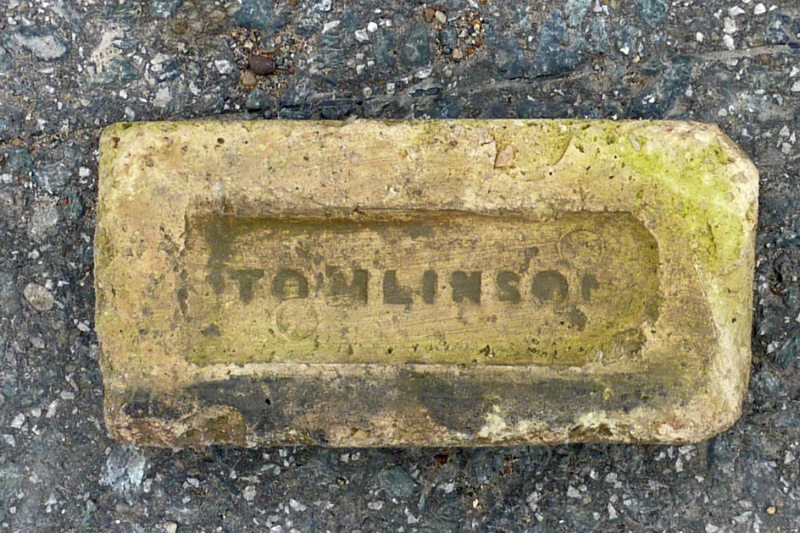
George Henry Tomlinson is recorded in the 1881 Census as living in Gringley on the Hill aged 37. Born in Gainsborough in 1844 his occupation is given as brick manufacturer employing 10 men & 1 boy. George is listed as brickmaker in Kelly's 1881 to 1904 editions at Gringley on the Hill.

 © Crown Copyright. Reproduced with permission of NLS/Ordnance Survey 1900.

1900 O.S. map showing the location of the two brick works next to the Chesterfield Canal at Gringley. With just having access to more maps I now think that George Tomlinson owned the Lock Brickworks from 1881 to 1904. This works is recorded on the 1875 map but is not recorded on the 1912 map. Therefore leading me to believe George owned the Lock Brick Works.


The Shaw Brick Works is recorded on the 1875 map right through to 1946 map & was owned by the Hill family who are listed in Kelly's 1908 to 1916 editions at Gringley. There is also an entry for Hill Brothers, Gringley in the 1941 edition. One can only assume that the Hill family continued to operate their Gringley works between these dates unless the site was mothballed until 1941. The date when this works closed is unknown.
As previously wrote the Hill Brothers also operated another brickworks in nearby Misterton & I have trade directories recording the Hill family at Misterton between 1881 & 1941. 

As well as George Tomlinson & the Hill Brothers working in Gringley I have found that both Charles Barrowcliff & S. Marples are listed in trade directories in 1855 & I have a photo of one of Charles Barrowcliff's bricks. 

Photo by Frank Lawson.

Found in Gringley on the Hill by Frank this CB brick was made by Charles Barrowcliff junior who is listed as brickmaker in Gringley on the Hill in Kelly's 1855 edition. Charles junior was also a coal dealer & had followed in his father's footsteps in the two businesses with Charles senior also listed as a timber merchant & by 1853 Charles senior is recorded as "gentleman". 

S. Marples is listed in Kelly's 1855 edition as brickmaker at Gringley.  

 © Copyright Graham Hogg and licensed for reuse under this Creative Commons Licence.

This building & chimney are still standing at the former Shaw Brick Works at Gringley.


Worksop


© Crown Copyright. Reproduced with permission of NLS/Ordnance Survey 1900.

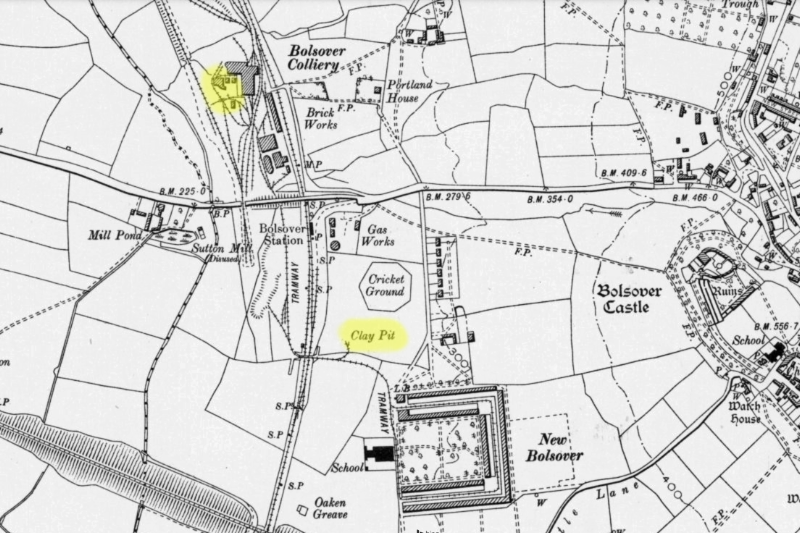
The Chesterfield Canal also passes through Worksop & the Low Grounds Brickworks was built next to the canal. I have established from 1875 & 1885 maps that the Low Grounds Brickworks consisted of two yards with the purple coloured yard last shown on the 1900 OS map above & with it being incorporated into the yellow coloured yard in 1904. In 1925 the yellow marked yard also consisted of two yards & I will explain that later. I have also established that the Low Grounds yards where part of the hamlet of Haggonsfields.
For later reference, the road that I have marked in red is Sandy Lane & runs from Worksop town centre (off to the right of this map) & Shireoaks Road I coloured green. I have also coloured the access roads to these brickworks in the same colour as the road.


In Whites 1896 edition B. Garside & Son are listed as Brick Makers & Timber Merchants at Priorswell Road & Low Grounds Brickworks. This is the only entry for this company & I think that this company owned the purple marked yard at this date.

I next found two brickmakers by the name of Whittaker, Thomas & Edward in 1890's trade directories at Worksop & both are listed at either Low Grounds or Haggonsfield. Up to yet no bricks have been found with the Whittaker name stamped in them. I have established Thomas & Edward were brothers, but I start by telling you about their father William (b.1818) who in the 1851 census was a journeyman tile maker living in Worksop & married to Mary. They had one daughter & three boys, Thomas, Edward & George & all three boys were to become brickmakers in Worksop. In the 1861 census William is listed as a tile maker in Worksop residing in Haggonsfield, however the 1871 census records he is now a brick & tile maker aged 56. I am assuming William will have been working at a brickyard rather than owning a yard himself. 

Eldest son, Thomas Newton Whittaker, (b.1845) in the 1861 census aged 16 is recorded as a brickmaker & still living with his father & mother. The entry in 1871 census is same as the 61 census, however the 1881 census records Thomas was now married & working as a brickmaker in Ecclesall Bierlow, South Yorkshire (now part of Sheffield). We next find the 1891 census records him back in Worksop brickmaking. I continue with Thomas' career a little later.

Second son Edward (b.1851) aged 20 in the 1871 census is listed as a brickmaker & also living with his father & mother. I have no more census listings for Edward, but we know from the 1890's trade directory entries he was still brickmaking in Worksop. 

Third son George (b.1853) aged 18 in the 1871 census is also listed as living with his father & mother & being a brick & tile maker. Again with no more census listings on the website that I use or trade directory listings for George, the trail goes cold.
 
So Edward Whittaker is listed as brickmaking with the address of High Grounds, Worksop in Kelly's 1891 edition & this may have been where he lived. Whites 1894 edition lists him at Haggonfields, however Edward Whittaker had died on the 25th of December 1893. A 1890 "For Sale Notice" for the two Low Grounds brick yards records Edward as tenant of the yard which I have coloured purple on the 1900 OS map above. The two brick yards at Low Grounds in the late 1800's lay in the hamlet of Haggonfields & the land they were situated on was owned by the owners of Worksop Manor. Today the hamlet of Haggonfields lies within the village of Rhodesia. Thomas N. Whittaker in Kelly's 1891 edition is listed as brickmaking at Low Grounds, Worksop. Whites 1894 edition also records Thomas as brickmaking at Haggonfields. Kelly's 1900 & 1904 editions lists Thomas again at Low Grounds, Worksop & from the 1890 "For Sale Notice" Thomas is recorded as being the tenant of the yellow yard on the 1900 OS map above. 


Many Thanks to Simon Patterson for allowing me to photograph this 1890 Sale Catalogue which records Thomas Whittaker was running the yellow yard & Edward Whittaker was running the purple yard. This Sales Catalogue also includes other buildings being sold by the owners of Worksop Manor. This now begs the question on who purchased the land the brick yards were situated on & did they get sold ?

Now back to Thomas Whittaker & the 1901 census records him as a Brick Manufacturer in Worksop, so this begs the question did Thomas purchase the yard he worked ? It appears to me that this happen as we find Garside & Son were operating the purple coloured yard in 1896.

We next find Thomas aged 66 in the 1911 census was a widower & living with his married daughter Gertrude & his trade is given as a Brick Burner, so had Thomas' circumstances changed & he was once again an employee ? Thomas died on the 3rd of February 1915 aged 70.


 Worksop brick in the Dave Penney collection, photographed by MF. 

We next find that the two Low Grounds brick yards were combined & the purple yard had become the clay pit to the yellow works by the 1912 OS map. The Low Grounds Brickworks was now owned by the Worksop Brick Company & the company first appears in Kelly's 1904 edition listed at Shireoaks Road, Worksop. Graces Guide records that the company name of the Worksop Brick Co. had been registered in 1900. Kelly's 1904 entry for the company is repeated in subsequent editions until the 1916 entry when there is the addition of Charles James Saunders as Managing Director. 
C.J. Saunders also owned two brickworks in Chesterfield & I have written about these works in my Chesterfield post. 
The next Kelly's trade directory in 1922 now lists George W.M. Turner as Managing Director. Then in the last two entries in Kelly's 1925 & 1928 editions it is just Worksop Brick Co. 
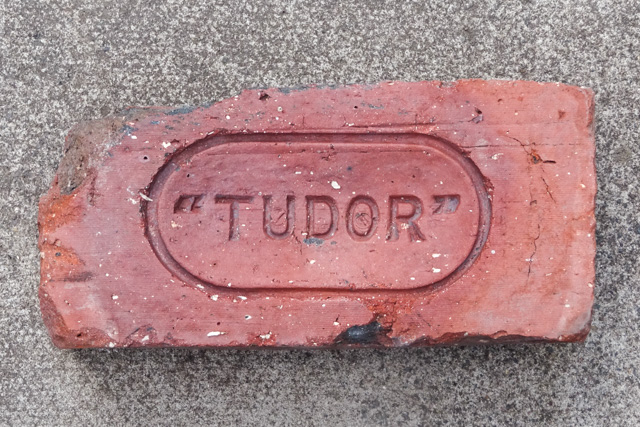
Photo by Simon Patterson.

Simon's cousin Scott found this Tudor brick on the site of the old Worksop works & with it having the same frog as the Worksop brick there is good chance that the Worksop Brick Co. made this brick.

This is were things get a little bit complicated, but hopefully I can explain from the info found. 
I next found entries in Kelly's 1925 & 1928 trade directories for The General Refractories Ltd. Sandy Lane Brickworks, Shireoaks Road, Worksop with Frank Russell as Managing Director.  G.R's Sandy Lane works is the same works as the works belonging to the Worksop Brick Co. The 1912 OS map below shows the Low Grounds Brickworks had two entrances one on Shireoaks Road (coloured green) & the other Sandy Lane (coloured red) & new buildings are now shown on this site at this date, also the works was connected to the railway network. 

© Crown Copyright. Reproduced with permission of NCC/Ordnance Survey 1912.

I then found in Grace's Guide that General Refractories Limited of Sheffield, formed in 1913 became a major shareholder in the Worksop Brick Co. (possibly around 1922) & the production of red bricks & refractory bricks/products for the steel industry were produced side by side under the two company names until 1929 when the Company was rebranded just as General Refractories.  Kelly's 1932 T.D. only lists General Refractories at the Low Grounds Brick Works, Shireoaks Road, Worksop with Frank Russell as M.D. The company was only producing refractory products from this date. General Refractories entry continues until the last available trade directory in 1941. In April 1967 General Refractories Ltd acquired the shares of John Stein's refractory business based in Scotland & the new company was re-named GR Stein. Then in 1970 Hepworth's acquired GR Stein. After several more changes in ownership - Premier & then Cookson PLC in 2000.  Cookson's then operated the Worksop works as part of it's Vesusvius Refractories division until it's closure in December 2005.

Update 13.3.16.
A visit to Nottingham Archives last Thursday has revealed a document in the form of a Prospectus outlining the formation of a new company from The Worksop Brick Co. to The Worksop Tile & Refractories Ltd. Dated 29th February 1928. 
This very lengthy document contains everything about what the "New Company" is taking over from the "Old" & lists many activities the "New Company" will engage in. The core of which is bricks, tiles & refractory products, but the list is endless. Another main point is to acquire the land situated at Sandy Lane which is leased to Arthur Beardmore for a term of 21 years from the 30th november 1927, but then the document goes on to say that they are seeking permission to dig clay from the land leased to Mr. Beardmore who is recorded as living at James Street, Worksop. Mr. Beardmore's name later appears on the list of Shareholders which also includes Frank Russell, Brick & Refractory Manufacturer & M.D. living at Auldam House, Worksop, John Peter Ruault, London & John Gillies Shields, Isley Walton. All parties having 2,000 shares each. 
The list of property included in the change over is one 16 chamber Hoffmann kiln, two down draught kilns, engine & boiler house, mill house, workshops, store house, drying sheds & 3 cottages. The site is served by a railway siding from the Great Central Railway Line & the kilns have the capacity of producing 6 million bricks & 500,000 tiles per year.

Please note that this "New Company" - Worksop Tile & Refractories Ltd; appears not to have been established with the Sandy Lane brickworks being recorded as being fully owned by General Refractories Ltd in 1929 with Frank Russell now recorded as Managing Director of General Refractories Ltd. 

Photo by Ian Suddaby.

This Magnesia BCM GX brick has a good tale to tell. First it was found in December 2022 by Ian Suddaby while searching through the cinders & furnace debris at Dalzell Steelworks in Motherwell & although it's a standard imperial sized brick, it weighs 6kg. Then Mark Cranston found two newspaper articles revealing who made it & where it was made. A 10th of March 1930 Sheffield Daily Telegraph advert advertises General Refractories Ltd. of Sheffield were selling many types of refractory products of which Magnesia bricks was one of them & the company was using the British Commercial Monomark postal address of GX = Genefrax which was used by General Refractories of Genefrax House, Wicker Arches, Sheffield up to 1933/4, after which it was changed to Genefax House. British Commercial Monomark Ltd was a company based in London (established in 1925) which provided companies with a London postal address & from were the companies mail was sent to & then forwarded on. So in a nutshell the use of the BCM postal address was an early form of the Post Code that we used today for our letters & parcels. Now on to where these bricks were made & the answer was found in an article in the Sheffield Daily Independent newspaper dated 6th of September 1930. The article reveals that the Worksop Brick Co. which was associated with General Refractories Ltd of Sheffield had sent a whole tram of these specially manufactured magnesia bricks from the Worksop works to Tunis, where they were going to be used in the lining of Zinc Reduction Furnaces. Please note GR actual took over the Worksop Brick Co. in 1929, but may have continued to use the original name until 1932 when we do know the Sandy Lane Works was operating under the GR name. I have also found a May 1931 newspaper article which states GR exported more of these magnesia bricks to South Africa to be used in the erection of a Copper Smelting Plant, so these magnesia bricks may well have been made at Worksop. However I do have to note that GR had a brickworks in Sheffield making many types of refractory products as well being in association with another company in Ambergate, Derbys which operated under the name of Midland Refractories Ltd.  

Found by Steven Tait in the River Tees in July 2023, this Coroma brick adds another BCM GX variation to the list of bricks made by General Refactories. It is unknown if this brick was made at Worksop, but with GR having two more works in Sheffield it is highly likely theses Coroma bricks were made in this area. The 1930 GR advert below lists the Coroma range of bricks, it also records the Trade Mark & monomark - BCM GX. 

Photo by Steven Tait.

Sheffield Daily Telegraph - Monday 10 March 1930 Image © National World Publishing Ltd. Image created courtesy of THE BRITISH LIBRARY BOARD.

Photo by Ian Suddaby.

Photo by Chris Tilney.

These refractory brick finds by Ian Suddaby & Chris Tilney in March 2023 & me finding this excerpt from a speech given by Frank Russell, Chairman of General Refractories, newspaper dated April 1937, reveals these Diazite bricks were made by GR at their entirely mechanised model works at Worksop. 

 South Yorkshire Times and Mexborough & Swinton Times - Friday 02 April 1937 Image © Johnston Press plc. Image created courtesy of THE BRITISH LIBRARY BOARD.


I have also found in trade directories & an article at Retford Library that there were three more brickmakers working at the Haggonfields/Low Grounds/Sandy Lane brick yards before 1890. Haggonfields, Low Grounds & Sandy Lane being the different names for the same site.  Daniel F. Anderson (purple marked yard) is listed in Kelly's 1881 edition at Sandy Lane & William Traunter (yellow marked yard) is first listed in Kelly's 1876 & 1881 editions at Haggonfields, then the entry in Kelly's 1885 edition reads William Traunter, Sandy Lane, Worksop. 
Then from the article at Retford Library, William Traunter is recored as employing fifteen workers in 1851, thirty five in 1861 & twenty in 1871 at his Haggonfields Low Grounds yard. Traunter operated this yard between 1844 & 1888. In the same article G.M. Unwin is also recorded as owning a brick yard at Low Grounds (purple marked yard) between 1844 to 1872, employing seven workers in 1851.

Timeline for the two Low Grounds brickworks from trade directory entries & other sources. Please note these are not exact start & finish dates of each brickmaker or company. 

The yellow marked yard on the 1900 map.
1844 to 1888 William Traunter.
1890 to 1904 Thomas N. Whittaker.
1904 Worksop Brick Co.
1925 Worksop Brick Co. & General Refractories Ltd.
1932 to 2000 General Refractories Ltd., then G.R. Stein, then Hepworth, then Premier & Cookson.
2000 Vesusvius.
2005 Closed.

The purple marked yard on the 1900 map.
1844 to 1872 G.M. Unwin.
1881 Daniel F. Anderson.
1890 to 1894 Edward Whittaker
1896 to 1904 B. Garside & Son.
The site of this yard was incorporated into Worksop Brick Company's works around 1904/5 as the Low Grounds Brickworks which is next shown as one works on the 1912 map above.


In November 2024 Kim Hulme sent me this William Traunter bill (number 1866) from his collection with permission to add it to this post. Now the address of the brickyard is given as High Ground Brickyard, so it appears there was a brickyard next to High Grounds Farm (see 1900 map above) & William operated this yard before moving to the Low Grounds yard. William died in January 1888 & a newspaper article states he had been brickmaking for 50 years. So it appears he was at this High Ground brickyard between 1838 & 1844.  


If you have ever wondered how white bricks get their colour like I did while I was writing this post. The answer can be found at this link & it explains the different processes in achieving different types & colours of bricks. Pages 25 to 31.


Retford


I first wish to thank Bassetlaw Museum for allowing me to photograph their local brick & tile collection from which I now record five previously unknown Retford brickmakers to the post.


Although hard read this lightly stamped brick says Philips & Roberts, Retford. Although I have not found any trade directory entries for this company, I have found individual trade directory entries for these two brickmakers. William Phillips is first listed in Whites 1853 edition at Spital Hill, Retford, then in Whites 1864 edition at West Retford. The trade directories spell his name with two L's & the brick has only one, but you find many misspellings on bricks during this period of time. Retford Library where I viewed the trade directories told me that West Retford was a different location in Retford to Spital Hill, so I assume William had moved his works to West Retford by 1864. William's partner on this brick, J. Roberts is listed at Carolgate, East Retford in Kelly's 1855 edition. 
On OS maps dated 1875 & 1887 I have found that the Spital Hill brick works is marked in a field called Balk Field at the top of Spital Hill opposite the Workhouse & not to far away on Bolham Lane just off Moorgate is marked a brick & tile works which I am taking to be in West Retford with the map saying West Retford just to the left of this site. I have used two 1887 maps to show the locations of William Phillips yards in 1853 Spital Hill & 1864 West Retford. 


© Crown Copyright. Reproduced with permission of NCC/Ordnance Survey 1887.

I have coloured Spital Hill & the brick yard both in yellow & William Phillips is recorded as being at this yard in 1853. Also to note this yard had it's own wharf on the Chesterfield Canal in 1887. 

© Crown Copyright. Reproduced with permission of NCC/Ordnance Survey 1887.

Situated a little north of Spital Hill, just off Moorgate we find marked on the map above the Brick & Tile works on Bolham Lane which was owned by William Phillips in 1864. 


A mint example of a floor quarry tile made by Jesse Smith. Jesse is listed in Kelly's 1885 edition at Bolham Lane, Bolham, Retford & then at Moorgate in Kelly's 1891 edition. I am taking it that both these two locations are the same yard. The 1884 map below shows that there were two brickworks on Bolham Lane & I believe Jesse own the works which was nearest to Bolham village & I have coloured that yard green. This brickworks must have closed not long after 1891 as only the clay pit is shown on the 1897 map (see map in Ogle entry).

© Crown Copyright. Reproduced with permission of NLS/Ordnance Survey 1884.

Photo by Frank Lawson taken at Bassetlaw Museum. 

George Ogle is listed as brick & tile maker at Moorgate/Bolham Lane in Kelly's 1881 edition to it's 1900 edition. George's works was the one which was nearest to Moorgate on Bolham Lane & I have coloured this yard yellow on the 1897 map below. Also to note on this map is that Jesse Smith's yard no longer shows only the clay pit (green).

Advert from White's 1885 edition.

Before George Ogle moved to his Moorgate yard he is listed in Kelly's 1876 edition as operating a brick yard at Little Gringley, Clarborough, Retford. 

© Crown Copyright. Reproduced with permission of NLS/Ordnance Survey 1897.

© Crown Copyright. Reproduced with permission of NLS/Ordnance Survey 1912.

The 1912 map above shows that the Moorgate/ Bolham Lane brickworks had expanded since being owned by George Ogle & I have found that the new owner was Thomas Hopkinson. Thomas Hopkinson is listed in Kelly's 1912 edition through to it's 1932 edition at the Bolham Lane brickworks. As yet no bricks have been found made by Thomas.


Tom Hind (& Son) is listed in Kelly's 1885 editions as brickmaker at Strawberry Terrace, Pottery Lane, Retford & then in the 1891 & 1895 editions the entry is just Strawberry Terrace, Retford. So I am taking Strawberry Terrace as his home address & Pottery Lane as his works. This yard is shown on the 1875 OS map below & I have coloured Tom's yard in yellow, Pottery Lane in two shades of green & the row of houses which I believe was Strawberry Terrace at this date in brown. 
  
© Crown Copyright. Reproduced with permission of NCC/Ordnance Survey 1875.

I then find on the next map dated 1887 that his brick yard is no longer shown, hence the later trade directory listings for only Strawberry Terrace, Tom's home address. So that begs the question where was Tom brickmaking with him being listed in trade directories dated 1891 & 1895 ? That question at this moment in time I cannot answer.

What I can add is that today the darker green section of Pottery Lane is now Caledonian Road & the lighter green section up to the yard is Strawberry Road. Also the houses of Strawberry Terrace still stand & just after these houses there is a small cul-de-sac called Hind Street (coloured red on the 1875 map above). Hind Street is shown built on the 1887 map, so one can assume that this street was named after Tom. You can also speculate that Tom's bricks were used to build these houses ?  


Harworth


© Crown Copyright. Reproduced with permission of NLS/Ordnance Survey 1900.

Shown on the 1900 map above this brickworks at Harworth was owned by Viscount Galway of Serlby Hall who was the primary land owner in Harworth & his initials are shown on the brick below with Harworth on the reverse. The year this brickworks had been established is unknown as there are no trade directory entries for this works. All we know is that it was in production around 1900 as shown on the map above. The brickworks must have closed before 1920 because Harworth Colliery was sunk on the same site replacing the brickworks in that year.


 Photos by Frank Lawson.


I wish to thank the following people.

Frank Lawson, fellow collector for the use of his excellent photos.
Chris Shaw - photos
Penny Hawkins - Cocking photos 
Chris Page for suppling me with his Cowling article. Chris is a member of the Society for Lincolnshire History & Archaeology & I have pasted their link below if you wish to read about the Society & the work that it promotes.
These links contain the articles about Walkeringham brickworks compiled by W.A. Los & supplied to the Retford Times by Mr Gee in 1982 & was the source of some of the information compiled in this post.


Nottingham City Council & National Library of Scotland for access of their Ordnance Survey maps.
http://info.nottinghamcity.gov.uk/insightmapping/#
http://maps.nls.uk/geo/explore/#zoom=13&lat=53.2330&lon=-0.5638&layers=1

Bassetlaw Museum, Retford for giving me permission to reproduce my photos taken at the Museum which are in the Retford section.
http://www.bassetlawmuseum.org.uk


Sunday, 14 February 2016

Samuel Oxley, Brickmaker, Hucknall under Huthwaite, Notts.

Samuel Oxley is recorded as a brickmaker in Hucknall under Huthwaite in Nottinghamshire in Kelly's 1885 to 1925 trade directories & from information found in census records, the works may have been run by other members of his family as Samuel would have been 75 in 1925, however he would have been overseeing the business. Samuel died in 1931 aged 81.

Thought I would clarify Hucknall under Huthwaite next. When you see the name Hucknall today you automatically think of Hucknall near Nottingham which is six miles north of the city, but this town is Hucknall Torkard. On the other hand Hucknall under Huthwaite today is just known as Huthwaite & this village is a part of Sutton in Ashfield in the District of Ashfield. When my dad lived in the village in the 1920's & 30's his postal address was Huthwaite, Mansfield. 

Finding a named brick made by Samuel Oxley has so far eluded me, but it has not been for the lack of searching. Many of the houses in The Falls area were built between 1879 & 1917 as shown on the maps below & I suspect they were built using Samuel's bricks.  My only conclusion is that Samuel did not stamp his bricks. On one of my foray's into Huthwaite I had gone at the right time when a house on New Fall Road was being renovated, but alas all the bricks which had come out of the house had no name stamped in them & the local builder who was doing the work said he had never seen any bricks marked Oxley. 
Samuel is recorded as later living on New Fall Road in 1912 & I have coloured this road red on all three maps below. Also I have coloured the road which leads down to Samuel's works in yellow & this was Newkiln Lane, it was later renamed Skegby Road as shown on the 1917 map.

© Crown Copyright. Reproduced with permission of Ordnance Survey 1879.

First I would like to thank Marg at Sutton Library for supplying me with information from various census records about Samuel Oxley & the different members of the Oxley family who were either brickmakers or brickmaker labourers who may have all worked at the yard. In 2021 I revisited the census records & added new info.

I first start with info on Samuel's father Charles who was also a brickmaker. Charles Oxley b.1821 in the 1841 & 51 census is listed as a brickmaker in Conisborough, Yorkshire. By 1861 Charles & his family had relocated to Nether Moor, Tupton near Chesterfield & in the census he is listed as a Coal labourer with four sons, Joseph b.1847, Charles junior b.1849, Samuel b.1850 & Arthur b. 1855, the three eldest are listed as labourers with Arthur a scholar. The three eldest sons were born in Sandall near Doncaster & Arthur was born in Armthorpe, Doncaster. I mention these locations because later census record other towns for their birth which is incorrect. 

In the 1871 census with part of the Oxley family now living at Hagg Bridge, Tupton, Derbyshire. Charles now aged 50 together with sons Joseph 24 & Arthur 16 are all listed as brickmakers. By the 1871 census Charles' other sons Charles junior & Samuel were brickmaking in Huthwaite. Back in Tupton we then find Joseph continues to be a brickmaker, living in Grassmoor in the 1881 & 1891 census, then becoming a Coke Filler/Cooler in the 1901 & 1911 census & still living in Grasmoor. By 1881 Arthur had become a Draper. Their father Charles in the 1881 census is listed as a Timber Dealer & Inn Keeper on Chesterfield Road, Hasland. Charles died on the 14th February 1884.     

So back to Samuel Oxley & in the 1871 Census aged 21 together with his brother Charles Oxley, aged 22, both are listed as brickmakers lodging with Henry Humphrey (miner) & his wife in Huthwaite, the exact address is not given. It is unknown at this date if the brothers were brickmaking at the brickworks shown on the 1879 OS map above because from receiving information on another brick making family in Huthwaite there may have been a brickworks at the New Hucknall Colliery on Common Road, so the brothers may have worked there first before setting up the brickworks on Newkiln Lane (Skegby Road) as per 1879 map. Another option is that someone else owned the Newkiln Lane works in the 1870's & the brothers just worked there. If I do find evidence the brothers did established Newkiln Lane brickworks around 1871, I will update the post. 

Samuel Oxley in the 1881 Census is recorded as a brickmaker, living on Falls Lane, Huthwaite, aged 31 & married to Mary with two daughters & one son, Frederick Charles. The couple went on to have another son Arthur born in 1883. Samuel is recorded as a widower in the 1891 census, so Mary had passed away sometime after the birth of Arthur & 1891. Samuel did not re-marry. Meanwhile brother Charles in the 1881 census was on his own back in Yorkshire working as a navvy. However the 1891 census does record Charles back in Huthwaite as a Brickmaker. So I have now come to the conclusion that while Charles was in Yorkshire Samuel established his own brickmaking business at the Newkiln Lane works around 1885, operating it in his own name as per Kelly's directory. After which Charles returned to Huthwaite to work for his brother at his works.   

These are the trade directory entries that I have for Samuel - Samuel Oxley, brickmaker, Hucknall-under-Huthwaite, Mansfield in Kelly's 1885, 91, 94, 1900, 04 & 08 editions. Then the listing is Samuel Oxley, brickmaker, New Fall Street, Huthwaite, Mansfield in Kelly's 1912, 16, 22 & 25 editions. Samuel was also a Beer Seller between 1885 & 1904 & he is also recorded as a Boot Dealer in the early 1900's in trade directories.

Samuel's son Frederick Charles Oxley b.1879 in the 1901 census aged 22 is listed as a brick yard labourer living on Columbia Street, Huthwaite & the 1911 census records Frederick as a brickmaker (worker) at the same address, so Frederick had joined his father at the works. Samuel's other son Arthur is only listed as a brickmaker aged 18 in the 1901 census. The 1911 census records Arthur as an Engine Driver & living with his sister Elizabeth who had married George Featherstone, a Brick Setter, all living on Unwin Street, Huthwaite. I have been told houses on Unwin Street were built by Samuel for his family members to live in. I am assuming with George's trade he was working for Samuel & was Arthur's Engine Driver job operating a static steam engine at the brickworks rather than on the railways. I have come across this job description before & I associated it to a brickworks on that occasion also.   

As well as being listed in the 1891, 1901 & 1911 census as a brickmaker Samuel's brother Charles was also a baker. Some of Charles sons also became bakers, but two sons became brickmakers at Samuel's works. In the 1891 & 1901 census Charles was living on Sutton Road, Huthwaite, with him then living on Unwin Street in 1911. Charles' son Charles Edmund b.1874 in the 1891 census was a Brickmaker living with his father. He then became a Coke Drawer living in Hasland in the 1901 census with a return to Huthwaite by the 1911 census aged 37 & now a Brick Yard Labourer. Charles' other brickmaking son Harold b.1880 is listed as living with his father & a Brickmaker (worker) in the 1911 census aged 31.

So from my findings it appears Samuel established his brickmaking business around 1885, was then joined by his brother Charles shortly afterwards. With Samuel still in charge he closed the works around 1925/6. Taking into account Samuel's age I am assuming Samuel's son's Frederick Charles & Arthur & his nephew's Charles Edmund & Harold (Charles' sons) played a part in helping Samuel run the brickworks in his later life. The 1921 census when released (early 2022) should provide me with info on who was still at the brickworks with Samuel. As previously written Samuel passed away in 1931 aged 81.

 © Crown Copyright. Reproduced with permission of NLS/Ordnance Survey 1900.

During one of my recent brick sorties into Huthwaite I spoke to a gentleman who together with his father had been coal merchants. Now retired he remembers when he was young & his father was not delivering coal, they would go to Riddings Brickworks at Jacksdale were they would load his fathers lorry up with bricks to deliver to local building sites.  My next question was "Have you ever seen any bricks stamped Oxley." He replied, " The brickworks used to be over there where the Brierley Park Visitors Centre now stands, but I have not seen any bricks marked Oxley." The Visitors Centre was built just to the right of the marked Brick Works buildings on the map below & the park was created from the former brickyard & the nearby former Sutton Colliery site located a little further north in Stanton Hill. Walking Trails also connects three other former pits sites to the park mainly via old railway routes. As to the name of Brierley Park, Sutton Colliery was also known locally as Brierley Colliery from the fact that miners from Brierley Hill in the West Midlands came to sink & then work at the pit in 1874. These miners christening the colliery Brierley & the name stuck.

© Crown Copyright. Reproduced with permission of Ordnance Survey 1917.

Another little bit of local history is the use of the vernacular term of Mucky Huckna'. This refers to the village of Hucknall under Huthwaite & not to Hucknall Torkard as a lot of people think & I have found on the web that a lot of "old timers" in Hucknall Torkard have claimed it as their own also, but I'm afraid it belongs to Hucknall under Huthwaite. 
The term was used to describe the village as a coal mining village where most of it's miners worked at the New Hucknall Colliery & lived in the village in the 1870's. The men would come home from their shift covered in coal dust, hence the term mucky, no pit baths in those days. 


Get the tin bath out & fill it with hot water Ma. 
- I feel cleaner now !

Mucky Huckna' could have also been used to describe the foul or colourful language often used by some of the miners in their daily lives. You can read some readers remarks about Mucky Huckna' at this link.
Also about the sinking of New Hucknall Colliery at this link.

I have also found a 1707 reference to the village being called Dirty Hucknall & this name for the village may have been corrupted to Mucky Hucknall with the coming of the coal pits & it's miners.
Dirty Hucknall was a reference to the poorly made roads in the village & because the village was built on clay these roads soon turned to mud during bad rainy weather. Therefore your clothes got mucky if you traveled on these roads during bad weather.
The article which contains this information can be read at this Link. I have been told of another variation in Dotty Huckna' also meaning dirty. 

So there you have it, I have not yet found a Oxley marked brick, but my research has unearthed a wealth of knowledge.

If you have got or you find a Oxley marked brick, please let me know, my e-mail address is on the contact tab, as I would like to come along & photograph it for my post & if by chance you have one spare, I would dearly like to own one. Many Thanks Martyn.

Searching trade directories has revealed another brickmaker working in Huthwaite & the listing from Kelly's 1885 edition is Robert Wright, Hucknall under Huthwaite. The location of his yard is unknown unless he worked with Samuel Oxley ?


Thursday, 3 December 2015

North East Derbyshire Brickworks


John Hall Gosling


John Hall Gosling was born in 1813 & the 1851 census records him as a farmer of 82 acres in Barlborough, however a 1854 mining record shows he had opened a colliery situated just off Barlborough Lane (now Road). Then Kelly's 1855 edition is the first directory recording him as a brick maker. To add to the list of jobs done John I found he was the Inn Keeper at the Rhodes Arms Inn, Barlborough in 1853 & he is listed in the 1861 census as still being an inn keeper. So with the help of Mark Lomas I think I can say John Hall Gosling owned the brickworks which I have coloured green on the 1875 OS map below with it having access from Barlborough Lane (red) next to his bell coal pits. Please note the deep mine of Barlborough Colliery shown to the south of John's brickworks on this map was sunk by the Staveley Company in the summer of 1873 & had nothing with John's mining business. I have come to the conclusion with John being primarily a farmer & inn keeper he was employing a brickmaker to make his bricks. I then found an 1873 newspaper reference to his second son Frederick b.1839 as running the coal pits for him. John's first son, George John Gosling was a Grocer for most of his life before becoming a Colliery Weighman in the 1891 census.  

© Crown Copyright. Reproduced with permission of NLS/Ordnance Survey 1875.

John Hall Gosling is next listed in Kelly’s 1864 to 1881 editions as brickmaker in Barlborough. These entries are followed by an entry in the 1885 edition of the Barlborough P.O. Directory as brickmaker. 


With me finding this IFG brick in Derbyshire I am taking it to have been made by John & Fredrick Gosling. The letter I was used in this font to represent a letter J. I then found second son Frederick is listed as a brickmaker in Kelly's 1887 & 1891 editions in Barlborough & it appears Fredrick took over the full running of his father's brickworks between 1885 & 1887. The Gosling brick below may have been made by Fredrick. I just note that all of the census records for Fredrick only record him as a farmer & from Mark Lomas's findings this was at a different farm to his father's in Barlborough. 

Although trade directories record John Hall Gosling as a brickmaker/owner until 1885 he had moved to Brampton, Chesterfield by the 1871 census which records him as a Colliery Owner in Chesterfield. This entry is then repeated in the 1881 census. By the 1891 census John is recorded as living on his own means. John died in Chesterfield in 1892. This Barlborough Road brickworks is last shown on the 1897 map, but doesn't look active.


Charles Robinson


Charles Robinson of Barlborough is recorded in the Brick & Tile Makers Section in Kelly's 1908 edition. Further research has revealed that Charles Robinson was the Managing Director of the Barlborough & Cottam Brick & Tile Co. from 1899, so it appears Robinson had some bricks made with his initials stamped in them when he is listed as the owner of the Cottam Works in 1908. Please see next entry for the location & more info on the Cottam Brickworks.


Barlborough & Cottam Brick Co.
Barlborough Brick Co.

Cottam Colliery, Barlborough was sunk in 1853 & was owned by Appleby & Co. then later by the Eckington Coal & Iron Co. The 1875 OS map below shows the associated brickworks was next to Cottam No.2 pit (yellow) which was also known as Cottam "New Colliery". The 1899 OS map shows the colliery as disused & the brickworks are no longer shown. So far no bricks have turned up made these two companies.

© Crown Copyright. Reproduced with permission of NLS/Ordnance Survey 1875.

Photo taken at the Barlborough Heritage Centre.

Photo by Frank Lawson.

An article in the Derbyshire Times dated 30th of September 1899 records that fifteen acres of land at Cottam, Barlborough had been leased to the Barlborough & Cottam Brick & Tile Co. for a term of 30 years from the 25th of March 1899. A May 1911 Derbyshire Times newspaper article reports that in 1899 Charles Robinson took up the position of Managing Director of the Barlborough & Cottam Brick & Tile Co. & was instrumental in the re-opening of Cottam Pit. Known as the Cottam Brickworks I have coloured this works yellow on the 1914 OS map below. Please note Cottam is mis-spelt as Cottom on the first brick. The Barlborough & Cottam Brick & Tile Co. Ltd., Barlborough, Chesterfield is listed in Kelly's 1912 & 1916 editions. However articles in the London Gazette record that the Barlborough & Cottam Brick & Tile Co. went bankrupt & was wound up on the 14th of March 1912. It then appears Charles Robinson personally took over the brickworks & was operating it as the Barlborough Brick Co. A May 1916 newspaper article records Charles Robinson, Manager of the Cottam Brickworks was appealing against three of his workers being called up to go to war, two were exempted conditionally, but the third was given his orders to report for duty. Cottam Colliery which is also recorded as Hazel Colliery had closed in 1914. A 1917 newspaper article still records Charles Robinson as a brick manufacturer, however info on the web records the Cottam Brickworks had closed in 1917. I then found Charles Robinson was operating this brickworks again in 1926 & had formed a Limited company with the backing of new investors.  

The Sheffield Telegraph dated 5th April 1926 records a new private limited company had been registered on the 29th of March 1926 called the Barlborough Brick Co. Limited. This new company with a share capital of £10,000 in £1 shares was owned by Charles Robinson JP, Westfield Lodge, Barlborough, Managing Director; R.E. Archer of the Royal Oak, Barlborough, licensed victualler & haulage contractor & T. Beighton, Brimington, public works contractor. Charles Robinson continues in the position of Works Manager. It appears this new company did not last very long with finding the London Gazette records the Barlborough Brick Co. Limited was struck off the Joint Stock Companies Register in June 1929. A search on Family Search website revealed Charles Robinson died on the 23rd of January 1929 aged 74 which resulted in the company not being formally wound up by the other investors. A Barlborough Brick Co. brick is shown after the map. 

  © Crown Copyright. Reproduced with permission of NLS/Ordnance Survey revised 1914.

Photo by Frank Lawson.


Miles Barber

Photo by Frank Lawson.

Kelly's 1855 edition records Miles Frederick Horatio Barber b.1816 as a Farmer & Contractor. In 1861 he established a brown earthenware pottery at Barlborough Lower Common manufacturing all kinds of flower pots, pancheons & sanitary pipes. The 1862 Directory of Sheffield records Miles Barber as a Contractor, Builder, & manufacturer of fire bricks, tiles, flower pots, pancheons, sanitary pipes & all kinds of brown ware at the Barlborough Field Pottery. The same directory also records him as a Farmer & Coal Master, so a very busy man. Miles Barber went on to build the 42 houses (around 1863) that once stood on Barbers Row which I have coloured green on the 1876 OS map below. His pottery/brick works stood behind these houses & is coloured yellow. The location of his works is confirmed in a For Sale Notice for Buildhurst House which is described as being on the main Barlborough to Sheffield road & adjacent to Miles Barber's brick yard. 

© Crown Copyright. Reproduced with permission of NLS/Ordnance Survey OS 1876.

Miles Barber is listed as brickmaker in Barlborough in Kelly’s 1864 to 1881 editions. Miles Barber died at the age of 68 & was buried on the 26th of May 1884. 

Photo by Frank Lawson.

As a footnote I mention the brick & tile yard which I have coloured purple on the 1876 map above. The Freehold to this yard was put up for sale by brick & tile maker Joseph Hopkinson in August 1853 who had briefly worked this yard. The notice goes on to say there was abundant amounts of clay on the 6 acre site of which only a small amount had been got. The site also contained a large amount of Moulders sand & various beds of coal. The purchaser of this yard may have been Samuel Woodhead who is recorded as brick & tile manufacturer at the time of his wedding in December 1854 & is then listed in Kelly's 1855 edition at Barlborough. Who owned this yard after 1855 is unknown. There is the option Miles Barber may have operated it at the time of this 1876 map with his yard being close by.    


Barlborough Common Brickworks.

 © Crown Copyright. Reproduced with permission of Ordnance Survey 1900.

This brickworks at Barlborough Common is first shown on the 1875 OS map, but I have not been able to find who own this works at this date. I have used the 1900 OS map above to show it's location coloured yellow. So the first bit of information found is when this brickworks was put up for sale in September 1893 & had been operated by the Lancashire, Derbyshire & East Coast Railway Co. It appears this railway company formed in 1891 took over this yard to produce the thousands of bricks needed for the construction of it's new railway line which conveniently ran past this brickworks. From the For Sale notice this works had the most up to-date machinery with it having a Clayton's pug mill & Clayton's brick press, a tile & pipe machine by Page & Son of Bedford, a horizontal engine & boiler, a 7ft clay pan with 4ft rollers, plus all the other items needed to make bricks. Surprisingly the notice did not state what type of kilns the works were using, only using the words " includes all the buildings, chimney & kilns." 

The next owner of this brickworks was Peter Newton, a Derby business man & this works is recorded in a August 1901 job advert as Newton's Brick Works, Barlborough. By October 1903 Peter Newton was now trading as the North-East Derbyshire Brick Co. with Sam Parker as works manager. This new company was registered on the 13th of October 1903 with a Capital of £20,000 in £10 shares. This new company also took over Mr. Newton's other Derbyshire brickworks at Spinkhill in the deal & I write about this works next. Then through my research I have also found Peter Newton owned the Stoney Lane Brick Co. in Brinsley, Notts. a works he took over in 1896. 

My next newspaper find dated November 1905 reports that the Highways Department had sent a report to the North-East Derbyshire Brick Co. noting the excessive damage done to Spinkhill & Huts lanes by the Company's steam traction engine. Ruts had been formed 2 to 3 inches deep & the Committee was waiting to hear back from the steam traction engine's owners of their concerns. In August 1906 William Henry Ashwell is recorded as Managing Director of the company.   

The 1914 map still shows all the brickwork's buildings, but is marked as disused, so I am assuming the works had closed due to their men going to fight in WW1. A February 1917 newspaper article recording the death by drowning of young man ice skating on the thin ice of a pond in the Barlborough Common Brickyard states the North-East Derbyshire Brick Co. still owned the yard & the Coroner suggested that the pond be filled in as soon as possible to save anyone else losing their life. It appears the works did not re-open after the war & closed for good.  


Spinkhill Brickworks

Photo by Frank Lawson.

Spinkhill is a small village, a few miles north west of Barlborough & a brickworks situated north of the village is first shown on the 1897 OS map below (coloured yellow) next to a railway line in the course of construction (green). This brickworks had been established by the Lancashire, Derbyshire & East Coast Railway Company to make the bricks needed for the tunnel at Spinkhill. This railway company had been formed in 1891 to construct a railway connecting many collieries in Derbyshire & Nottinghamshire to Liverpool in the west & the east coast ports in Lincolnshire. The first reference to this brickworks is a 1895 newspaper article stating that many kilns had been constructed to provide the bricks for the nearby tunnel & when completed Spinkhill Station would then be built at the end of the tunnel's cutting.  

© Crown Copyright. Reproduced with permission of Ordnance Survey 1897.

I then found Mr. Peter Newton owner of the Barlborough Common brickworks had also taken over the Spinkhill Brickworks from the railway company & this may have also been in 1901. Mr. Newton then formed The North East Derbyshire Brick Co. in October 1893 to run his Spinkhill & Barlborough works. The first newspaper advert found this company at Spinkhill is in the Sheffield Daily Telegraph dated 4th December 1907 for Brick Setters & Drawers by contract. Apply, Parker, Spinkhill Brick Yard, Spinkhill near Eckington. Sam Parker was also the Works Manager at the Barlborough Yard which appears to have closed in 1917.

The next reference to the Spinkhill brickworks is in 1919 when it was proposed by Eckington Parish Council to use the brickworks to supply them with bricks for their preposed house building program. The article does not say who was running the works.  

I have used the 1923 map below to show the completed railway line & station which had been opened in 1898. The brickworks looks like it was still operational in 1923, but I have not found who it was owned by.  

  © Crown Copyright. Reproduced with permission of Ordnance Survey 1923.

My next piece of info on the brickworks at Spinkhill comes from a For Sale advert in the Derbyshire Times dated 30th November 1934 for Good Hard-Burnt Bricks, Apply Spinkhill Brick Co. Sheffield. I think the brick below will have been made by this company, but no more info on this company/works has been found other than this info in the London Gazette dated 8th February 1949, registering The Spinkhill Brickyard Limited with the Companies Registration Office (Board of Trade) Bush House, Strand, London, WC2 on that date. The 1947 map only shows four small buildings & clay pits at this date, so it appears by 1947 it was only a small concern. 

Photo taken at the Barlborough Heritage Centre.


Bolsover Colliery Co.


The Bolsover Colliery Company was founded in 1889 by Emerson Bainbridge who took out a lease from the Duke of Portland at Bolsover to extract coal from the Duke's land. John Plowright Houfton was the Company's first General Manager. A brickworks was also established & houses were built for the company's workers & was locally known as "The Model Village", but marked on maps as New Bolsover. 
The brickworks was in production to around 1935 when the pit baths were built on the site and today this site is the home of Aztec Oils. During my visit to the "Model Village" I met Malcolm an ex-miner, who told me that the clay for the bricks was dug from what is now the village football fields and the bricks were stamped, BCC for Bolsover Colliery Company. 
The Colliery was Nationalised in 1947 & closed in 1993.

  © Crown Copyright. Reproduced with permission of NLS/Ordnance Survey 1900.

On this 1900 map I have marked the location of the brickworks & the site were they dug the clay from in yellow. The clay was transported to the brickworks via a tramway & miners had their coal delivered to the "Model Village" by the same tramway.


Went I visited the old colliery site in search of B.C.C. bricks I had to get permission from the company which now runs the industrial site. I found that many of the former pit buildings were still standing & had been converted to new use as industrial units. The only bricks that I found that day did not have any makers marks stamped in them, but I believe that they had been made at this brickworks as these bricks were of the same size & colour as ones in the former colliery buildings. I then met up with the Site Manager who pointed me into the direction of one of the buildings which had these intertwining B.C.C. lettered bricks set above it's windows. He also told me the location of the former brickworks which was now Aztec Oils & that the site had been the pit baths in between.  
I found the B.C.C. brick above a few weeks later in Derbyshire.


Updated 25.8.16. - Recently photographed by Frank Lawson in a West Yorkshire collection. More than likely this brick came from the works offices in Bolsover same as the ones I photographed in situ.

Photo by Frank Lawson.
Note the fancy C's same as the header brick above.


Byron Brick Co.

New Byron Brick Co.

 © Crown Copyright. Reproduced with permission of NLS/Ordnance Survey 1900.

1900 OS map showing the location of the Byron brickworks just off Carr Lane, Palterton. The village of Palterton is to the right just off this map.

The origins of this brickworks started in 1881 when Josiah Court & William Mannikin leased land from Earl Bathurst of Cirencester Park, Gloucestershire to mine coal & fireclay on the Earl's estate just north-west of Palterton village.

In 1883 the Bathurst Fire Stone & Fire Brick Co. was established by Court & Mannikin alongside their Bathurst Main Colliery. After this company had changed hands several times the colliery closed in 1891, but the Bathurst Fire Stone & Fire Brick Co. which is listed in Kelly's 1891 edition continued to produce bricks & was put up for auction twice in 1893 & 1896 as a going concern. I have found S. Pearson & Sons, Contractors had taken up the lease in 1893 & carried on running it as the Bathurst Brick Works. Then with their lease about expire in June 1896 a new notice in March 1896 was offering a new lease & I think this when A. W. Byron, a Sutton Scarsdale Estate Agent stepped in to run the brickworks, calling his company the Byron Brick Co. The first newspaper job advert for the Byron Brick Co. appears in the Derbyshire Times dated 22nd November 1899. Another job advert dated March 1907 for clay getters is the last for this company. 

Photo from the Phil Sparham Collection.

I next found a new company was running this works & a job advert in June 1907 for barrow runners to work on the setting & drawing a patent kiln was being advertised by the New Byron Brick Co. The owner of New Byron Brick Co. was Mr. James Bilson, a Bolsover Industrialist who lived in Leicester.

Photo from the Frank Lawson Collection.

All of the Byron stamped bricks which have been found so far have been red house bricks.

The New Byron Brick Co. is listed in Kelly's 1922 to 1928 editions at Palterton, Chesterfield with Joseph Chapman Wilson as manager. 

Photo courtesy of the  Fred Webley Collection.

Kelly's 1932 to 1941 editions lists the New Byron Brick Co. Palterton, Chesterfield, but now with Herbert Leslie Vass as Manager. Vass was also a Director in the company & further research has revealed Herbert Leslie Vass was the son of brick manufacturer Albert Henry Vass who between 1882 & 1907 owned several brickworks during his career in Leicestershire, Leicester, Nottingham & Chesterfield. 

James Bilson died in March 1936 while on holiday in Algiers. It is unknown at this moment in time who then ran this company. 

The 1943 Ministry of War Directory records the New Byron Brick Co's works was closed like most of the other brickworks in the country, but another source reveals the works was re-opened as there was a shortage of bricks in this area. 

I now have a very large gap to when the brickworks closed in 1967. The only bit of info found from an obituary of a Duckmanton man is that he worked at Revells brickworks in Carr Vale. Then Fred Webley has told me the Revell family were builders.  


This example of a Byron brick is the one most commonly found & possibly dates from the 1920's to the mid 1940's.

Photo by Fred Webley.

Fred Webley tells me at the age of 17 he started work at the Carr Vale brickworks in February 1967 as a kiln loader & unloader. He goes on to say this was back breaking hard work & the bricks were still hot when they came out of the kiln. However his time at the brickworks turned out to be a short one as owner Jeff Revell assembled all the men into the canteen one day in October 1967 & announced that the works was to close in two week time. I am assuming brick sales had slumped hence the works closure. Fred has sent me an image of his Byron brick with larger letters which I have never come across before, so one to watch out for.   

After the works had closed the clay pits were filled in with refuse & the land was then restored by the planting of trees which have now matured into a woodland. The Stockley Trail footpath passes this woodland & it follows the former course of the branch railway line to Glapwell Colliery.  

More information & a detailed account of the owners of this brickworks can be read at this link, from which I have compiled some of the information from for this post. 


Killamarsh Brick Co.


Killamarsh Brick Co. Ltd. at Killamarsh near Sheffield is recorded in 1899 to 1912 editions of Kelly's Trade Directory with Fredrick E. Welsh as manager.

 © Crown Copyright. Reproduced with permission of NLS/Ordnance Survey 1900.

Although not marked as a brickworks on this 1900 map, I have been told when I visited Killamarsh that the area which I have coloured yellow was the site of this brickworks off Station Road. There are brick yards marked on this map opposite Holbrook Colliery & this is also Station Road but this location may be in Holbrook. Historically Killamarsh was in Derbyshire, but today it forms part of Sheffield. 


J. Lee, Mosbro

  © Crown Copyright. Reproduced with permission of NLS/Ordnance Survey revised 1902.

Mosborough was another village which was historically in Derbyshire, but today it forms part of Sheffield. John Lee is listed as farmer, brickmaker & blacksmith at Waterthorpe, Mosborough, Sheffield in Kelly's 1887 to 1912 editions. John's works was on Station Road & I have coloured it yellow on the 1902 map above.

 Photo taken at the Barlborough Heritage Centre.

 Photo by Simon Patterson found in North East Derbyshire.


G. Haslehurst, Mosbro

Photo by Frank Lawson.

This G.H. brick was possibly made by George Haslehurst who is listed as brickmaker in Mosborough in White's 1879 edition. George may have owned the brickworks in Mosborough that John Lee is recorded at in 1887. See map in Lee entry.


Reddish, Beighton

  © Crown Copyright. Reproduced with permission of NLS/Ordnance Survey 1896.

Beighton was another village which was in Derbyshire before 1967 & with the boundary changes it became part of Sheffield. 
Edward Reddish is recorded as the owner of Drakehouse Colliery on Drakehouse Lane, Beighton, but due to thin coal reserves & water in the mine the colliery closed in 1894. Although the colliery is not shown on the 1896 map, it may have been on the same site which the brickworks was to later occupy.
So with Edward owning Drakehouse Colliery I expect that when he was listed as brick manufacturer, his brickworks was the one marked Drakehouse Brick Works on the 1896 map above, as there are no other brickworks marked on maps in Beighton at this date. Edward is listed in Kelly's Derby's 1899 & 1900 editions as Gregory - Reddish & Co. Beighton, Sheffield. Then in White's 1901 edition the listing is just Edward Reddish, Beighton. So I am taking it that this Mr. Gregory may have been part owner & possibly the brickmaker at the works. If it was John Gregory who is recorded in 1881 as a brickmaker in Sheffield, there is then a gap in trade directory dates for John until he is next listed in his own name at a new works in 1905 in Sheffield. So he may have been the Gregory in this Gregory - Reddish partnership in 1899 & 1900 ? Bricks found up to yet have only said Reddish. If I get confirmation that this Gregory is definitely John Gregory, I will update the post.


G. Milnes

Photo by Simon Paterson.

George Milnes is listed as brickmaker at Mosborough in White's 1876 edition. Milnes was followed at this brickworks on Station Road by George Haslehurst in 1879 & John Lee 1887 to 1912. Please see map in Lee entry.