Thursday, 17 November 2016

Nottingham Brickworks - part 3 - Bulwell, Babbington, Bestwood, Linby & Hucknall

Bulwell Brick Co.


The Bulwell Brick Co. is listed in Kelly's 1876 edition through to it's 1932 edition at Kett Street, Bulwell with the works closing around 1940. The company had a second works on The Wells Road & that works is listed in Kelly's from 1891 to 1916. An example of a brick made at the Wells Road works & a map showing the works location can be seen at the end of this entry.  

  © Crown Copyright. Reproduced with permission of NLS/Ordnance Survey 1875.

I have coloured Bulwell's brickworks yellow on this 1875 map & Kett Street green. So from this map it looks like the Bulwell Brick Company was in production before the 1876 trade directory entry. A listing in the London Echo records the Bulwell Brick Company was registered in late January 1874 with a Capital of £50,000 in £10 shares, so I am assuming the works was then built & in production by the end of 1874. The purple marked brickworks was Sankey's which was on Hemphill Lane (coloured red) & I write about that company later in the post.


Bulwell Brick Coy. reverse Clayton's Patent photographed in-situ in the underground water reservoir at Papplewick Pumping Station. With this brick being made on a Clayton's Brickmaking machine I think we can date this brick to when this works started in 1874 - 1875.


© Crown Copyright. Reproduced with permission of NLS/Ordnance Survey 1900.

This 1900 OS map shows that Bulwell at this date had incorporated Sankey's brickworks into their site & it also shows the extent of it's clay reserves on the other side of the railway line. The clay was brought to the works via a tramway which runs under the Midland railway line. Today the course of the former Midland railway line is now Sellars Wood Drive. Bulwell Potteries marked blue on this map was owned by Sankey's & as said this company features later in the post.


Made at Bulwell's Well's Road Works & was also photographed at the Wollaton Industrial Museum, Nottingham.

 © Crown Copyright. Reproduced with permission of NCC/Ordnance Survey 1912.

1912 map showing location of Bulwell's Wells Road Works.


Linby.


This Linby reverse Clayton's Patent & Bulwell reverse Clayton's Patent (in Bulwell entry) bricks had be used in the construction of the underground water reservoir at Papplewick Pumping Station & to my delight I was given permission to have one of the Linby bricks which had been brought up to the surface. 

Updated 17.1.19 & 26.4.19.
I have now found the location of Linby brickworks which was on Wighay Road, Linby, but at this moment in time who owned the works is unknown - please see 1875 map below. Available trade directories have also drawn a blank to it's owners. The works does not appear on the 1887 map, only the clay pit is shown. A search on the web has revealed that the underground water reservoir at Papplewick from where this brick came was built in 1879 by the Nottingham Waterworks Co. to store water from it's Bestwood Waterworks. It was also in 1879 that the Corporation of Nottingham purchased this underground reservoir & then set about the building of Papplewick Pumping Station near to the reservoir between 1881 & 1884. Therefore we can now date this Linby brick as to have been made before 1879. One could speculate that Linby Brickworks was set up by the Bulwell Brick Co. to supplement the many bricks needed for this vast undergound reservoir project with Linby Brickworks closing on it's completion. The reason why I have put forward the Bulwell Brick Co. as owning the Linby Brickworks is that the clay found at Linby is identical to Bulwell's in both colour & texture & both works used Clayton's Brick Making Machinery to make these reservoir bricks.

  © Crown Copyright. Reproduced with permission of NCC/Ordnance Survey 1875.

I have coloured Wighay Road red & the land to the north of it which includes the brickworks is within the boundaries of Linby village. The land to the south of Wighay Road up to the railway line is in Hucknall. The village of Linby is where it says St. Michael's Church & Linby Colliery is in the bottom right hand corner of this map. Today, the houses on Peverel Road have just been built on this former brickworks site & they are situated next to the former clay pit & occupy land which had not been used for brickmaking or the buildings of the works. Peverel Road was named after William Peverell the younger who granted Linby to the Church of Holy Trinity at Lenton in 1105.

 Three photos of Papplewick Pumping Station, it's underground reservoir & a Linby brick photographed in situ.


Sankey, Bulwell.


My first reference found to Sankey's Bulwell Brick Co. appears in the Nottingham Guardian dated 7th June 1877 when an individual (name not given) was selling their 25 shares in the company, Apply to Mr. Martin, Solicitor, Low Pavement, Nottingham. Sankey’s Brick & Tile Co. Ltd. Hempshill Lane, Bulwell owned by Richard Sankey is listed in Kelly’s 1881 to 1885 editions with George Kemp as manager. Bricks may have only been produced between the mid 1870's & 1885 at Hempshill Lane as Sankey’s were more well known for producing clay flower pots which they made at their Bulwell Pottery works which was situated a little further north of their brickworks on the other side of the railway line. Sellars Wood Drive now follows the course of this former Midland railway line. The year the brickworks closed is unknown, but was before 1900 as an OS map dated 1900 shows that Sankey's yard was now part of Bulwell Brick Company's yard by this date.
Sankey’s continued to produce clay flower pots until 1976 at their Pottery Works, after which they then made them of plastic. The pottery/plastic works relocated to Bennerley Road & the site of their original pottery works is now Sankey Drive. Sankey’s became part of the Fiskars Group in 1999. 

  © Crown Copyright. Reproduced with permission of NCC/Ordnance Survey 1875.

I have coloured Sankey's brickworks purple & Hemshill Lane red. The yellow coloured brickworks was owned by the Bulwell Brick Co. & it appears the Bulwell Brick Co. took over Sankey's yard when they closed.


With this brick saying Sankey & Bulwell Brick Co. Ld. there is the possibility that it was made during a collaboration between the two companies before the Bulwell Brick Co. totally took over Sankey's works.

In July 2025 John Musty kindly gave me this Sankey's flower pot to add to my collection. Thanks John. I have also added an advert from 1891 for Sankey's flower pots. From old newspapers adverts for Sankey's I have found Charles Sankey was advertising his pottery wares at Bulwell in 1868. A July 1872 advert now records Richard Sankey at the pottery.


Derby Daily Telegraph - Tuesday 03 February 1891 
Image © Reach PLC. Image created courtesy of THE BRITISH LIBRARY BOARD.


Babbington.


The story of this brickworks all starts in the village of Babbington in 1839 when Thomas North who owned the Babbington Coal Company was sinking shallow pits around Babbington to extract it's coal. This successful venture lead Thomas to move to nearby Cinderhill to sink two 7ft mine shafts on land owned by the Duke of Newcastle in 1842, calling his new pit Babbington Colliery. A brickworks was established next to the colliery in 1851 & from a 1853 list of brick outputs in Nottinghamshire, it lists Thomas North as producing 6 million bricks in that year at Cinderhill. Thomas North was well revered by his workers for providing them with housing & other amenities. He built Cinderhill Church on land given by the Duke of Newcastle & with the fruits of his hard labour he moved into Basford Hall. 

 © Crown Copyright. Reproduced with permission of NLS/Ordnance Survey 1900.

This 1900 OS map shows the size of the Babbington's brickworks which was located next to Babbington colliery (also known as Cinderhill Colliery as shown on this map). Also to note on this map is the railway line which connected the colliery & it's brickworks to the Great Northern Railway line which opened in 1870.  


With the expansion of Thomas' company in owning or sinking other collieries & building houses for his workers, resulted in Thomas running out of money & moving out of Basford Hall. Sadly Thomas North died a pauper in London in 1868 aged 57 & owing a quarter of a million pounds to the bank, who took over the running of all his businesses which included Babbington brickworks. 


This example of a Babbington brick was photographed at the Wollaton Industrial Museum, Nottingham. Trade Directory entries for the brickworks are as follows :- 

Wright's 1866 & 68 editions - Thomas North, Low Pavement, Nottm. (offices).

Kelly's 1904 edition - Babbington Coal Co. 5, Low Pavement, Nottm.

Kelly's 1908 edition - ditto plus Cinder Hill Road (works), Hayden Rd, Marmion Rd & Wells Rd, Nottm. I have been told that these three addresses are railway sidings on the Nottingham Suburban Railway line from where Babbington Coal Company may have sold it's coal from. This is the only entry listing these addresses.

Kelly's 1912 edition to Kelly's 1928 edition - Babbington Coal Co. offices, 5 Low Pavement, works, Cinder Hill Road, Cinder Hill, Nottm.

Kelly's 1928 to Kelly's 1936 edition - Babbington Coal Co. offices & works, Cinder Hill Road, Cinder Hill, Nottm.

So with the last trade directory entry being 1936 for the brickworks one can assume that it closed before 1941 as it does not appear in that directory. Today the site of the former colliery & brickworks is the Phoenix Business Park & it includes ample parking at the tram station which takes you to the centre of Nottingham.

Photo by Roger Turton.

In April 2026 Roger Turton found this TN brick in Newark mixed in with some Babbington bricks, so the thought is that TN stands for Thomas North. I think I can say if anymore TN bricks turn up alongside Babbington bricks they will have been made by Thomas North. Only time will tell.


McCarthy, Bulwell.


McCarthy's brickworks was at the end of Thames Street in Bulwell, on the opposite side of the then Midland Railway line to Sankey's Pottery works. Today the course of the former Midland railway line is Sellers Wood Drive. 
As far as I know McCarthy's only made internal house bricks & they were stamped either McCarthy (one is still to be found) or MAC. A bricklayer friend has told me that because these internal bricks were very absorbent he had to soak them overnight before he could lay them the next day. If not the bricks would draw the moisture out of the mortar and the wall would fall down. Gary has also told me that when he was a nipper, he & his friends would play in McCarthy's brickyard where they stacked the cooling bricks. These cooling bricks had their use in the winter, first they kept the gang warm & secondly they use to take their jacket potatoes & place them in-between the bricks until they were cooked, Lovely Jubbly ! I expect that while he was playing in this brickyard with his chums at this tender age, he did not think that one day he would be laying McCarthy's bricks for a living !

The company is listed in Kelly's 1941, 53 & 56 editions as M. McCarthy & Sons, sand, lime & bricks, (SPW Brand), Bulwell Lime Works, Thames Street, Bulwell, Nottingham.

Nottingham Journal - Tuesday 05 January 1937 Image © Reach PLC. 
Image created courtesy of THE BRITISH LIBRARY BOARD.

  © Crown Copyright. Reproduced with permission of NCC/Ordnance Survey 1946.

1946 OS map showing location of McCarthy's works (coloured blue) between the end of Thames Street & the Midland railway line which today is Sellars Wood Drive.
Just to note that the Bulwell Brick Co.'s brickworks on Kett Street (green) had gone by the date of this map.

Courtesy of the David Bloor Collection.


McCarthy's also made internal bricks stamped SPW = Special Purpose Whites & SPW was their Trade Mark for this type of brick. Below is an advert from the 1939/41 edition of the Architects Standard Catalogue showing the composition & quality of their Special Purpose White bricks. Many thanks to Paul & Cynthia for supplying me this advert.


Photo by Reg Baker, courtesy of the Picture the Past website.

This photo of the works was taken shortly before the works closed due to poor sales of lime & bricks in 1977. 


Bestwood Coal & Iron Co.


This Bestwood Coal & Iron Company brick is set into the wall of the winding engine house at Bestwood Colliery Museum. Bestwood pit was sunk between 1872 & 1878 & the building of an ironworks next door had been completed by 1881. Just over a mile to the north of the colliery a brickworks at Cobler's Hill had been built & is shown on the 1875 map below. As found with the sinking of other coal pits a brickworks will have been established to provide the bricks needed to line the pit's shaft as it was being built & these bricks will have been made at the Moor Road yard starting around 1870 using the on-site clay. A tramway was built alongside Moor Road to take coal to & bricks from the brickworks. This tramway also serviced a gravel quarry which was slightly to the north of the brickworks. A web article records that bricks made at this works were used to build the original 64 dwellings & colliery buildings in the village, whether all of these bricks were stamped with the colliery's name is unknown, as the few bricks that I have found in the village have been not been stamped with any makers name. Another web article records that the terrace houses on Park Road, St Albans Road & The Square were these houses built by the Bestwood Coal & Iron Co. & with viewing street view on Google Maps the houses on Park Road have stone wall plaques dated 1876 & the Company's logo. Checking the web has revealed that coal production at Bestwood started in 1876, so the bricks used to build these houses were made with clay shale from the pit after 1876 & not from the clay which was readily available at the brickyard. The use of clay shale produced a much harder & weather resistant brick.

The next available map in 1899 shows the brickworks as disused & the tramway & gravel pit are no longer shown. I have therefore come to the conclusion that after the 64 houses & colliery buildings had been completed the brickworks closed, the exact date of which is unknown, but I am thinking around the early 1890's because the 1899 map shows that 4 of the 5 brickworks buildings were still standing. Bestwood ironworks closed in 1928 & the pit closed in 1967. 

 © Crown Copyright. Reproduced with permission of NCC/Ordnance Survey 1875.

I have coloured the tramway yellow to indicate it's route between the brickworks at Cobbler's Hill & the Colliery on this 1875 map.

Added 3.8.20. Just found this Bestwood C & I Coy Ltd brick which is stamped both sides close to the village & it's made of pure clay rather than clay shale from the pit, so my thoughts are that this brick was one of the first ones made at the yard in the early 1870's before they started using clay shale to make a more hard wearing durable brick.  


Granger/Wilmott, Hucknall Torkard.

 © Crown Copyright. Reproduced with permission of NLS/Ordnance Survey 1878.

A brick made by William Granger of Hucknall Torkard has still to be found, whether he stamped his bricks we will not know until one turns up.

William Granger, brickmaker, is listed at Hucknall Torkard, Nottingham in Kelly's 1855 & 1864 editions. The 1881 Census records William aged 52/3 as brickmaker, farmer & maltster employing 10 at his brickworks called the Brick Yard, situated on Wood Lane, Hucknall Torkard & is shown on the 1878 map above. The next trade directory entry for William Granger records him brickmaking at The Common, Hucknall Torkard in Kelly's 1885 edition & this will have been the Wood Lane works with Common Lane meeting Wood Lane near to the brickworks entrance. The 1891 Census only records William Granger as farmer & maltster. The Wood Lane brickworks continues to be shown on maps up to 1938, but I have no trade directory entries or web info on who worked or owned this brickworks up to this date. If anyone has this information, please get in touch.

Update 28.11.16. 
I can now add that I have found information of another brickmaker working in Hucknall Torkard. John Wilmott is listed in Kelly's 1876 & 81 editions at Hucknall Torkard. There is then a gap in trade directory entries until John Wilmott is listed again in Kelly's 1888 & 91 editions with the address of High Street, Hucknall Torkard. The location of his brick yard is unknown.

Updated 25.2.20 & 13.08.26. 
I can now add this information just received in an email from a resident who lives in "The Brickyard" Butler's Hill. It was with them doing research into their house's history that they found that John Wilmott is recorded as owning the land their 1897 house is built on & I can now say from the location of their house that John Wilmott's yard was the one which I have coloured yellow on the 1879 OS map below. There is also the option that Wilmott may have also owned the other yard. Today this former brickworks site now called The Limes is accessed via a railway crossing with barriers, but I expect back then access was still over the tracks, but without any barriers. Bricks stamped Wilmott have still to be found. 

A new find in the Nottinghamshire Guardian dated November 1879 advertises Mr. C Cooley had instructed Grundy & Morris to sell at Auction on the 18th November 1879 30,000 bricks, 2,000 pan tiles, 4,500 pressed bricks, garden edge tiles, copper moulds, wheelbarrows, a horse box, a brick press & various other brick making equipment. The advert states there is a railway siding into the yard from the station, so this clearly describes the green coloured yard. You can just about make out this siding between the round kiln & the main railway line. This now begs the question did Mr. Cooley stamp his name into his pressed bricks ? Only time will tell. Then did John Willmott take over this yard after the Auction ? The 1900 OS map shows that houses had been built on both these former brick works sites.

 © Crown Copyright. Reproduced with permission of NCC/Ordnance Survey 1879.


I wish to thank the following people in helping me bring this post to the web.
Papplewick Pumping Station
Nottingham Museums & Galleries
NCC & NLS for the use of their maps
Picture the Past


Sunday, 21 August 2016

Derby Brickworks - part 2

In part 2 of Derby Brickworks, I cover the brickmakers who operated in the rest of Derby. 


Normanton.

I start with a brickworks which was known as Melbourne Junction, Normanton Brickworks & Sinfin Lane. This works was next to the railway at Melbourne Junction & is recorded on maps as the Normanton Brickworks on Sinfin Lane, Normanton.

 © Crown Copyright. Reproduced with permission of NLS/Ordnance Survey 1900.

Photo taken at the Silk Mill Museum, Derby.

As wrote in Derby Brickmakers - part 1 John Holmes had been in the partnership of Bennett, Holmes & Kay at Stockbrook Lane up to early 1878. John then went on to open up a new brickworks at Melbourne Junction, naming it the Junction Brickworks as recorded in the Derbyshire Advertiser newspaper dated 26th of July 1878 - shown below. This brickworks site which contained a very deep & extensive bed of superior brick clay situated next to the Birmingham to Derby Railway had been originally advertised "To Let" by Mr. John Shaw of College Place, Derby in a newspaper advert dated 21st of August 1872. So it appears that this site was not let until John Holmes came along in 1878. I do not have any trade directory entries for John Holmes at this works only the census listing in 1881 recording him as a brickmaker & as wrote in Derby Brickmakers - part 1, he may have taken up brickmaking with Thomas Bennett as early as 1872, because in the 1871 census he is recorded as grocer & flour dealer.

  Image © Reach PLC. Image created courtesy of THE BRITISH LIBRARY BOARD.


My next newspaper find in the Derbyshire Advertiser dated 5th of January 1883 advertises John Holmes of the Melbourne Junction Brickworks was selling 30,000 assorted drain pipes, a Schofield's brick making machine, a Schofield brick press & other brick making plant. Apply at the Works or J. Holmes, Victoria Villas, Uttoxeter New Road, Derby. Then another notice in the Derby Daily Telegraph dated 27th January 1883 reports Mr. Miles was auctioning the previously listed drain pipes & machinery at the Melbourne Junction Brickworks. So in conclusion John had decided to close the brickworks.  

It then appears Thomas Bennett, the Bennett in Bennett, Holmes & Kay, after working at the Parcel Terrace Brickworks, then takes over this Melbourne Junction works on Sinfin Lane. Kelly's 1887 edition lists Thomas Bennett as brickmaking at Sinfin Lane, Derby. According to his descendant Thomas died in 1891 while still working as a brickmaker. As yet no bricks have turned up made by Thomas at this works.

 Photo taken at the Silk Mill Museum, Derby.

The next owner of this Melbourne Junction brickworks, Sinfin Lane was John Walley junior & he is recorded at the Normanton Brickworks in Kelly's 1891 edition. This is the only entry for Walley as we next find William Eaton is listed in Kelly's 1895, 1899 & 1904 editions at Normanton. William Eaton is also recorded as living in Normanton. In 1906 William Eaton joined forces with four other Derby brickmakers in forming the Derby Brick Company & I write more about Eaton & his Normanton works in Derby Brickworks - part 1.


Further research has revealed William Eaton from 1895 was a co-partner with Samuel Hall at the Bull Bridge Brick Co. in Sawmills, Ambergate, Derbys. & from the 13th of October 1899 this partnership was dissolved by mutual consent & the Sawmill's works was then to be solely operated by William Eaton under his own name which he continued to run up to 1916. 

There were two more brickworks to the north-west of Normanton village as shown on the 1880 OS map below & one of them I believe was occupied by my next brickmaker, James Reading.

 © Crown Copyright. Reproduced with permission of NLS/Ordnance Survey 1880.

Reading/Normanton brick photographed at the Silk Mill Museum, Derby.

The London Gazette dated 2nd October 1877 records James Reading, builder & brickmaker of Burton Road, Derby; brickworks, Normanton, had declared himself bankrupt & any debts not yet proven were to be declared before the 12th of October 1877 to William Holbrook, Auctioneer & Accountant of Full Street, Derby. Dated 29th of September 1877. The 1880 OS map above shows two brick yards to the north-west of the village, one of which is marked as disused (coloured green) & it is this works which I am favouring was owned by James Reading. It is unknown who owned the purple coloured works. The 1899 OS map shows no trace of either of these two brickworks.


Spondon.

 © Crown Copyright. Reproduced with permission of NLS/Ordnance Survey 1881.

On the Spondon O.S. map above dated 1881 I have coloured the three brickworks which are on this map, of which one is marked disused. 
The yellow works was owned by Richard Bennett from 1876 to 1885 (together with Henry Leese between 1876 & 1882). After Richard's death in 1885 the works continued as Richard Bennett & Co. until it's closure in 1897. The blue disused works was owned by Richard's father Thomas Bennett who is listed as owning this Spondon brickworks from 1850 which is described as being situated between the canal on it's south side & the toll road on it's north side. Thomas ran this works until his death in 1871. This leaves the red works & I have two entries in Kelly's 1876 & 1881 editions for the Antill Brothers brickmaking at Spondon & this appears to have been their yard. As yet no bricks have been found with Antill Brothers stamped in them.


Photo taken at the Silk Mill Museum, Derby.


Photos by Richard Bull.

Thompson & Fryer were Builders & Contractors of some note in Derby in the early 1860’s. From this brick it appears they had their own brickworks in Spondon which I think was the red works on the 1881 map above. Things went wrong for the company in September 1865 when Samuel Thompson & his foreman were thrown from the cart they were traveling at speed in with both men being found dead on the carriageway. The company under Mr. Fryer then filled for bankruptcy.


Chaddesden Hill.

© Crown Copyright. Reproduced with permission of NLS/Ordnance Survey 1900.

From trade directories I have established father & son, Joseph & Charles Dyche had established a brickworks at Chaddesden Hill by 1855 & with the help of Peter Barnes & Peter Cholerton of the Chaddesden Historical Group I can now reveal the location of the Dyche's brickworks by using the 1900 OS map above to show it's location, coloured green. The marked brickworks on this map belonged to the later Derby Kilburn Colliery Co. & I write about this works after this Dyche entry. 


So in the brickmakers section of Kelly's 1855 edition it lists Joseph Dyche with his home address of 51, Sitwell Street, Derby & I have found Joseph was a Timber Merchant so will have just been funding the brickworks for his son Charles Dyche who is listed in the same directory as brickmaker at Chaddesden Hill. The 1851 census records Charles as an Assistant Timber Merchant so will have been working for his father in 1851. Therefore I think I can say the brickworks was established between 1851 & 1855. White's 1857 edition just lists Charles Dyche at Chaddesden Hill. The 1861 census records Charles Dyche as a brickmaker employing 5 men & 3 boys. Drake's 1862 directory lists Charles Dyche at Nottingham Road (Chaddesden Hill), however this is Charles' last entry as a newspaper advert in the Derbyshire Advertiser dated 31st of October 1862 reveals Joseph Dyche was selling by Private Contract the Chaddesden Hill Brickyard as a going concern & it included a house built next to the yard which had been lived in by Charles Dyche & his family. I then found Charles had moved to Findern & had become an Inn Keeper & Farmer, taking over his father-in-laws 30 acre farm in Findern. The 1871 census has revealed three houses now occupied the former brickworks site with there address given as the Old Brickyard, Chaddesden Hill, so I have come to the conclusion the brick yard did not sell & two more houses were built on the site.


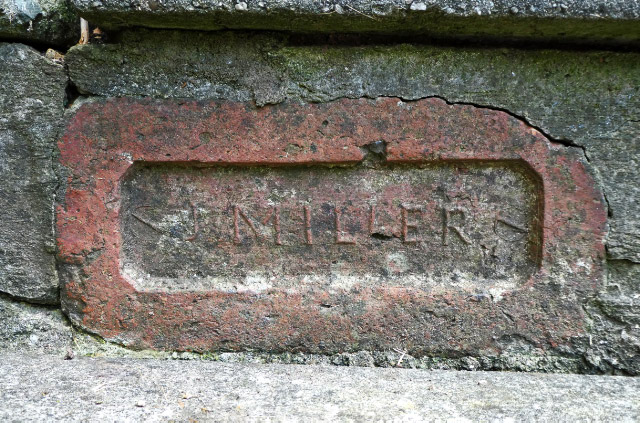
This Chaddesden brick, photographed at the Silk Mill Museum, Derby has Dyche stamped on the other side, but unfortunately I did turn the brick over to photograph it. Then a fellow collector photographed the same brick & this has revealed that it has got the same stamp mark as the Dyche brick above which I have got in my collection, but mine has not got Chaddesden on the reverse. 


There is the possibility that because of the texture of the clay this Derby brick was also made by Charles Dyche. 


I now move on to the Derby Kilburn Colliery Company who's brickworks was also on Chaddesden Hill.


The Derby Kilburn Colliery Company was formed on the 2nd of April 1891 with a capital of £30,000 in £100 shares & in doing so took over a colliery at Stanley called the Stanley Kilburn Colliery previously owned by the Small Brothers who went bankrupt in 1885. The first directors of this new company were T.P. Hickman & C. Moore. It may have been from this colliery's name that Derby Kilburn Colliery Company took part of it's name from. The company then expanded by opening the Footrill drift mine which was to the south-west of Manor Farm in Stanley. They used Stanley Kilburn pit to vent air into & pump water out of the drift mine. D.K.C.C. then built their own tramway from the drift mine to Chaddesden Hill from where their coal was conveyed to Derby. It was after this tramway was up & running that DKCC then opened their brickworks at Chaddesden Hill & the works is shown on the 1900 OS map below at the terminus of the tramway. 

© Crown Copyright. Reproduced with permission of NLS/Ordnance Survey 1900.

Bricks were made using clay shale from the mine transported via the tramway to the beehive kilns & some of these bricks where used to build four semi-detached houses at Klondyke on the edge of Stanley village. By 1918 D.K.C.C. had closed their brickworks & Stanley pit due to financial difficulties & their works was sold over three days on the 30th April, 1st & 2nd of May 1919. I have found that the Footrill drift mine had already been taken over by the Mapperley Colliery Company in December 1908 & it appears this company continued to supply clay shale & coal to D.K.C.C.'s brickworks. 

© Crown Copyright. Reproduced with permission of NLS/Ordnance Survey 1900.

The 1900 map above shows the distance the tramway travelled from the Footrill's drift mine near Stanley village to Chaddesden Hill. It must have been a feat of engineering to build this tramway. Also coloured yellow is Stanley Kilburn Colliery. If you wish to study this map in more detail I have pasted the link below. Just zoom in and follow the tramway on this continuous map.
https://maps.nls.uk/geo/explore/#zoom=13.7&lat=52.94560&lon=-1.41571&layers=6&b=1&o=100

Also if you wish to read more details about this amazing tramway, please follow the link below. 
http://www.chaddesdenhistorygroup.co.uk/transport/colliery-tramway-opening.pdf


Chellaston.

© Crown Copyright. Reproduced with permission of NLS/Ordnance Survey, surveyed 1879/81.

The first company found operating this Chellaston brick & tile works as shown on the 1879 OS map above was the Chellaston Mining Co. who appears to have established this brickworks around 1871. The Chellaston Mining Co., a Plaster Manufacturer had been established in 1861 when they took over the lease of the California Gypsum Mine which is shown on this 1879 map as being situated just to the right of the brickworks. The owners of the Chellaston Mining Co. were William Singleton Birch, John Ryde & Joseph Gregory, however Gregory left this Partnership as per London Gazette notice on the 3rd of September 1873 with Birch & Ryde continuing to trade as the Chellaston Mining Co. & the 9 inch square floor tile below will have been made between 1871 & 1876.


It appears Birch & Ryde then decided to operate the brickworks under their own names with Kelly's 1876 edition listing Birch & Ryde as brick & tile manufacturers at Chellaston. As you can see on the map above there is no clay pit next to the works, so as well as bringing coal to the works via their tramway, Birch & Ryde must have also brought clay to the works via road & then their tramway. As to where the clay came from whether it was from their gypsum mine or a 2nd option is the unmarked (at this date) clay pit with tramway which I have coloured blue, is unknown. If they did own the blue coloured area, it appears that they did not own the land between the clay pit & the brickworks, so therefore they had transport the clay by road & then by their tramway to the works. The 1899 map does show that the next owners of the brickworks did have direct access to this blue coloured clay pit.

  B & R's brick & tile where both photographed at the Silk Mill Museum, Derby.


Photo by Simon Booth.

A Notice in the Derby Mercury dated 2nd July 1879 recording the sale of a farm & several fields situated next to the Chellaston gypsum mine reveals Birch & Ryde had recently given up the lease to the mine & brickworks & both mine & brickworks were now being run by T.P. Stableford & I write about him next. 

© Crown Copyright. Reproduced with permission of NLS/Ordnance Survey 1899.

As you can now see on the 1899 map above the tramway has gone & the works had direct access to the clay pits, some of which are marked as old clay pits by 1899. It was the new owner of this brickworks T.P. Stableford who was responsible for gaining direct access to the clay pits. 


Thomas Porter Stableford b.1821 is listed in Kelly's 1881 to 1904 editions as brick making in Chellaston. Then son John Thomas Stableford b.1862 is listed at this works in Kelly's 1908 to 1916 editions. A web article has revealed that John Thomas Stableford after the war modernised the works building a Hoffman kiln & replacing the steam engine with a gas fired one. In doing all these changes John got into financial trouble & to ease his situation he accepted a loan from F.W. Gilbert, however John soon got deeper into trouble & the the loan was foreclosed. F.W. Gilbert then took over the brickworks & John was made works manager, hence there being no more trade directory listings for John after 1916. In 1922 John Stableford was made redundant & the brickworks was closed by Gilbert. If you look at the 1899 map above you will see a house marked Woodlands next to the brickworks & this is where Thomas Stableford & John Stableford lived. These clay pits where also known as Woodlands Brickpits. As of yet, no bricks stamped John Stableford, Chellaston have turned up, unless he carried on stamping his bricks with his father's name on. 

 Both Stableford bricks where photographed at the Silk Mill Museum, Derby.

Photographed at the Silk Mill Museum, Derby by Frank Lawson.

© Crown Copyright. Reproduced with permission of NLS/Ordnance Survey, surveyed 1937/8.

From the same article as some of the Stableford info has come from, I found that in 1923 F.W. Gilbert joined forces with J.E. Williamson forming Chellaston Minerals & the Woodlands Brickworks was re-opened. Chellaston Minerals is first listed in Kelly's 1928 edition with J.E. Williamson as Managing Director. 

Bricks were in great demand during both World Wars from this works especially the 2nd, because the Company (Chellaston Minerals) had to keep a sufficient stock of bricks to rebuild Rolls Royce in case of major damage by enemy bombs.  

While digging for clay, gypsum was also dug & was sold to produced plaster by the company. The company continues to be listed in the brick & tile makers section of Kelly's Directory up to it's 1941 edition, the last available directory. 


In 1948 the Woodland Brickworks was purchased by Mr. Sissons of Langley Mill who then change the company name to the Chellaston Brick Co. A gypsum mine article states that the gypsum on this site had run out by 1965. In 1976 a company called Granwood Flooring of Somercotes took over the brickworks, but after only two years the brickworks closed for good in 1978. Bricks made by these last two companies have still to turn up.


Shelton Lock Brickworks near Chellaston.

© Crown Copyright. Reproduced with permission of NLS/Ordnance Survey, surveyed 1879.

Situated next to the Derby Canal I have coloured this Shelton Lock brickyard yellow on the 1879 map above. Thomas Cooper is recorded as brickmaker in White's 1857 edition at Shelton Lock, Chellaston with George Shelton listed as manager. However the Derbyshire Advertiser date 5th of September 1856 records Thomas Cooper as a Bankrupt & the Assignee had been charged to sell the Brick Yard & it's contents which included 150,000 common & pressed bricks on the 17th of September 1856. So I can only assume the trade directory had not been informed of Cooper's bankruptcy before it went to print. Cooper may have only operated this yard for a short time with him not being listed in Kelly's 1855 edition.   

 T. Cooper/Shelton brick photographed at the Silk Mill Museum, Derby.


Tomlinson & Harpur next took over the lease to this works by October 1856 & a 1859 mining statistics article on the web records Tomlinson & Harper were producing bricks, tiles & pipes at the Shelton Lock Works. Tomlinson & Harpur also ran a larger works on Uttoxeter Road in Derby. After Tomlinson & Harpur had dissolved their partnership in 1863 John Harpur then ran the two works on his own. It appears by October 1869 John Harpur had given up the lease on the Shelton Lock brickworks as I found an article recording Thomas Clews was now leasing this yard. 

In March 1876 Thomas Clews, a farmer took out a new lease on the brickworks for a term of 10 years from the 25th of March 1876 at the minimum aggregate rents of £76 5s. 6d. According to this notice Thomas Clews also occupied the house which came with the brickyard. However as you will see the brick below is stamped A. Clews & Co. Thomas had a son called Arthur L. Clews & he is recorded as a brewers clerk, aged 17 in the 1871 census & it appears Thomas had leased the brickyard for Arthur to run. By the 1881 census Arthur had moved to Wales as a Travelling Salesman in the brewery trade. I next found an advert in the Derby Telegraph dated November 1880 recording Thomas Clews & Sons were advertising first class bricks for sale at reduced prices. The 1881 census records Thomas Clews aged 63 as a farmer & brickmaker employing 4 men & 1 boy. Also listed with Thomas in this census are two more sons, James aged 36 & John aged 31, but both are recorded as farmers. A notice in the Derby Reporter dated 27th April 1883 reports Mr. Clews was giving up the business & was selling all the plant, stock-in-trade & brickmaking equipment, but it appear the works was not sold at this date as it was re-advertised for sale in May 1885.


 A. Clews/Chellaston brick was photographed at the Silk Mill Museum, Derby by Frank Lawson.


In May 1885 the Shelton Locks Works was advertised in the Derbyshire Advertiser to be Sold as a going concern, so I am thinking it was in May 1885 that the Shelton Brick Co. purchased the works. There are no Trade Directory listings for the Shelton Brick Co. so I do not know how long this company ran the works for. The Shelton Lock brickworks is no longer shown on the 1899 OS map. As a footnote there is the possibility Thomas Clews operated as the Shelton Brick Co. & made the brick shown above.  


Weston Underwood.

© Crown Copyright. Reproduced with permission of NLS/Ordnance Survey, surveyed 1880.

James Miller is listed in Kelly's 1864 to 1887 editions at Weston Underwood, Derby. A For Sale Notice to Brick Manufacturers etc in the Derby Mercury dated 30th of April 1890 reports Mr. Wilkinson had been instructed by Mr. Miller who is declining the business to sell at Auction that day at 2pm prompt the whole of the valuable Brick & Tile Making Plant. The notice goes on to list the many items that were to be auctioned including a brick & tile machine, a nearly new Patent lever press machine made by Stone, railway wagons, horse-gear, brick barrows etc, etc. 
    
More can be read at the link below about James, his family & his brickworks in this blog written by one of his descendants Brett Payne who lives in New Zealand. A very interesting blog which requires more time to read his many posts about Derbyshire towns & it's inhabitants. The posts include many old photographs which is his passion. 
http://photo-sleuth.blogspot.co.uk/2008/11/james-miller-1815-1893-drainage-man.html


Duffield.

© Crown Copyright. Reproduced with permission of NLS/Ordnance Survey, surveyed 1879/80.

I have been unable to find a brickmaker in trade directories with the initials of I.J. at Duffield, but I have found Samuel Jennens & Son recorded as brickmakers in Kelly's 1876 edition at Duffield, Belper. So I expect I.J. is more than likely the son.


Photos by MF, courtesy of the Frank Lawson collection.


I found this O. Smedley rev. Duffield at a reclamation yard in April 2023 & Kelly's 1881 edition records Owen Smedley at Duffield, so I assuming he took over Jennens' works. How long Smedley operated this Duffield works is unknown because in Kelly's 1891 edition Smedley is listed as operating a brickworks in Loscoe, Derbyshire. I've wrote more about Smedley at Loscoe in this post.


I wish to thank the following people for their help & use of their maps & photos.

Silk Mill Museum, Derby - for giving me access to their brick collection & permission to use my images in this post.
http://www.derbymuseums.org

National Library of Scotland & Ordnance Survey - use of their maps.

Frank Lawson - photos.