Showing posts with label Leicester brickmakers. Show all posts

Friday, 3 January 2025

Leicester Brickworks - part 2


Barrow Brothers

Photo by Dennis Gamble, courtesy of Brocross brick website.

With Phil Evans contacting me in March 2026 with information about his Barrow brickmaking family I have now updated this entry with Phil's information & the new info I have found since. Phil's mum, a Barrow is a direct ancestor of brickmaker William Barrow born 1802 & I start this entry with this William.  

William Barrow (b.1802) is recorded in the 1841 census as a brickmaker & living with his young family on Conduit Street, Leicester. As to the location of his brickworks this could have been also on Conduit Street as I have found that a brick yard at the upper end of Conduit Street was put up for sale in February 1840, so it fits the bill, however there were several more brick yards nearby where he could have worked at. I just need written evidence confirming his brick yard.

The 1851 census records William had moved his family to 44, Benford Street in the St Matthews area of Leicester, a street which today no long exists, but was situated off Christow Street. Although I do not have written evidence I think William had also taken over the Willow Bridge Brick Yard which was on Willow Bridge Close next to the Willow Brook river & was only two streets from where he lived. My first reference found to this yard is 1833 when it was owned by Issac Grundy. The 1851 census also records 3 of his sons were brickmakers & will have been working with him, these being Henry aged 16 (b.1835), William, 12 (b.1839) & John, 10 (b.1841). 

The 1861 census records William now living at 52, Benford Street & 2 more sons Thomas aged 15 (b.1846) & Joseph 14 (b.1847) had also had become Brickmakers. Henry & William in the 1861 census were both living on Curzon Street with their respective families & with Henry being recorded in The Leicester Gazette trade directory as owning the Curzon Street Brick & Tile Yard, I am assuming William was working alongside him. Wright's 1864 edition also records Henry at the Curzon Street yard. 

Meanwhile it appears John shortly after the 1861 census left his father's employ to operate his own brick yard on Wharf Street in Leicester. This brickyard is recorded as being operational as early as 1816 with a newspaper article recording it was being Let by it's owner William Elliott. 

A November 1863 newspaper article records John had ceased being the brickmaker at Wharf Street & his brother William would then take over the business to which it now belonged & would continue to run the works, however Wright's 1864 edition still records John Barrow as operating the Wharf Street yard, unless Wright's hadn't been updated on the change to William. I next found in a newspaper article that John was operating a brick yard at nearby Spinney Hills situated next to Fielding Moores brick yard, however in September 1867 the same thing happened again with John relinquishing the works & William taking over the running the business on his own account. A 1867 directory & the 1871 census records John as a brickmaker & Grocer on Abbey Gate, so it appears John concentrated on running his grocers shop at this period of time.  

At a date unknown in the early to mid 1870's John joined William in the partnership of the "Barrow Brothers" operating a brickworks in Belgrave which from later findings in trade directories & newspapers was situated just off Belper Street in Belgrave. The Leicester Chronicle dated 25th of August 1877 records five lads were accused of the malicious damaging of a batch of newly made bricks, the property of John & William Barrow, Belgrave. The only brickworks found in Belgrave on maps is the disused one shown coloured green on the 1885 OS map shown below & was situated just off Belper Street. Melrose Street was later built through the middle of this brickworks to give you an indication of it's location today. White's 1877 edition records William Barrow as a Brick manufacturer in Belgrave, living at 108 Cranbourne Street & John Barrows is also recorded as a Brick Manufacturer in Belgrave & living at 110 Cranbourne Street, so next door to his brother. It appears in the early to mid 1870's William either closed or just moved on from the Wharf Street & Spinney Hill brick yards with him & his brother relocating to Belper Street. 

It's at this point that I mention from Phil Evans research that John & William were employing several members of their family as brick makers & that included their brothers & an Uncle & his son.  

© Crown Copyright. Reproduced with permission of NLS/Ordnance Survey 1885.

Wright's 1878, 1880 & 1883 editions records J & W Barrow as brickmaking at the Willow Bridge Works, Belper Street, Belgrave, Leicester & it is from these directories that I got my confirmation of the location of the brothers Belgrave Works. It also appears that the brothers had named their brickworks Willow Bridge in honour of their father's Willow Bridge yard which they both worked at in the early 1850's. I note the Willow Brook river ran much further south of this Belgrave brickworks hence my theory of the brothers naming their works the same to honour their father who died in 1866. 

Wright's 1883 edition also records both brothers were now living on Melton Road & this ties in with the brothers opening a new brickworks on Melton Road around this date & closing their Belper Street works which is not shown on the 1885 map. I have used the 1900 OS map below to show the location of this Melton Road works which was situated next to the Midland Railway & had it's own siding into the yard. I also note this brickworks was in Thurmaston with the parish boundary shown to the south of it. Wright's 1887 edition is the first directory recording this Melton Road works as Thurmaston & it's from later findings that I found it was called the Lodge Farm Brickworks. Wright's 1887 directory also record John Barrow was now living at 2, Malkin Street, Belgrave. William was still living at Stockdale House on Melton Road. Wright's 1889 & 1892 editions continue to list the brothers as operating the Thurmaston works & living at the same addresses.

© Crown Copyright. Reproduced with permission of NLS/Ordnance Survey 1900. 

At a date unknown, but in the late 1890's the Brothers opened a second brickworks in Thurmaston called the County Brickworks & is coloured green on the 1900 OS map below. A May 1889 newspaper article states the road between Messrs Vass's High Meres brickworks & Messrs Barrow's new works (County) was to be widened by 5 feet, so I am assuming the County Brickworks was operational in May 1889. The Hinckley News dated 30th March 1889 lists Brick Manufacturer John Barrow of Belgrave as a Guardian on a Local Board. 

Kelly's 1899 edition lists the Barrow Brothers at Thurmaston; office, Belgrave Road, however the listing does not state the brothers were operating two brickworks. It's not until Wright's 1903 edition that both works are listed as Barksby Thorpe Lane, West Humberstone (County) & Thurmaston (Melton Road). I note with local government boundary changes the County Brickworks was now in West Humberstone.  

© Crown Copyright. Reproduced with permission of NLS/Ordnance Survey 1900.

With there being a downturn in the need of bricks in the early 1900's the Barrow Brothers joined forces with the Knighton Brick Co. & the Gypsy Lane Brick Co. to form a Marketing Company called The Leicester Brick Company Limited to sell their bricks & this was in 1902. Orston Wright of South Wigston became Chairman (also the owner of Knighton Junction Brick Co.) & the Board of Directors consisted of Mr. A.B. Partridge for the Knighton Junction Brick Co.; Mr. J. & Mr. W. Barrows for Messrs Barrow Brothers; Mr. W.H. Winterton & before his death, Mr. Weston for the Gypsy Lane Brick Co. This association worked well for several years with excellent brick sales. 

The 1911 census now records William was living on Knighton Grange Road, Oadby & John was living at Clifton House, Fosse Road, Syston, both brothers are recorded as Brick Manufacturers. 

William Barrow died in January 1916 aged 77 & John Barrow died in June 1918 also aged 77. We then find Barrow Brothers was then run by the Executors of John's Will. William had two sons & four daughters & John had one son & five daughters, so I am assuming some of them took part in the running of  Barrow Brothers after William & John's deaths. 

With Phil Evans tracing his family back I can now reveal who was running Barrow Brothers after William & John's deaths. Only one of William's sons came into the business & this was William Barrow junior born 1863. The 1901 census records him as a clerk at a brickworks, then the 1911 census records him as a Manager at the Lodge Farm Works. The 1921 census records him as a Manager at the County Brickworks. William died in 1929. William had 3 sons, but it appears they did not enter into the business.

Now on to John's son, John Edwin Barrow born 1875. The 1891 census records him as Apprentice Brick Maker. The 1901 census records him as a Manager of a Brick Yard. In the 1911 census he is a Manager at the Lodge Farm Works & the 1921 census again records him as a Brickworks Manager. John Edwin died in 1929. John Edwin had a son called John Edwin junior born 1901 & the 1921 census & the 1939 census records him as a Brickworks Manager. John Edwin junior died in 1955. 

So it appears after the deaths of John Edwin senior & his cousin William both in 1929 the Company was then run by the Leicester Brick Co., the Marketing Company which the Barrow Brothers had had a long association with since the early 1900's.

Kelly's 1932 edition is the last trade directory listing for Barrow Bros (exors of) at the County Brickworks, however the 1943 Ministry of War Directory records Barrow's County Brickworks as closed & in the care of Ministry. This usually meant armaments were being stored in the buildings. The Lodge Farm Works had closed by September 1943 with a newspaper article reporting that the Leicester Sanitary & Baths Committee had recommended the purchase of 29 acres of land which had formed part of the Lodge Farm Brickworks, Melton Road for the use of controlled tipping purposes. J.W. Durham then set about dismantling the works & selling the demolished buildings bricks & hardcore. 

Leicester Evening Mail - Wednesday 08 September 1943. Image © Reach PLC. 
Image created courtesy of THE BRITISH LIBRARY BOARD.

With the Leicester Brick Co. (Marketing Company) going into Voluntary Liquidation in November 1945 it appears Barrow Brothers also ceased trading, however by February 1946 the County Brickworks was under new ownership & being run by the Leicester Brick & Tile  Co. which was owned by the Sherriff Family, Builders in Leicester & I write about this company later. 


Gypsy Lane Brick Co.

© Crown Copyright. Reproduced with permission of NLS/Ordnance Survey 1900.

The Gypsy Lane Brick Co. on Fairfax Road, Belgrave, Leicester is first listed in Kelly's 1895 with John Henry Weston & William Henry Winterton listed as proprietors. Their offices were situated at 1 Campbell Street. Up to yet no bricks stamped Gypsy Lane Brick Co. have turned up, so if you have one, please send photos, Thanks. 

With there being a downturn in the need of bricks in the early 1900's the Gypsy Lane Brick Co. joined forces with the Knighton Brick Co. & Messrs Barrows to form a Marketing Company called The Leicester Brick Company Limited to sell their bricks & this was in 1902. Orston Wright of South Wigston became Chairman (also the owner of Knighton Junction Brick Co.) & the Board of Directors consisted of Mr. A.B. Partridge for the Knighton Junction Brick Co.; Mr. J. & Mr. W. Barrows for Messrs Barrow Brothers; Mr. W.H. Winterton & before his death, Mr. Weston for the Gypsy Lane Brick Co. This association worked well for several years with excellent brick sales. Kelly's 1928 edition now lists the Fairfax Road works as being in West Humberstone.  

In 1940 with men from the brickworks signing up to go to war the company set about trying to replace them to keep the brickworks operational. Several adverts appeared in local newspapers & the first in March stated they required Kiln Wheelers, Pitmen & Labourers. In June the request was for Kiln & Machine Men. However time we get to October we find with more men going to war the request was now for Strong Men & Youths, Good Wages. Then by the time we get to March 1941 & the company starting to get desperate the advert was now Wanted Boys & Youths for Brick Works. I am assuming it was around this time that the brickworks closed either by choice or from the instructions of the Ministry of War. The 1943 Ministry of War Directory records the Gypsy Lane Brick Co.'s Fairfax Road works as closed & in the care of Ministry. This usually meant armaments were being stored in the buildings. 

With the Leicester Brick Co. (Marketing Company) going into Voluntary Liquidation in November 1945 it appears the Gypsy Lane Brick Co. also ceased trading, however by February 1946 the Fairfax Road brickworks was under new ownership & being run by the Leicester Brick & Tile  Co. which was owned by the Sherriff Family, Builders in Leicester & I write about this company later. 

As a footnote John Weston & William Winterton were also the owners of two more brick companies in the West Midlands & these were the Little Bromwich Brick Co. & the Castle Bromwich Brick Co. & more can be read at this Link.


Leicester Brick Co. Ltd.

The Leicester Brick Company was formed in 1902 as a Marketing Company by several Leicester brick manufacturers who found with there being a downturn in the need for bricks & competing with one another for what little trade there was, that the only option open to them was to unite rather than to compete. So theses united companies were the Knighton Junction Brick Co., Gypsy Lane Brick Co. & Messers Barrows. Orston Wright of South Wigston became Chairman (also owner of the Knighton Brick Co.) & the Board of Directors consisted of Mr. A.B. Partridge for the Knighton Junction Brick Co.; Mr. J. & Mr. W. Barrows for Messrs Barrow Brothers; Mr. W.H. Winterton & before his death, Mr. Weston for the Gypsy Lane Brick Co.

Kelly's 1908 edition is the last trade directory recording the Knighton Junction Brick Co. & the Leicester Daily Post dated the 14th of October 1909 reports that men working at both of Knighton Junction's brickworks were given a weeks notice that the company was to close & the closure was due to very poor sales. I then found in the London Gazette dated 27th of January 1911 that owner Orson Wright put the Knighton Junction Brick Co. into Voluntary Liquidation & the company was wound up a year later by the Liquidator. So this just left the Barrow Brothers County Brickworks & Winterton's Gypsy Lane Brickworks in the group.  

The Leicester Brick Co. Limited is listed in Kelly's 1908 edition with the office address of 8, St. Martins, Leicester. In Kelly's 1932 edition the address had changed to 64 - 66 Granby Street, Leicester. 

William Barrow died in January 1916 aged 77 & John Barrow died in June 1918 also aged 77. We then find Barrow Brothers was then run by the Executors of John's Will these being William & John's sons who continued their association with the Leicester Brick Co.

The two bricks below were badged with the Marketing Co's name & were made at the Barrow Brother's County Works. The BB will stand for Barrow Brothers, but the XL is a bit of a mystery. I expect there will be other bricks made from the other works within the group with Marketing Co's name stamped in them, just hope they turn up. 


The London Gazette records the Leicester Brick Co. Ltd was put into Voluntary Liquidation on the 23rd of November 1945 & the Company was Liquidated on the 2nd of July 1946 when all of the accounts were laid before the Companies Members. It appears the Gypsy Lane Brick Co. & the Barrows Bros. companies also closed in 1945 with both works being shut down during WW2. 

I then found by February 1946 a new company called the Leicester Brick & Tile Co. was now running the Fairfax Lane Works previously run by the Gypsy Lane Brick Co. & the County Works previously run by the Executors of the Barrow Bros. The owners of this new company were the Sherriff Family, Builders in Leicester & I write more about the Leicester Brick & Tile Co. next. 


Leicester Brick & Tile Co.

© Crown Copyright. Reproduced with permission of NLS/Ordnance Survey 1950.

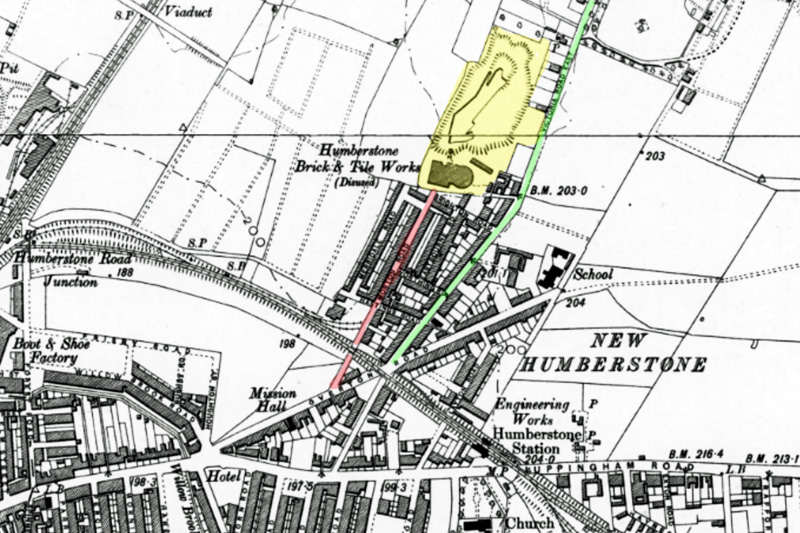
The former Gypsy Lane Brick Co.'s brickworks on Fairfax Road had closed in 1946 & new brickworks was built on the same site (yellow) & was up and running in January 1947 & was being operated by a new company called the Leicester Brick & Tile Co. owned by Mr. L. Sherriff. This new company had also taken over the Barrows Brothers, County Works (green). However on the 6th of February 1946 Mr. Sherriff stated in a newspaper article that with the shortage of coal due to the Government cutting back supplies from 70 tons to 35 tons, he had to lay off 70 workers at his Gypsy Lane & County Brick Works with the exception of maintenance staff & kiln burners. Mr. Sherriff continues, the men have only been working 2 days one week & 3 days the other & 250,000 of undried bricks would also be lost if he could not get more coal & the immediate effect would be the lost supply to 20 housing projects. Apparently a government official replied to one of Mr. Sherriff's letters saying - can't you let a kiln go out & the reply was that if he did it would take 50 tons of coal to get the kiln working again. A short newspaper article the next day stated the government had released an extra 20 tons of outcrop coal to Mr Sherriff, but he said work could not resumed until it was received. From several newspaper adverts this company also operated under the name of Gypsy Lane Brick Works Ltd. 

It appears the County Brickworks had ceased production by 1950 with the 1950 map (above) recording Old Clay Pit next to the brickworks buildings. The last newspaper reference to the County Brickworks was the shortage of coal in January 1947, so the decision may have been taken to close the works at this point.

The Leicester Evening Mail on the 25th of April 1962 shows a photo of company chairman Mr. L. Sherriff setting light to the works new kiln. The article reports the design of which was the most advanced type of kiln in the world. Mr. Sherriff stated this new kiln had been 10 years in the planning & took one year to be built. The 460ft long oil-fired kiln was capable of producing 200,000 bricks per week with the kiln working in conjunction with new automatic brick-making plant which required just 12 men to operate. The bricks are fed into the kiln on a car which can carry 2000 bricks & each car spends 96 hours in the kiln. Managing Director, Mr. J.B. Sherriff stated the new kiln could produce more bricks than their 4 existing kilns. The Sherriff family continued to run this brickworks up to July 1983.

This next info has been supplied to me by Mike Chapman & strictly speaking requires a new heading, but with the Sherriff Family still being involved I have continued as per last heading. 

In the late 1970's & early 1980's the Nottingham Brick Co. were keen to expand their business in the production of Keuper Marl bricks & several brick companies in the Midlands were looked at with the view of taking them over. In 1979 the Maltby Works owned by the Badger Family (Maltby Brick Co.) was acquired by the Nottingham Brick Co. They then turned their interests to the Gypsy Lane Brickworks owned by the Sherriff Family. In a 18th of July 1983 meeting at Nottingham Brick PLC's Dorket Head Brickworks Managing Director, M.W. Sledge confirmed that an agreement had been finalised with the Sherriff Family to obtain the assets to Gypsy Lane brickworks with the Family continuing to hold the land as Leaseholders. Nottingham Brick then set about improving the Gypsy Lane works which they had now named the Thurmaston Factory & introduced a larger range of wire-cut facing bricks to compliment the ones made at Dorket Head. In 1987 Nottingham Brick PLC was taken over by roof tile manufacturer Marley & Marley Brick was formed which included the Thurmaston works & Nottingham Brick Co's two other works. Below is a Marley brochure showing the range of bricks made at Leicester. The brochure mentions the bricks were made with shale clay & Mike tells me these Leicester bricks were made from a mixture of the local Keuper Marl & shale clay from Maltby which was a very costly thing to do bringing the shale from Yorkshire. Mike continues to say this range of wire-cut bricks was never entirely successful & the Thurmston works suffered during 1989 - 1993 recession & the Thurmaston Works had closed by the time Tarmac PLC bought Marley Brick in 1993 & that was the end of brick making in this part of Leicester.     


Marley Brochure & Thurmaston Factory photo courtesy of Mike Chapman Collection.


John Day

Photo by Frank Lawson.

The Leicester Mercury dated 10th September 1864 reports on a straw fire at Mr. John Day's Thurmaston Lodge Farm which according to the report was situated one mile north of Thurmaston village & when the Sun Fire Brigade (Mr. Day's insurers) arrived they found they did enough water for the job in hand and the nearest water available was obtained from the ponds of the Barkby Lane brickworks half a mile away. Now this got me thinking that this brickworks was John Day's, so I am hoping I am right. I have to note this brickworks was actually on Barkby Thorpe Lane as shown on the 1883 OS map below.  

© Crown Copyright. Reproduced with permission of NLS/Ordnance Survey 1883.


Albert Henry Vass


A newspaper article on Albert Henry Vass of Ingaraby House, Uppingham Road, Leicester records he first worked for the Knighton Brick Co. as a Manager & Salesman then in 1895 he established his own brickworks on Gypsy Lane. Now on the 1900 map there is only one brickworks situated just off Gypsy Lane & this was owned by the Gypsy Lane Brick Co. on Fairfax Road which was established in 1895 by Weston & Winterton, however nearby on Barkby Road there's the marked High Meres Brickworks (coloured yellow on the 1900 OS map below) which I had not been abled to ascertain who owned it from trade directories or old newspapers, so I have come to the conclusion Albert Vass had established this High Meres Brickworks in 1895 with him then being listed in Kelly's 1899 edition at Thurmaston. My theory is backed up by another snippet of information from a 1898 Local Council meeting in which the decision was made to widen the road by 5 feet between Messrs Barrow Brothers brickworks & Mr. Vass's brickworks. The map below shows these two works were next door to one another. This Kelly's 1899 entry is the only listing for Vass as this article goes on to say Vass sold his Leicester brickworks (to an un-named company) at a large profit in 1900. Vass then established the Carlton Brick Co. in Star Lane, Nottingham in 1901. 

Photo by Ady Stuart.

It appears nothing happened to the High Mere Brickworks after it had closed with the 1919 map showing no buildings only the old clay pit. Then the 1928 map shows the same, so my only thoughts are with the Barrow Brothers County Brickworks being next door they had bought the works for the clay, but there is no evidence to support this. 

© Crown Copyright. Reproduced with permission of NLS/Ordnance Survey 1900.

As a footnote, this 1907 article was reporting Albert Henry Vass was in Court addressing his situation with him running out of money & being in debt. After the sale of his Leicester brickworks in 1900 he next ran the Carlton Brick Co. on Star Lane, Carlton, Nottingham from 1901. He then ran another brickworks in Chesterfield from 1904 & this may have been the Wheeldon Mill Works which was put up for sale in October 1904. Vass also invested heavily in many house building projects, hence him running out of money. The Mortgagees of the Carlton Works took possession of the works in March 1906 & the Mortgagees of the Chesterfield took possession of their works in April 1907. Sadly Albert Henry Vass died in 1909 aged 52.      


Star Brick Works
Star Brick Co.
New Star Brick Co.

Leicester Chronicle - Saturday 19 July 1879 
Image © Reach PLC. 
Image created courtesy of THE BRITISH LIBRARY BOARD

An advert in the Leicester Chronicle dated 19th of July 1879 records The Star Brick Works, Thurmaston was owned by Robert Richard Gray & he was advertising he could supply Patent Pressed Facing bricks of high quality & colour. Kelly's 1881 edition is the first directory listing the Star Brick Works with R.R. Gray as proprietor. 

Kelly's 1881 edition.

The 1901 OS map below shows the Star Works (yellow) was on Humberstone Lane (purple) in Thurmaston. 

© Crown Copyright. Reproduced with permission of NLS/Ordnance Survey 1901.

A Notice in the Leicester Chronicle dated 19th August 1882 brings your attention to the Sale of the Star Brick Works, Thurmaston by Private Treaty, owned by Robert R. Gray. The works came with a Lease of 21 years on favourable terms of rent & loyalty which had started on the 25th of December 1878, so I think I can say that was when Gray had established this works. The notice states the buildings & machinery consisted of a 20 horse-powered horizontal engine, a Cornish boiler by Gimson & Co., dry press machinery by Whittaker of Accrington, capable of making 50,000 pressed bricks per week, wire cut machinery by Ward & Co. Leeds also capable of producing 50,000 bricks per week, a new Clay Mill, four Newcastle kilns holding 30,000 bricks each plus a round oven holding 14,000 bricks, drying house & offices. There is a railway siding from the main line of the Midland Railway into the works affording excellent facilities for the forwarding of bricks etc to all parts of the country. The site is of 5 acres & contains superior clay to produce excellent facing bricks. There is a bottom bed of clay from which white bricks are made. The works is three miles from the centre of Leicester. Arrangements to visit the works by bonafide people can be made with Mr. R.R. Gray.   

It is unknown if Gray sold his works in 1882, but we find the next owners of The Star Brick Works were Thomas & Henry Herbert, Builders, Contractors & Brickmakers of Welford Road, Leicester. The brothers are first listed as the proprietors of the Star Brick Works in Kelly's 1891 edition & this entry is repeated in Kelly's 1895 edition. 

I just write a bit about the Herbert's before they took over the Star Brick Works & as well as being builders & contractors Thomas & Henry Herbert, are listed with the address of Welford Road as brickmakers in Harrod's 1870 edition, then Wright's 1878 edition records them as brickmakers on Lancaster Street. The 1885 OS map does not show a brickworks on this street only the outline of the roads without any houses, so maybe the Herbert brothers were going to build the houses in this area, hence the listing. There are several Old Clay Pits marked on this map nearby in the Spinney Hills area, so in 1878 the brothers may have owned one of these brickyards. 

Photo by Dennis Gamble, courtesy of Brocross Old Bricks website.

Kelly's 1899 edition next records the Star Brick Works as being owned by Henry Herbert & Sons & the London Gazette reveals the brothers had dissolved their partnership on the 31st of December 1897. Thomas Herbert then traded under his own name as a Builder & Contractor at the Welford Road yard & Henry Herbert was now operating his builders yard & office on Millstone Lane, trading as Henry Herbert & Sons, Brick Manufacturer, Builder & Contractor.  

Kelly's 1925 edition is the last entry for the Star Brick Works, proprietor Henry Herbert & Sons, however we find by 1928 Henry Herbert had moved to new brickworks with Kelly's 1928 edition now listing the New Star Brick Works, proprietor Henry Herbert & Sons, Thurmaston. The 1928 OS map below shows this new works (coloured green) was further down Humberstone Lane (purple) & the old works (yellow) had been dismantled. A later article on the company now records the works was on Barkby Road, coloured red (later renamed Barkby Thorpe Road).  

© Crown Copyright. Reproduced with permission of NLS/Ordnance Survey 1901.

Photo by Peter Harris, courtesy of Brocross Old Bricks website.

Kelly's 1932 edition now records Sydney Frank Herbert as the proprietor of the New Star Brick Co., New Star Works, Thurmaston, however the builders & contractors side of the family business carried on as Henry Herbert & Sons. A quick check on a family website reveals Sydney was Henry's son. A 1939 newspaper article describes the New Star Brick Co.'s works as the most up to date in the area with the latest machinery & plant. The company is fortunate in possessing a bed of the finest red clay entirely free from lime & impurities covering many acres. The well known firm are the makers of the popular "Star-ruff" & Wi-ruff facing bricks & also manufacture Sand-stock facing bricks & common bricks. The 1943 Ministry of War Directory records the New Star Brick Co. was one of the very few brickworks which was allowed to operate during the war. 

Sydney Frank Herbert died in January 1950 aged 74 & he is recorded as being the senior partner in H. Herbert & Sons. The article states he had three sons, Geoffrey B. Herbert was a Solicitor, then his partners in the building company & brickworks were Henry Davis Herbert & Samuel Frank Herbert.   

The Leicester Daily Mercury dated July 1969 reports Mr. Henry Davis Herbert & his brother Samuel Frank Herbert, Partners in H. Herbert & Sons, Builders, Contractors & owners of the New Star Brick Co. were closing the builders & contractors side of the business, but the brickworks was to continue. Henry Davis Herbert stated the company which had been in existence for 160 years was not in any financial difficulties, but trade had been very slow over the last 12 years. Then with neither himself or his brother having any children to carry on the family business they had taken the decision to close the builders & contractors side & all manual workers & apprentices had been placed with other companies. With the brick company continuing a 1970 newspaper advert records The New Star Brick Co. were supplying facing bricks to the building of the Wigston Stage Motel. 

My next find in the Leicester Daily Mercury dated 20th August 1975 states the New Star Brick Co. had applied to the Local Council to change use of the brickworks to warehousing, but this meeting in September had been cancelled. I am therefore assuming the brickworks had closed by this date. 


I now write about the six owners/companies which operated the brickworks situated at the end of Red Hill Lane, Thurmaston.


Thurmaston Terra Metallic Brick Co.

The first newspaper reference found to the Thurmaston Terra Metallic Brick & Tile Co. appears in the Leicester Journal dated 22nd January 1875 when Architect & Surveyor, Mr. H. Barnard was prepared to receive Tenders from Contractors on the erection & completion of several proposed buildings for the Company's new brickworks at Thurmaston. Plans & specifications could be seen by contacting Mr. H. Barnard at Halford Street, Leicester. A July 1875 Notice notifies that an Ordinary General Meeting by the Thurmaston Terra Metallic Brick Co. for the present year would be held at the Freemasons' Hall, Halford Street, Leicester on the 26th of July. I expect this meeting was to update it's shareholders on the building of the new works. With the works operational Kelly's 1976 edition is the first directory recording this new company with offices at 9, Halford Street. A July 1877 newspaper advert tells you the works was producing Common & Patent Hand-Pressed Bricks, Tiles & Quarries, Ridges, Finials, Cornice & Beaded Bricks, String Coursing, Chimney Pots, etc, etc. Quotations on application to Mr. A. Yates, Resident Manager. The 1900 OS map below shows works (coloured green) was situated at the end of Red Hill Lane (red) & had it's own railway siding off the Midland Main Line. By December 1877 the company was now selling medium & best pressed machine pressed bricks & paving from their works which they had called Thurmaston Tileries. Please note the marked Pottery south of the works, coloured yellow was owned by Henry Woodfield from 1883 & his family continued to run this works to at least 1941 making pottery, terra cotta, tiles & bricks.    

© Crown Copyright. Reproduced with permission of NLS/Ordnance Survey 1901.

A Notice in the London Gazette informs you at a General Meeting on the 11th September 1879 of the Thurmaston Terra Metallic Brick Co. that the company was unable to fulfil it's liabilities & therefore could not continue. The resulting vote was to put the company into Voluntary Liquidation. In October 1879 the surplus stock was sold at Auction & then the works was put up for Sale as a going concern by the Liquidator. The works consisted of two Ensor Patent Angular Kilns having 12 arched chambers each, 2 buffalo ovens & 2 open kilns, drying sheds, three Murray's Patent pug mills & facilities to make land drain pipes outside. The works buildings were situated on an acre & a half of Freehold Land & there was another 11 acres of land available on lease & royalties. The Thurmaston Terra Metallic Brick Co. was wound up on the 22nd of September 1881 & this notice states the works had been deposed of & we find Thomas Miles was now running this brickworks & I write about him next.    


Thomas Miles
Thurmaston Brick & Tile Works

Thomas Miles is listed as brick manufacturer at Thurmaston in Kelly's 1881 edition & this is the only entry for Thomas Miles. I then found Thomas Miles, a Solicitor of 19, Cank Street, Leicester was declaring himself bankrupt in June 1888 & this notice records Augustus Cufaude Palmer, a Charted Accountant as his Trustee. Thomas Miles' office for the brickworks was at 30, Cank Street as per Kelly's 1881 advert below.

Kelly's 1881 edition.

J.G. Burgess, Official Receiver was put in charge to dispose of Miles's works & the Sale of the Thurmaston Brick & Tile Works with immediate possession was advertised in the Leicester Chronicle on the 2nd of August 1890. So from this notice it appears Thomas Miles also was trading as the Thurmaston Brick & Tile Works. The works sitting on an acre of Freehold land consisted of a 12 chamber German Kiln (Hoffman) capable of holding 240,000 bricks, 5 round ovens holding 90,000 bricks, 4 drying sheds all heated by exhausted steam, mill room, 2 Murray's Patent brick machines, 80 horse-power engine, 2 boilers, 4 brick presses, 4 pipe machines etc etc. A further 11 acres of land was available which was on a 21 year lease from 2nd March 1881. I am assuming this was the date Thomas Miles took over the works & then renegotiated the lease on this 11 acres of land with the owner.    

The new owner of this works then turns out to be Augustus C. Palmer, Miles' Trustee & his company A.C. Palmer & Co. are listed as the Proprietors of the Thurmaston Brick & Tile Works in Kelly's 1891 edition. From this directory & another newspaper article it appears Palmer continued to trade as the Thurmaston Brick & Tile Works. 

A Notice in the Leicester Chronicle dated 30th of April 1892 tells you AC. Palmer was selling the Thurmaston Brick & Tile Works with 6 Acres of adjoining land by Private Treaty.  


I have come to the conclusion this brick was made between 1881 & 1892 by either Miles or Palmer while operating as the Thurmaston Brick Works.       


Thurmaston Brick & Tile Company

I am assuming the sale of Palmers' works was completed not long after April 1892 as we find a new company The Thurmaston Brick & Tile Company was now running the works & this company is listed in Kelly's 1895 edition with Robert Sneddon as Secretary & Manager. This company did not last long as we find the London Gazette dated 30th of July 1897 records the Thurmaston Brick & Tile Company was voluntarily wound up on the 26th of July 1897 so that the Works could be made ready to sell to a new Company. Signed John Wootton, Chairman. To me this says the transfer to a new company had already been agreed upon & we find the next owners of this works was the Thurmaston Brick Co. 


Thurmaston Brick Company

The Thurmaston Brick Co. was owned by W. G. Birkinshaw & Co., coal merchants in Leicester. It appears this company took over the Red Hill Lane works not long after July 1887. Kelly's 1899 edition records the Thurmaston Brick Co. with Claude Arthur Brown as manager. The entry in Kelly's 1908 & 1912 is the Thurmaston Brick Co., W.G. Birkinshaw proprietors. A 1913 advert now records Birkinshaw & Co. as Birkinshaw, Brown & Co, Coal, Lime, Salt & Builders Merchants of Syston & they were the Sole Agents for the Thurmaston Brick Co., so it appears Claude Brown had now become a Partner in this new company of Birkinshaw, Brown & Co. 

Kelly's 1916 edition now records the Thurmaston Brick Co. as a branch of En-tout-cas Co. Ltd. This entry is repeated in Kelly's 1922 & 1925 editions. En-tout-cas Co. Ltd were based in Syston & were designers of landscape gardens and manufacturers of chicken sheds & garden furniture. A 1932 newspaper article reveals Claude Arthur Brown was the owner of En-tout-cas Co. Ltd. So it appears Brown took full control of the Thurmaston Brick Co. from Messrs Birkinshaw by 1916. This 1932 article goes on to say with the slump in the sale of bricks around 1909 & with Thurmaston having to sell their bricks at a lower price than they could be made for, Claude Brown was given the task on how to utilise the works plant. A chance meeting with W.G. Hillyard, secretary of the All England Tennis Club about the time tennis could be played on a grass court resulted with Brown coming up with the idea of a tennis court made of burnt clay which could be played on all year round round. Naturally it took time to perfect this & it resulted in Brown taking over the Thurmaston Brick Co. by 1916 to produce this clay surface & brick production was scaled down. There are no more trade directory listings for the Thurmaston Brick Co. after 1925 & the 1927 OS map just records the name En-tout-cas Works against the former brickworks buildings.         


Saturday, 8 January 2022

Leicester Brickworks - part 1


Messenger & Healey, Wigston.

Photo by Dennis Gamble & reproduced with the permission of the "Old Bricks" website.
Some info in this entry has been supplied by Dennis Gamble.

I first tell you that Ebenezer Healey in the 1871 census is recorded as a Manager of a Steam Brickworks in Knighton, Leicester. Wright's 1878 edition records Healey was now the owner & brickmaker of this works which was on Saffron Lane, Leicester. Healey may have left this works shortly after 1878 as we find in White's 1877 edition Ebenezer Healey was in partnership with Thomas Goode Messenger at the Wigston Junction Brickworks in Glen Parva, Blaby. This works is also listed as being in Wigston or South Wigston. The 1881 census records Healey as a Master Brickmaker, living in Glen Parva & employing 45 men & 20 boys. It appears Thomas Goode Messenger who lived in Loughborough was the moneyman in this partnership with him owning several other businesses as well. He is recorded as a Master Plumber, Glazier & Horticultural Builder. Then listed under Messenger & Co. as Valve Makers, Hot Water Engineers & Iron Founders. 

Several editions of Wright's directories & Kelly's 1881 edition records Messenger and Healey at the Wigston Junction Brickworks, Glen Parva & their works is shown on the 1884 OS map below. This is followed by Messenger & Healey's half page 1881 advert for their works. 

The London Gazette dated 17th August 1883 reveals the Partnership between Thomas Goode Messenger & Ebenezer Healey was dissolved by mutual consent on the 23rd of January 1883. Healey then continues to run the Glen Parva Works with him being listed in Wright's 1887 edition.

Dennis Gamble has found that by 1888 Orson Wright was now the owner of this Glen Parva works & his company the Knighton Brick Co. is listed in Kelly's 1891 edition as owning two works, Welford Road, Knighton Junction & Wigston Junction, Glen Parva, so it appears Messenger & Healey ran this Wigston Junction brickworks at Glen Parva for around ten years. 

I have also found Ebenezer Healey operated another brickworks in Sileby called the Sileby Brickworks on Barrow Road from 1886 to at least 1888. The next brickmaker at this works is recorded as being there in November 1894, so Healey could have been at this works up to 1894. 

In the 1891 census Messenger is recorded as a Retired Horticultural Builder & Healey is recorded as a Farmer in Aylestone, however in Wright's 1899 edition & the 1901 census Healey, aged 60 is listed as a Brick Manufacturer in Kirby Muxloe & living a mile away from his works on Hinckley Road in Leicester.

© Crown Copyright. Reproduced with permission of NLS/Ordnance Survey 1884.

Kelly's 1881 edition.


Blaby Brick & Tile Co.


The Blaby Brick & Tile Co. is listed in Kelly’s 1928 to 1936 editions at Cork Lane, Blaby, Leicester. I have used the 1928 OS below to show the location of this brick & tile works.


© Crown Copyright. Reproduced with permission of NLS/Ordnance Survey 1928.

The advert below from Leicester Daily Mercury dated 9th of September 1939 indicates the works was still active in the sale of it's bricks & operating an Air Raid Warning Station, but the making of bricks had ceased due to the war. The 1943 Ministry of War Directory of Brickworks records the Blaby works was completely closed & not under their ownership, however my next newspaper article dated 28th of March 1946 written by Managing Director Mr Charles Arthur Sword in the Leicester Evening Mail records the opposite & the works had been used by the Ministry of War. Simply Blaby on Facebook also revealed some bits of info about this works. Charlie Sword grandson of Managing Director Charles Sword wrote in 2021 that the War Dept requisitioned the works from his grandfather to store Rolls Royce aircraft engines there during the war with the location of the brickworks being far enough away from major industrial centres which were being bombed. Charlie also writes that his father also called Charles was the works general foreman & he use to take him as a child down to the works to see the kilns being fired & emptied. Charlie notes his happy memories of the brickworks & what a great bunch of chaps who worked there were. I tried contacting Charlie for more info on the works in August 2023 through FB, but alas I have not had a reply.   

 Image © Reach PLC. Image created courtesy of THE BRITISH LIBRARY BOARD.

 Image © Reach PLC. Image created courtesy of THE BRITISH LIBRARY BOARD.

In 1947 the company was taken over by the Butterley Brick Co. & in 1955 Butterley was renamed the Butterley & Blaby Brick Co. The Butterley & Blaby Brick Co. was taken over by the Wiles Group in 1968, later called the Hanson Trust & the company was renamed Butterley Building Materials Ltd. In June 1986 Lady Hanson commissioned the new kiln at Blaby. However with poor brick sales Butterley/Hanson decided to close it's Blaby works in November 1990 with a loss of 60 jobs & hand made brick production was transferred to Butterley's Heather works. Today houses on Navigation Drive have been built on this former brickworks site. 


It is thought this Blaby brick was made after Butterley took over this works in 1947.

As a footnote there was another brickworks which was on the opposite corner of Cork Lane were the Chemical Works is shown on the 1928 map above which was only operational for a few years around 1900. Kelly's 1900 edition lists the Blaby Brick Co. with Charles Halford as Managing Director. Charles Halford was a builder & timber merchant in Blaby. The 1900 map shows this works had two bee-hive kilns & a tramway into the clay pit from the main building. The Liverpool Mercury dated 13th November 1901 reports the Blaby Brickworks Co. Ltd. had been placed into Voluntary Liquidation.  


Whetstone Brickworks.


The first newspaper reference found to a brickworks situated near to the village of Whetstone is in 1856 when Mr. Willmore was declining the business. I have coloured this works green on the 1885 OS map below. The next brickmaker found at this works was Isaac Tarry b.1841 who is listed in Kelly's 1876 edition at Whetstone & will be the maker of this Whetstone brick. White's 1877 edition & Kelly's 1881 continue to record Isaac Tarry at Whetstone. Like several other brickmakers I have found during my brick research Isaac Tarry was also a publican at the Dover Castle Inn in Leicester, a pub which he took over from his father Isaac Tarry senior in 1871. 

A February 1888 Leicester Daily Post For Sale advert records Isaac Tarry of 26, Albion Hill, Leicester was selling his Whetstone brick, pipe & tile works together with cottages & 6 acres of land, however it appears the works did not sell as we find Isaac is still recorded as a brickmaker in Kelly's 1891, 1895 & 1900 editions, then Wright's 1903 edition at Whetstone. The 1891 census records Isaac Tarry as a builder. Then the 1901 census records Isaac as a brickmaker & builder of houses. It appears Isaac finished brickmaking not long after his last trade directory in 1903 with a 1905 newspaper article recording Isaac Tarry as a retired brick manufacturer of 26, Albion Hill, Leicester. 

© Crown Copyright. Reproduced with permission of NLS/Ordnance Survey 1885.


Countesthorpe Brick & Tile Co.
Vass & Co. Countesthorpe
Knighton Junction Brick Co. Countesthorpe


The Countesthorpe Brick & Tile Co. was registered on the 3rd of September 1879 with a share capital of £20,000, in 4000 shares at £5 each. The Directors are listed as George Harrison, Leicester; Henry Bell, Grantham; W.H. Townsend, Leicester; E. Massey junior, Managing Director of the Nottingham Builders Brick Co. Nottingham; W.E. Hickling, Leicester & W.E. Jefferson, Leicester. The company had been formed to acquire the Countesthorpe brickworks previously owned & run by William Henry Townsend who became a director in this new company. The article states 2,500 shares had been subscribed to, but the remaining 1,500 had not been offered to the Public. I have coloured the Countesthorpe works yellow on the 1884 OS map below. 

© Crown Copyright. Reproduced with permission of NLS/Ordnance Survey 1884.


Ordinary Shares in the newly formed Countesthorpe Brick & Tile Co. Ltd. were offered to the Public in March 1881. The newspaper article states the business has developed with such rapidity since the plant had been completed that the Directors at this time had decided to offer additional shares to raise the cash to employ more men to increase production to meet the demand of their much sought after quality bricks. Kelly's 1881 edition records W.E. Hickling was the Managing Director of the Countesthorpe Brick & Tile Co. Ltd. & Francis Cole Turton was Works Manager.

Photo by Richard Blackett.

It appears the company was in financial trouble by December 1881 with W.E. Hickling putting the Countesthorpe Brick & Tile Co. Ltd into Liquidation on the 28th of December 1881 as per a Notice in the London Gazette. The Mortgagees of the works then put the brickworks up for Auction on the 15th of March 1882. I next found a meeting of the Countesthorpe Brick & Tile Company's creditors took place in April 1882 to wind the company up.

The next owners of this brickworks were Vass & Co. & information from the Countesthorpe Parish Website (info under Stonecroft) states bricks made by Albert Vass & Co. at the Countesthorpe Brickworks were used to build the Countesthorpe Cottage Homes in 1884, an example of which is shown below & is followed by the 1884 map showing these Cottage Homes & the brickworks. 

Photo by Richard Blackett.

© Crown Copyright. Reproduced with permission of NLS/Ordnance Survey 1884.

In the 1881 census Albert Henry Vass aged 24 is listed as a Fancy Brick Presser living with his wife in Basford, Nottingham, so I am assuming he was working at a brickworks rather than being a brickworks owner at this date. It then appears Vass moved to Leicestershire & purchased or leased the Countesthorpe Brickworks from the Mortgagees shortly after March 1882. 

Vass then ran this brickworks up to at least 1891 when we find Kelly's 1891 edition now lists the Countesthorpe Brick & Tile Co. Ltd. with Alfred Measures as Works Manager (son of John Measures). Now who was behind this company is unknown unless it was Albert Vass ? I next found Albert Vass in the 1891 census is listed as living with his family in Wigston as a Traveler for a Brick Company (Salesman) & further research has revealed this was for the Knighton Junction Brick Co. A job he did until 1895 when he reset up Vass & Co. to run a brickworks at High Meres, Leicester. I am therefore assuming Albert Vass either sold or passed his lease over to the Knighton Junction Brick Co. & then took up a position of Salesman with Knighton. 

Going back to the Countesthorpe brickworks & a snippet in the Leicester Chronicle dated October 1891 lists a donation by the Workpeople of the Knighton Junction Brick Co's Countesthorpe Brickworks, so it appears the Knighton Junction Brick Co. from late 1891 was running the Countesthorpe brickworks. This is confirmed by an 1895 advert for Knighton Junction which lists Countesthorpe as one of it's works. This advert is shown in the Knighton Junction entry, which I write about next. I have also come to the conclusion that the entry in Kelly's 1891 edition for the Countesthorpe works should read owned by the Knighton Junction Brick Co. (formed in 1888) rather than the Countesthorpe Brick & Tile Co. I note that I have found trade directories have made mistakes for other brickmakers during my research, hence my thoughts on this entry.    

By 1902 the Countesthorpe brickworks had closed with the 1902 map only showing a pond were the claypit had been.


Knighton Junction Brick Co.


The Knighton Junction Brick Company first appears in Kelly's 1891 edition with James Squires as Manager & as wrote previously this company was formed around 1888 & was owned by Orson Wright, a local builder. A new find by Mark Cranston in a newspaper article which appeared in the Leicester Chronicle dated 19th of November 1887 reveals The Knighton Junction Brick Company had been formed with capital of £30,000 in 3000 shares at £10 each to take over the brickworks owned by William Watts Clarkson & it's owners are listed as William Henry Ellis & Arthur B. Partridge of Ellis Partridge & Co. Builders Merchants in Leicester, Orson Wright, Builder & Edward Sharman, MD of the Wellingborough Brick & Tile Co. Ellis was Chairman & Partridge & Wright were joint Managing Directors. The majority of the shares had been taken up by it's Directors, with the rest being available to the general public. 

This Knighton Junction brickworks on Welford Road in Leicester had been owned & run in his own name by William Watts Clarkson from at least 1871 to 1888 when he retired, hence the Knighton Junction Co. being formed to take over the running of this works. I am therefore thinking this Knighton Junction brick was made by the Knighton Junction Brick Co. rather than Clarkson. William Watts Clarkson is first recorded as a Brick Manufacturer in the 1871 census employing 33 men & 2 boys. The next references to William Clarkson manufacturing bricks are the many advertisements which appear in local newspapers from May 1874 & these all refer to his works being on Welford Road. I next found two trade directory adverts, the first is from Barker's 1875 edition & the second is from Kelly's 1881 edition. It is only the 1881 advert which refers to Clarkson's works as being situated at Knighton Junction, hence my thoughts this Knighton Junction brick was made by the Knighton Brick Co. I am just hoping a brick stamped Clarkson now turns up, so it can be added to this entry. 

Barker's 1875 edition.

Kelly's 1881 edition.

© Crown Copyright. Reproduced with permission of NLS/Ordnance Survey 1902.

As I have digressed I now return to the Knighton Brick Co. & I have used the 1902 OS map above to show their Welford Road brickworks which I have coloured green. Kelly's 1891 edition also records that the company owned a second works called the Wigston Junction Brick Works at Glen Parva & this works up to 1888 or thereabouts had been run by Messenger & Healey. I have coloured this Glen Parva Brickworks yellow on the 1902 OS map below.

© Crown Copyright. Reproduced with permission of NLS/Ordnance Survey 1902.


Kelly's 1891 advert for the Knighton Junction Brick Co. with works at Knighton Junction & South Wigston which is the Glen Parva works.

I next found in Kelly's 1895 edition that the company had acquired another brickworks at Countesthorpe previously operated by the Countesthorpe Brick & Tile Co., then by Vass & Co. Below is the OS 1885 map showing this works which I have coloured purple. Further research has revealed Knighton Junction took over the Countesthorpe Works in 1891. 

© Crown Copyright. Reproduced with permission of NLS/Ordnance Survey 1885.


Kelly's 1895 edition advert with the addition of the Countesthorpe works & this time the Glen Parva works is listed as Wigston. Kelly's 1899 editions only lists the Knighton Junction & Wigston brickworks, so the Countesthorpe works was only short lived & the 1902 OS map confirms this with only the clay pit now being shown. 

In 1902 the owners of the Knighton Junction Brick Co. along with the owners of the Gypsy Lane Brick Co. & Messrs Barrow Brothers formed a Marketing Company called the Leicester Brick Co. to sell their bricks. This alliance had all come about by the drop in demand for bricks & to stop each of the above companies in competing with one another for what little trade there was. Over the next few years their combined output being sold by this Marketing Company reaped rewards for the three Companies. I write more on the Gypsy Lane Brick Co., Barrow Brothers & the Leicester Brick Co. later in this post. 

Back to Knighton & Kelly's 1908 edition is the last trade directory recording the Knighton Junction Brick Co. & the Leicester Daily Post dated the 14th of October 1909 reports that men working at both of Knighton Junction's brickworks were given a weeks notice that the company was to close & the closure was due to very poor sales. This article goes on to say that at it's most profitable time the company was paying it's workers £100 pounds per week, but this had gradually dwindled until the Glen Parva works was now only paying £40 & Knighton Junction £35. I then found in the London Gazette dated 27th of January 1911 that Chairman Orson Wright put the Knighton Junction Brick Co. into Voluntary Liquidation & the company was wound up a year later by the Liquidator. It appears Wright had become chairman of the company after the death of Ellis in December 1894.


James Yates

Photo by Dennis Gamble courtesy of Brocross Old Bricks website.

The 1861 edition of the Gazetteer & Directory of Leicestershire records James Yates (b.1822) as a Brickmaker & Inn Keeper of the George & Dragon, 11 Kent Street, Leicester & was in the partnership of Yates & Packwood, Brickmakers. This being John Packwood, home, 39, New Bridge Street, Leicester. It's in the 1861 Commercial Directory that it records Yates & Packwood's works as being at Knighton Hill. Slaters 1862 edition only records John Packwood at Knighton Hill. Wright's 1864 edition then only records James Yates as brickmaking on Welford Road & still at the George & Dragon. Running a pub & brickmaking did run hand in hand with brickmaking only taking place between Spring & Autumn. So I am taking it this James Yates brick was made after 1864. I have not found any reference to the Yates & Packwood partnership being dissolved. As to the location of the Knighton Hill works & the Welford Road works I think they are one of the same & may have been the works I have coloured yellow on Welford Road on the 1885 OS map below. I have highlighted in green the Knighton Junction Brickworks which was just off to the left on the next map. There is one more entry for James Yates as brickmaker in the 1870 edition of the Directory of Leicester which records him with the address of 3, New Bridge Street.

© Crown Copyright. Reproduced with permission of NLS/Ordnance Survey 1885.


Norman & Underwood


Norman & Underwood were primarily plumbers & glaziers in Leicester originally operating from Free School Lane in the centre of Leicester (now part of the High Cross Shopping Centre), however the company diversified into brick making & are later recorded as also being builders & roofers. The firm recently closed in 2023 after operating for 198 years. 

So the first reference to Norman & Underwood as brickmakers appears in Kelly's 1876 edition with the address of 15, Free School Lane, Leicester. A notice in the Leicester Journal dated 26th July 1878 informs you Henry Norman was retiring from the company & the business of Norman & Underwood would then continue under the sole control of John Underwood who had joined the company in 1860. It was their uncle Thomas Norman who had established the plumbing & glazing company in 1825. Kelly's 1895 & 1900 editions record Norman & Underwood's brickworks as being on Saffron Lane in Leicester & I have coloured this works purple on the 1885 OS map below. Kelly's 1908 & Wright's 1911 edition now records Francis Underwood at the Saffron Lane Works. I am assuming Francis was John's son. The 1912 map now shows the Saffron Lane Works as disused. The site after being disused for many years eventually became allotments. Today a sports centre & running track now occupy part of the site.    

© Crown Copyright. Reproduced with permission of NLS/Ordnance Survey 1885.


Vincent Bradley

Photo by Dennis Gamble & reproduced with the permission of the "Old Bricks" website.

The first reference I have found to Vincent Bradley is in 1846 when he is listed as the Victualler of the Richard III Inn on Highcross Street, Leicester. 1852 is the first reference to Vincent Bradley being recorded as a builder, however a newspaper article in the Leicester Journal dated 2nd of October 1857 records James Spratbury, a brickmaker was working for Vincent Bradley at his Ansty Lane brickyard. I have coloured this yard green on the 1885 OS map below. 

© Crown Copyright. Reproduced with permission of NLS/Ordnance Survey 1885.

I then found Vincent Bradley owned a second brickyard from the For Sale Notice of the Bell Lane Brickyard adjoining the Midland Railway in the Leicester Journal dated 17th of February 1860. All stock consisting of 150,000 common bricks, pressed bricks, quarries were to be sold in lots to suit the purchaser. Then the Clay Mill in good working order, two eight hole brick kilns, sheds & stable were to be sold as a going concern. St George's Retail Park is now built were this brickyard had once stood. White's 1863 edition records builder Vincent Bradley with the address of 84, Highcross Street, Leicester. So it appears Vincent Bradley was making bricks for both his own use & for the retail market. Vincent Bradley died in October 1869 & from a notice in the Leicester Journal dated 9th of March 1877 which records the sale of the Freehold of the Ansty Lane brickyard, it is noted after Vincent Bradley had died the yard was run by George Fletcher & the present leaseholder was Mr. Thomas L. Wilson. However, the 1875 & 1876 trade directories record Thomas L. Wilson as the brickmaker of the Ansty Lane yard. By 1878 George Wain was leasing this Ansty Lane brickyard & I write about him next.  


George Wain

Photo by Frank Lawson.

Brickmaker George Wain is listed in Wright's 1878 edition with the address of Leicester Road, Belgrave & this could be his home or office address. Then the 1880 edition of the Commercial Gazette records his works as being on Ansty Road & from information found George Wain had taken over this works from Thomas L. Wilson in 1878. With this brickworks being marked as disused on the 1885 map it appears Wain only ran the works for a few years. A new find in the Leicester Mercury dated 20th November 1880 reports George Wain was unable pay the rent on the yard & the whole of the Brickmaking Plant & Stock-In-Trade & Effects were to sold to cover the Rent. The Leaseholder (T.L. Wilson) was then going to Re-Let the Yard, but this appears not to have happened with the works being disused on the 1885 map.  

© Crown Copyright. Reproduced with permission of NLS/Ordnance Survey 1885.


Billesdon Brick & Pipe Works

© Crown Copyright. Reproduced with permission of NLS/Ordnance Survey 1900.

Before I write about the marked brick, tile & pipe works, coloured green on this 1900 OS map I tell you about another brick yard in the village. A Freehold Sale Notice in the Leicester Journal dated 15th of February 1867 describes this excellent brick yard together with pasture land of 3 acres, cow shed, stables. piggeries, pottery, sand pit & other buildings situated with a considerable frontage to the Turn-pike-road from Billesdon to Leicester, & also to Long Lane, & adjacent to the Work House. This all points to the fields which I have coloured yellow. The buildings listed may relate to the ones situated to the right side of this field on the Turn-pike-road, but by this 1900 map some may have disappeared. The Notice goes on to say the brick yard was leased & worked by Thomas Henry Sharpe who is recorded in another article as being a brickmaker in the village in 1865. Also in the same Notice there were eight other houses/cottages being sold with sitting tenants, two were on the main street & five situated on or just off Long Lane which I have coloured red. I am therefore assuming one person was disposing of their estate which included all of these houses & the land on which the brick yard was built. It appears from my next find this brick yard was purchased by Thomas, John & William Batchelor, builders in Glenn Magna. However by April 1868 the brothers were advertising this brick yard to be Let. With the brothers failing to Let this yard they then proceeded in October 1868 to sell 90,000 bricks, all of the Plant & tools associated with brickmaking some of which were being sold as nearly new. In January 1869 Messers Batchelor advertised the Freehold Sale of the brick yard, kilns, a house & other buildings together with land amounting to three acres. It appears with there being no takers for the brick yard it then closed. 

Now on to the marked brickworks coloured green & it appears Thomas Henry Sharpe, brickmaker at the other yard had established this works by 1876 with Thomas being listed as brickmaker in Billesdon in Kelly's 1876 edition. Thomas then goes into partnership with George Ward Ward, a Provisions Merchant in Leicester operating as Sharpe & Ward. The London Gazette dated 11th of February 1879 records Thomas Henry Sharpe now living in Ruabon & a Brick & Pipe Manufacturer in the County of Denbigh, North Wales & George Ward Ward, a Provisions Merchant in Leicester operating as Sharpe & Ward, brickmakers in Billesdon had dissolved their partnership by mutual consent on the 5th of February 1879 & from this date William W. Ward alone would continue to operate this brickworks under the name of Sharpe & Ward. The only answer I can come up with Ward continuing to operate as Sharpe & Ward is that he felt customers would continue to purchase bricks & pipes from him with Henry Sharpe being a trusted brickmaker in the area. Kelly's 1881 edition records the company of Sharpe & Ward as brickmakers in Billesdon, however Kelly's 1891 edition records this works was being operated in George W. Ward's name only. 

Photo by Lynne Dyer.

A newspaper article in The Leicester Chronicle dated 21st of April 1894 states the Billesdon Brick & Pipe Works would be Let by Private Treaty. Machinery & all Stock in Trade could also be purchased at current prices. Immediate possession can also be had. Apply Williamson & Whittle, Auctioneers & Estate Agents, Leicester. Kelly's 1900 edition records the partnership of Bird & Hubbard were now operating the Billesdon works, therefore it appears Bird & Hubbard purchased the lease in 1894. Bird & Hubbard are not listed in Kelly's 1908 edition nor is anyone else, so I am assuming the brickworks had closed for good by 1908. The shape of the frog indicates the brick above may have been made between 1890 to when the works closed. Lynne has found there are several of these bricks displayed in walls in the village. Thanks Lynne. 


Launde Brickworks

© Crown Copyright. Reproduced with permission of NLS/Ordnance Survey 1884.

The brick & pipe works at Launde shown coloured yellow on the 1884 OS map above was advertised to be Let in February 1876 & consisted of a shed, one kiln & an excellent bed clay. The Estate Agent is recorded as Mr. Bate of Springfields near Newcastle, Staffordshire. 

Photo by Nigel Furniss.

This S & W Laund brick was found by Nigel Furniss in April 2025 & we have not been able to find no trade directories or newspaper articles recording brickmakers S & W at Launde, however with the partnership of Sharpe & Ward taking over the nearby Billesdon brickworks in 1876 there's a strong possibility Sharpe & Ward also took over the lease of the Launde works in 1876. If any concrete evidence is found I will update the entry.


Belgrave Brick Co.

© Crown Copyright. Reproduced with permission of NLS/Ordnance Survey 1901.

The first reference found to the Belgrave Brick Co. appears in a newspaper article dated 29th July 1898 when the company had been summoned to court for allowing two youths under the aged 18 to be working after 6pm. The bench fined the company one & a half guineas plus costs. 

Kelly's 1900 edition records the Belgrave Brick Co. Barkby Road, Leicester. I have coloured this works green on the 1901 OS map above. Kelly's 1908 edition is the same entry plus John Henry Weston as manager. However from my next find in a newspaper article dated September 1909 it records John Henry Weston as a brick manufacturer & had died in June 1909. With John not having any sons his estate was left to his brother Joseph, a retired farmer, so I have come to the conclusion with the death of John the brickworks closed. The 1919 map shows this works as disused & not shown at all on the 1928 map. 

Photo by Paul Ross. 


John Foxon, Belgrave

Photo by Dennis Gamble courtesy of Brocross Old Bricks website.

John Foxon junior b.1842 is first recorded as a brick manufacturer in the 1875 edition of the Leicester Commercial Directory with the address of Leicester Road (actually Loughborough Road) Belgrave & from later finds this was his home address of Burley House, Loughborough Road, Belgrave. Kelly's 1876, White's 1877, Wright's 1878 & Kelly's 1881 also record the address of Belgrave with the addition of a second works at Burbage in White's 1877 edition. The 1881 census records he lived on Loughborough Road, Belgrave as a Brick Manufacturer employing 5 men & 1 boy. I have found an old clay pit in Belgrave on the 1885 OS map below & this could have been his works which I have coloured green.

© Crown Copyright. Reproduced with permission of NLS/Ordnance Survey 1885.    

Now his father John Foxon senior b.1816 is also recorded as a brick manufacturer in the 1875 edition of the Leicester Commercial Directory with a works address of Groby Road. Later directories record this works as being at Freaks Ground/Groby Road. I have coloured the location of this works yellow on the 1885 OS map below. John senior is also recorded with a second works at Burbage in several directories up to Kelly's 1881 edition, a village he was born in. John Foxon senior lived at 61, Hinckley Road, Leicester. A May 1881 newspaper article records John junior was selling his father's Groby Road Works, the lease of which still had several years to run. I then found Kelly's 1881 edition records the Osborne Brothers at this works. Then from information found in newspapers during this 1875 - 1881 period both father & son were involved in letting houses or commercial properties & this may have been John Foxon senior's downfall when he was declared bankrupt in April 1882.

© Crown Copyright. Reproduced with permission of NLS/Ordnance Survey 1886.


I next write the three company's who ran the Humberstone brickworks which was accessed from both Morton Road & Victoria Road.


Leicester Patent Brick & Tile Co.


The Leicester Patent Brick & Tile Co. Ltd was formed in March 1873 with a Share Capital of £9000 in £25 shares. The two men who had formed this company were Edward Ensor junior of Woodville, Burton on Trent & J.A. Bosworth of Humberstone Cottage, Leicester. Edward Ensor junior is recorded as Managing Engineer within the company, he also had interests in Ensor Brothers, fire brick manufacturers in Church Gresley. J.A. Bosworth is recorded as Managing Director with George F. Harrison as Secretary. An 1877 job advert for the company gives the works address as Humberstone Road, but the works was accessed via Morton Road or Victoria Road both just off Humberstone Road, see the 1885 OS map below. Please note the works had change hands by this 1885 map hence the name of the Humberstone Works. Kelly's 1876 & 1881 editions record the Leicester Patent Brick & Tile Co. with offices in Grey Friars, Leicester & works New Humberstone, with Thomas Beech as Works Manager. However Wright's 1878 edition does record the works address as Morton Road, Humberstone. 

© Crown Copyright. Reproduced with permission of NLS/Ordnance Survey 1885.


A 25th of March 1881 Notice in the Leicester Journal notifies readers that on the 6th of April the Valuable & Extensive Leasehold Brickworks of about 8 acres lately occupied & operated by the Leicester Patent Brick Co. at New Humberstone was to be Sold at Auction. The Notice states the works had Patent Kilns (Hoffmann), powerful steam engines, all modern plant & machinery, valuable beds of clay & clay mills. The rent & royalties are moderate. We next find by October 1881 this works was being run by the Humberstone Brick Co. & I write about them next. 


Humberstone Brick Co.

Courtesy of Nottingham Museums & Galleries.

The first reference I have Humberstone Brick Co. is a October 1881 advert recording the Brick & Tile Works on Victoria Road was now open for the sale of wire-cut, pressed & ornamental bricks, quarries, floor bricks & drain pipes. Apply. C. Cayless, Manager. The next reference to the company is February 1884 when George Hewitt, a labourer was found living rough in the works kilns by the local police constable. Kelly's 1895 & 1900 editions record Matthew Adey Forrest as the Proprietor of the Humberstone Brick Co. Morton Road, West Humberstone. M.A. Forrest was a coal, coke & timber merchant in Leicester. By 1901 the Morton Road works was being run by Broadbent & Co. 


© Crown Copyright. Reproduced with permission of NLS/Ordnance Survey 1900.


Broadbent & Co.

Photo by Peter Harris courtesy of Brocross Old Bricks website.

Established in 1840 Broadbent & Co. were builders merchants in Leicester. It was originally thought that their named bricks were made by another local company, however when Alwyn Sparrow found the one below stamped Victoria Works, Humberstone that set me on my search for new info & the location of this Victoria Brickworks. 

Photo by Alwyn Sparrow.

Photo by Tim Sayers.

Broadbent & Co. are listed in Bennett's 1901 edition as builders merchants; brick & pipe manufacturers; slating & tiling contractors, Head Office - Erskire Street, Humberstone Road, Leicester. The 1901 edition of the Clayworkers Directory also records Broadbent & Co. as brick manufacturers at this address. The company is next recorded in Kelly's 1908 & 1912 editions as brick manufacturers with the address of 36, Humberstone Road. As to the location of Broadbent's Victoria Works I have established it was the works which was situated at the end of Morton Road in Humberstone & adjacent to Victoria Road previously run by the Humberstone Brick Co. who are last recorded in Kelly's 1900 edition. The 1900 map I have used below shows this works as disused for some unknown reason. I have coloured Morton Road red & Victoria Road green. Broadbent & Co. are next recorded in the Brick & Tile section in Kelly's 1912 edition however in the same section in Kelly's 1916 to 1925 editions the entry is Broadbent & Stephens, merchants. I have to note with Broadbent & Co. & then Broadbent & Stephens being primarily builders merchants Broadbent & Co. may have only manufactured their own bricks up to 1912. The trade directory dates of 1916 to 1925 are explained in the next paragraph with new info coming to hand. 

© Crown Copyright. Reproduced with permission of NLS/Ordnance Survey 1900.

Photo by Tim Sayers.

With Tim Sayers finding this Broadbent fire brick in February 2026 I then went in search for information on the company making fire bricks. The only info found were two trade directory entries in the Fire Brick Manufacturers section for Broadbent & Stephens at 36, Humberstone Road, Leicester (office) in Kelly's 1916 & 1922 editions. These listings lead me to find the advert below recording they were manufacturing their own fire bricks. With house bricks not being listed I am assuming Broadbent's had stopped making them around 1912 as previously wrote.   

Kelly's 1916 edition.

An unexpected find in the Leicester Chronicle dated 30th of May 1857 when looking for another brick company has revealed Benjamin Broadbent had owned this Humberstone brickworks before, so I have posted this Notice below.  

Leicester Chronicle - Saturday 30 May 1857 Image © Reach PLC. 
Image created courtesy of THE BRITISH LIBRARY BOARD..

I then found a September 1862 newspaper notice advertising the Humberstone Brickworks was being put up for sale as a going concern. The notice states "the whole of the works as new". I then found an August newspaper Auction Notice recording the sale of all of Broadbent's bricks & tiles etc. I have not been able to establish who purchased the works in 1862, so there is a gap in ownership until the Leicester Patent Brick & Tile Co. owned the works in 1873. In conclusion Benjamin Broadbent first owned the Victoria Brickworks from at least May 1857 to 1862 & there is a strong possibility this Victoria Works brick was made between these dates. The Broadbent & Co. brick will have been made between 1901 & 1912. 

Another snippet of information has come to light regarding Benjamin Broadbent with him being involved with another brick company in 1869. So whilst still running his builders merchant business he entered into a partnership with brothers Jacob Stanley & Reginald Stanley forming Broadbent & Stanley in 1869 to take over the Swan Lane brickworks in Nuneaton making blue bricks. A few months into the venture Benjamin took ill & had to step back from running the brick business. Benjamin left the partnership in August 1871 & the company was then renamed Stanley Brothers of Nuneaton. I was aware of this company & it's history, but had never made the connection to it being the same Benjamin Broadbent of Leicester before. Sadly Benjamin Broadbent died aged 47 in 1887 & his builders merchant business then became Broadbent & Co. which resulted it this company taking over the Victoria Brickworks, Humberstone again in 1901.


Edward Newton

Fielding Moore

© Crown Copyright. Reproduced with permission of NLS/Ordnance Survey 1885.

I now write about the two brick yards which were at Spinney Hill, Leicester, one was owned by Edward Newton around 1880 & the other by Fielding Moore. I am not 100% sure who owned which, but from a bit of info found on Newton he may have owned the yellow yard & then Moore owned the green yard. I then found in Harrold's 1870 edition there are listings for three brickmakers operating at Spinney Hill, these being Fielding Moore, William Cox & John Millington, so there may have been two yards in the area which I have coloured green ? With John Millington being listed with the address of Maynard Street (coloured red on map) Spinney Hill same as Edward Newton, Millington may have owned the yellow yard in 1870 before Newton took over ? 


Edward Newton is listed as brickmaking on Humberstone Road, Leicester in Wright's 1878 edition then Kelly's 1881 edition records him as brickmaking on Melbourne Road, Leicester. With Humberstone Road being not to far from Melbourne Road I am thinking these two locations are the same brickworks. A Notice in the Leicester Journal dated 9th December 1881 informs readers Edward Newton of the Spinney Hill Brickyard, Maynard Street, Leicester was closing his brickyard & there is a list of items in this notice which were to be sold at Auction. All the fixed machinery, boilers & engines had already been sold either at a previous auction or by private treaty. The OS 1885 map above shows there had been two brickyards on Melbourne Road (purple) but I am not 100% sure which Edward Newton had worked. I have coloured Maynard Street (now Road) red & Newton may have lived on this street or it could be a reference to Newton's yard, if so Newton's yard could have been the one which I have coloured yellow. 

Photo by Frank Lawson.

A notice in the Hinkley News dated May 15th 1869 reveals Fielding Moore, Spinney Hill Pottery begs to inform the Trade & Public that he is now manufacturing a first class description of pancheons, stone bottles, ham pots, jars & earthenware generally used for domestic purposes & these could be obtained from his home address 8, Upper Regent Street, London Road, Leicester or from his works. So it appears he made not have been making bricks at this 1869 date, however Harrold's 1870 trade directory lists Fielding Moore as brickmaking at Spinney Hill, Leicester & Moore's yard may have been situated in the area that I have coloured green on the 1885 OS map above. On another page in this 1870 directory it records Fielding Moore as manufacturing bricks, tiles, chimney pots, seakale pots, ornamental & common garden pots & vases, piping of various dimensions & seed pans. A 1882 newspaper article records Henry Woodfield had worked as Works Manager for Fielding Moore at the Spinney Hill Terra Cotta Works for the last 15 years, so this takes us back to at least 1867 when Fielding Moore was operating the Spinney Hill Works.

A newspaper notice in the Leicester Guardian dated 10th of June 1874 reports Fielding Moore had taken over the Breedon & Cloud Hill Lime Works & could deliver lime to any railway station, also a good supply was kept at his depot at Humberstone Wharf. Kelly's 1876 edition now records Fielding Moore with offices at 1A, Bowling Green Street, brickworks Spinney Hill & depot at Humberstone Road Wharf. Below I have added Fielding Moore's advert from White's 1877 edition which also records him as a Coal Merchant & this is followed by his Kelly's 1881 advert. 

White's 1877 edition.

Kelly's 1881 edition.


Fielding Moore died in either July or August 1881 & although he had two sons Charles & Fielding junior to take over his business, his brickworks, coal wharf & lime works all closed. The Building News dated 13th January 1882 reports the whole of the Spinney Hill Brickworks plant, machinery, tools & all remaining stock would be sold at Auction on the 18th of January 1882. 

Then an 1885 Court case reveals the Executors of Fielding Moore's Will were Joseph Isaac Hallam & Fielding Moore junior & I have gleamed after Fielding's children, Fielding junior, Charles & Elizabeth had been paid their money from the Will the vast majority of the Estate which include his grand house on Upper Regent Street, 64 other houses & some land on Spinney Hill Road went to Joseph Hallam. The children were disputing Hallam's claim, but the judge said if this case continued there would be no money left for the children as it would all be taken up in the court costs. So I have come to the conclusion Joseph Hallam had invested his own money into Fielding's business hence him being one of the Executors & then being able to get his investment back when the businesses were sold.   


Glenfield Premier Brick & Terra Cotta Co.
Glenfield Brick & Tile Co.

© Crown Copyright. Reproduced with permission of NLS/Ordnance Survey 1900.

The Glenfield Premier Brick & Terra Cotta Co. Ltd. was established in 1898 & is first listed in Kelly's 1899 edition. Situated just outside the village of Glenfield I have coloured this works green on the 1900 OS map above which also shows there was a siding into the works from the West Bridge Branch Line. In 1904 Mr. Ratcliff was the manager of the company.


The Glenfield Premier Brick & Terra Cotta Company continues to be listed in Kelly's up to it's 1928 edition. 

Photo by David Fox.

A share issue notice in the Sunday Mirror dated 17th June 1928 tells you the Glenfield Premier Brick & Terra Cotta Co. together with the Fontley Brick & Tile Co. & the Fareham Brick & Tile Co. both in Fareham, Hants. were to be taken over by a newly formed consortium which consisted of the Frewin Cavity Brick Co. Ltd. & B. Whitaker & Sons of Accrington & Leeds. This new holding company then traded as the British Cavity Brick & Tile Co. Ltd. running the five companies mentioned. The directors of this new company were Lord Islington, Bury St Edmunds (chairman), Sir Walter Townley, London, Percy Burton, Hatfield, then Joint Managing Directors, Albert Brathwaite, (B. Whitaker & Sons) & Edmond Frewin (Frewin Cavity Brick). The Nottingham Journal dated 10th of August 1928 reports the British Cavity Brick & Tile Co. had completed the take-over process of it's recent acquisitions. 

After the take over the Glenfield works then operated as the Glenfield Brick & Tile Works & this company is listed in Kelly's 1932 to 1941 editions. 

I then found in the Leicester Mercury dated 8th of May 1958 the Glenfield works was to close in five weeks time with the loss of 50 jobs. The reason of the closure was the works plant was totally out of date & it would have been to costly to replace with new equipment to then try & compete with the very large concerns in a very weak market. Apparently the works had a very large stock of cable covers which was their chief line & for which they had no orders for. The works also produced agricultural land drains & chimney pots. At this closure date there is no mention of bricks, so I am assuming brick production had been phased out at some point. Bricks stamped Glenfield Brick & Tile have still to turn up, so one to keep a look out for. Below is an 1932 advert which does list bricks. 


Leicester Evening Mail - Saturday 15 October 1932. Image © Reach PLC. 
Image created courtesy of THE BRITISH LIBRARY BOARD

As a footnote I mention the Glenfield Brick & Terra Co. Ltd was wound up in 1932.